";s:4:"text";s:13984:"[failed verification] This course deviation caused the plane to crash into a hilltop, 4.05 kilometres (2.52mi; 2.19nmi) short of and 150 metres (490ft) north of its assigned landing strip, runway 28. Moments before the crash, Lutz's running commentary indicated to investigators that Lutz must have thought he was at or near 2.2 nautical miles (4.1km; 2.5mi) from runway 28 because he said "Someone said he saw the runway late here". Please join us! If you want to start a conversation about a topic raised in this article or want to report factual errors, email us at english@swissinfo.ch. They managed to get away with this because the final approach ran over Lake Lugano, which (being perfectly flat) did not present any obstacles that would pose a hazard to low-flying planes. Zrich ATC, in order to comply with a new Swiss law designed to reduce airport noise from approaching aircraft over southern Germany in the late evening hours, redirected all flights on final approach to switch from the ILS-equipped runway 14 to the less-accurate VOR/DME-equipped runway 28. Were wondering how youre doing and what worries you. Lutz had almost 40 times as many flight hours as Lhrer, and his lectures earlier in the flight had established a teacher-student relationship between them rather than a partnership of equals. Before the crash, the plane had logged 13,000 flying hours with 11,500 takeoffs and landings. Upon reaching MDA of 2,400 feet (730m), Lutz declared that he had "ground contact" and would continue on, then deliberately descended the plane below the MDA without having the required visual contact with either the approach lights or the runway,[2] a major piloting error that ultimately led to the crash. He ended up in Italy, and was only made aware of this after circling the airport for several minutes, when Assisting the captain was 25-year-old First Officer Stefan Lhrer, who was fresh out of training with just 500 hours under his belt. Let us know by taking part in our survey. In 1961, at the age of 17, he failed his very first entry exam to begin flight training. Consequently, he continued through the MDA and crashed into a hill. Could he have struggled to keep track his speed, descent rate, and distance from the runway due to fatigue? The accident came as a shock for Switzerland: this was the third major tragedy to befall the small country in the past several months, coming shortly after 15 people were killed in a terrorist shooting and 11 died in a major accident inside the Gotthard road tunnel. Among the passengers killed in the crash were Melanie Thornton, the former American lead singer of the German Euro-Dance duo La Bouche, and singers Nathaly van het Ende and Maria Serrano Serrano of the German Euro-Dance trio Passion Fruit; the group's third singer, Debby St. Maarten survived with major injuries. Unfortunately, there was no one else to find: all 24 remaining passengers and crew were dead. Aviation accidents and incidents in Switzerland, Passenger had Sweden-United Kingdom dual Citizenship, Passenger had Germany-United States dual Citizenship, "Final Report No. 1 Dec 1939 : Offiziersanwrter: 1 Nov 1940 : There were poor visibility conditions due to low clouds, and the cockpit voice recorder (CVR) captured the transmission of a previously-landing Crossair flight informing air traffic control (ATC) that they could not see the runway until 2.2 nautical miles (4.1km; 2.5mi) away. In another case in 1995, a Crossair first officer reported that while on approach to Lugano in nighttime instrument conditions, Lutz initiated a blistering descent of 4,000 feet per minute, which he maintained clear through the MDA before leveling off when he caught sight of Lake Lugano at a height of 300 feet above the ground. The visual minimums at the time of the accident were actually inappropriate for using the standard approach to runway 28. Lack of discipline within Crossair resulted in absence of consequences of risky behavior. But a number of obstacles prevented him from doing so, not least among them Lutzs vastly superior experience. In that accident, the AAIB found that the pilots both hired from countries in Eastern Europe had not been adequately trained or assessed after coming to Switzerland, and while taking off in low visibility conditions they lost control of the plane. He could see villages on the ground and likely thought that he could get away with descending below the MDA like he did at Lugano, and that he would break out of the clouds well above any terrain. Ms visi esam niecga sastvdaa cilvces vstur, kuru aicinm rakstt kop! With poor visibility due to low cloud, a previous Crossair flight reported that they could not see the runway until they were two miles out. Please enter your email address so that the password reset email can be sent to you account. They would discover a pilot with a history of outlandish misadventures that defied common sense. Lutz exclaimed, "Shit, two miles he said, he sees the runway!" @cooperlund @tinybaby Crossair Flight 3597, Captain Hans Ulrich Lutz crashed his plane into a marked hill by the airport killing most of germany's spice girls. Unbeknownst to the pilots, Germany and Switzerland had recently agreed to a noise abatement policy that prohibited flights from landing on Runway 14 after 22:00. The visual minimums at the time of the accident were actually inappropriate for using the standard approach to runway 28. Your data is used to pre-fill some form fields. The charts included a new set of approach parameters, of which the higher minimum descent altitude (MDA) was the most crucial piece of information. Meanwhile, investigators from Switzerlands Aircraft Accident Investigation Bureau (AAIB) arrived at the scene to uncover the cause of the crash. Go around, both pilots said in unison. [2]:12 The crash was also known as The Day Euro-Dance Music Died a reference to the 1959 crash that became known as The Day the Music Died due to the deaths of some members of Euro-Dance groups La Bouche and Passion Fruit. During final approach, passengers noticed road signs in Italian outside the plane, at which point the pilots performed a go-around and proceeded to the correct airport. Zurich Air Traffic Control Tower, in order to comply with a new Swiss law designed to reduce airport noise from approaching aircraft over southern Germany in the late evening hours, must redirect all flights on final approach to switch from the ILS-equipped runway 14 to the less-accurate VHF Omnidirectional Range (VOR)/Distance Measuring Equipment (DME)-equipped runway 28. Please click the link in the e-mail to reset your password. This is the story of countless plane crashes, not just Crossair flight 3597. Fixated on finding the runway, they lost track of what their plane was doing until just second before the crash. WebWhile Captain Lutz was an experienced pilot, his competence soon came under close scrutiny by investigators from the Swiss Aircraft Accident Investigation Bureau (AAIB). Connections Married Ivanka Pistek, July 5, 1942. WebCaptain Hans Ulrich Lutz and First Officer Stefan Loehrer were the cockpit crew of Crossair Flight 3597 that night on 24thNovember 2001. WebWhile Captain Lutz was an experienced pilot, his competence soon came under close scrutiny by investigators from the Swiss Aircraft Accident Investigation Bureau (AAIB). Despite this, Crossair continued to let him fly even though he had nearly crashed while trying to land at Lugano Airport (LUG). This episode was fascinating because usually they point to a series of factors that caused the crash. Joining them that night were three flight attendants and 28 passengers, well short of what they were expecting: a group of 21 tourists who had been booked on the flight never showed up, leaving the 97-seat plane more than two thirds empty. A curiosity was that Captain Lutz had just recently started to fly the RJ100, which meant that the first officer had more experience flying the type. A few seconds later Lutz said, "Two thousand" and then one second later the synthetic voice gave the "minimums" GPWS message, which was triggered by the radio altimeter reading at 300 feet. While briefly circling in a holding pattern, the pilots went over the approach to runway 28. The nine survivors, two of whom are said to be in critical condition in hospital, have not yet been identified.Five Swiss nationals were among the victims, three of whom were members of the crew. This environment at Crossair went undetected by the Federal Office of Civil Aviation (FOCA), the Swiss equivalent of the FAA, because the agency was critically understaffed. Hans Ulrich von Schaffgotsch (15951635), Silesian nobleman, fought in the Silesian front of the Thirty Years' War. Contact me via @Admiral_Cloudberg on Reddit, @KyraCloudy on Twitter, or by email at kyracloudy97@gmail.com. Language links are at the top of the page across from the title. On 24 November 2001, the Crossair Avro RJ100 operating the route, registration HB-IXM, crashed into a wooded range of hills near Bassersdorf and exploded, killing 24 of the 33 people on board. While Captain Lutz was an experienced pilot, his competency would come under close scrutiny during the course of the investigation, which concluded that the accident was a controlled flight into terrain (CFIT) caused by a series of pilot errors and navigation mistakes that led the plane off-course. prior to that he nearly crashed into lake, got lost in Italy, and destroyed a Saab 340 by retracting its gear on the ground In contrast to the ILS approach, which displays lateral and vertical position, the VOR/DME approach only shows the lateral position of the aircraft and its range to the runway. On Monday Zurich police released a list of the names of the 24 people killed. In contrast to the ILS approach, which displays lateral and vertical position, the VOR/DME approach only shows the lateral position of the aircraft and its range to the runway. A little bit of sloppiness was probably to be expected. As they descended, the lights of a village became visible, prompting the captain to say he had the ground in sight. [2] Lutz made an additional error by not monitoring the DME as he made his approach; the CVR recorded Lutz's running narrative on nearly every move he made in the cockpit, but did not record any readout of the DME after a check, verified by Lhrer, at 6 nautical miles (11km; 6.9mi) from runway 28. In the late 1960s, he needed three years to get his instrument flight certification because he kept failing the exam. Press J to jump to the feed. It was a flight destined to Zurich Airport from Berlin Tegel Airport. However, flight simulators programmed with the time of day, terrain, and weather Lutz was facing at that time allowed investigators to determine that the only ground Lutz or Loehrer could see was the ground of the hilly terrain over which the plane was flying. At 10:05, Captain Lutz noted that they were nearing the minimum descent altitude (MDA). Due to increased azimuth error associated with the use of VORs and lack of vertical guidance (Glide Slope), the MDA is therefore much higher than a DA (Decision Altitude) for an ILS. The MDA states the minimum altitude in MSL to safely fly above any obstructions or terrain in the final approach flight-path before visual contact with the runway is made. Ranks. The problem was that unlike a lake, the terrain underneath the approach to runway 28 was not flat. However, by 2001 the next generation of ground proximity warning technology known as the Terrain Awareness and Warning System, or TAWS was already available. Upon approaching Zurich at 20:58:50 UTC, Crossair Flight 3597 received clearance from air traffic controller to land on runway 28 in poor visibility conditions due to low clouds instead of runway 14. ";s:7:"keyword";s:24:"captain hans ulrich lutz";s:5:"links";s:403:"Radio Merseyside Presenters 2021,
Forrest Kolb Net Worth,
Tracy Dawson John Chadwick,
Articles C
";s:7:"expired";i:-1;}
 There were poor visibility conditions due to low clouds, and the cockpit voice recorder (CVR) captured the transmission of a previously-landing Crossair flight informing air traffic control (ATC) that they could not see the runway until 2.2 nautical miles (4.1km; 2.5mi) away. In another case in 1995, a Crossair first officer reported that while on approach to Lugano in nighttime instrument conditions, Lutz initiated a blistering descent of 4,000 feet per minute, which he maintained clear through the MDA before leveling off when he caught sight of Lake Lugano at a height of 300 feet above the ground. The visual minimums at the time of the accident were actually inappropriate for using the standard approach to runway 28. Lack of discipline within Crossair resulted in absence of consequences of risky behavior. But a number of obstacles prevented him from doing so, not least among them Lutzs vastly superior experience. In that accident, the AAIB found that the pilots both hired from countries in Eastern Europe had not been adequately trained or assessed after coming to Switzerland, and while taking off in low visibility conditions they lost control of the plane. He could see villages on the ground and likely thought that he could get away with descending below the MDA like he did at Lugano, and that he would break out of the clouds well above any terrain. Ms visi esam niecga sastvdaa cilvces vstur, kuru aicinm rakstt kop! With poor visibility due to low cloud, a previous Crossair flight reported that they could not see the runway until they were two miles out. Please enter your email address so that the password reset email can be sent to you account. They would discover a pilot with a history of outlandish misadventures that defied common sense. Lutz exclaimed, "Shit, two miles he said, he sees the runway!" @cooperlund @tinybaby Crossair Flight 3597, Captain Hans Ulrich Lutz crashed his plane into a marked hill by the airport killing most of germany's spice girls. Unbeknownst to the pilots, Germany and Switzerland had recently agreed to a noise abatement policy that prohibited flights from landing on Runway 14 after 22:00. The visual minimums at the time of the accident were actually inappropriate for using the standard approach to runway 28. Your data is used to pre-fill some form fields. The charts included a new set of approach parameters, of which the higher minimum descent altitude (MDA) was the most crucial piece of information.
  Meanwhile, investigators from Switzerlands Aircraft Accident Investigation Bureau (AAIB) arrived at the scene to uncover the cause of the crash. Go around, both pilots said in unison. [2]:12 The crash was also known as The Day Euro-Dance Music Died a reference to the 1959 crash that became known as The Day the Music Died due to the deaths of some members of Euro-Dance groups La Bouche and Passion Fruit. During final approach, passengers noticed road signs in Italian outside the plane, at which point the pilots performed a go-around and proceeded to the correct airport. Zurich Air Traffic Control Tower, in order to comply with a new Swiss law designed to reduce airport noise from approaching aircraft over southern Germany in the late evening hours, must redirect all flights on final approach to switch from the ILS-equipped runway 14 to the less-accurate VHF Omnidirectional Range (VOR)/Distance Measuring Equipment (DME)-equipped runway 28. Please click the link in the e-mail to reset your password. This is the story of countless plane crashes, not just Crossair flight 3597.
  Fixated on finding the runway, they lost track of what their plane was doing until just second before the crash. WebWhile Captain Lutz was an experienced pilot, his competence soon came under close scrutiny by investigators from the Swiss Aircraft Accident Investigation Bureau (AAIB). Connections Married Ivanka Pistek, July 5, 1942. WebCaptain Hans Ulrich Lutz and First Officer Stefan Loehrer were the cockpit crew of Crossair Flight 3597 that night on 24thNovember 2001. WebWhile Captain Lutz was an experienced pilot, his competence soon came under close scrutiny by investigators from the Swiss Aircraft Accident Investigation Bureau (AAIB). Despite this, Crossair continued to let him fly even though he had nearly crashed while trying to land at Lugano Airport (LUG). This episode was fascinating because usually they point to a series of factors that caused the crash. Joining them that night were three flight attendants and 28 passengers, well short of what they were expecting: a group of 21 tourists who had been booked on the flight never showed up, leaving the 97-seat plane more than two thirds empty. A curiosity was that Captain Lutz had just recently started to fly the RJ100, which meant that the first officer had more experience flying the type. A few seconds later Lutz said, "Two thousand" and then one second later the synthetic voice gave the "minimums" GPWS message, which was triggered by the radio altimeter reading at 300 feet. While briefly circling in a holding pattern, the pilots went over the approach to runway 28. The nine survivors, two of whom are said to be in critical condition in hospital, have not yet been identified.Five Swiss nationals were among the victims, three of whom were members of the crew. This environment at Crossair went undetected by the Federal Office of Civil Aviation (FOCA), the Swiss equivalent of the FAA, because the agency was critically understaffed. Hans Ulrich von Schaffgotsch (15951635), Silesian nobleman, fought in the Silesian front of the Thirty Years' War. Contact me via @Admiral_Cloudberg on Reddit, @KyraCloudy on Twitter, or by email at kyracloudy97@gmail.com. Language links are at the top of the page across from the title. On 24 November 2001, the Crossair Avro RJ100 operating the route, registration HB-IXM, crashed into a wooded range of hills near Bassersdorf and exploded, killing 24 of the 33 people on board. While Captain Lutz was an experienced pilot, his competency would come under close scrutiny during the course of the investigation, which concluded that the accident was a controlled flight into terrain (CFIT) caused by a series of pilot errors and navigation mistakes that led the plane off-course. prior to that he nearly crashed into lake, got lost in Italy, and destroyed a Saab 340 by retracting its gear on the ground In contrast to the ILS approach, which displays lateral and vertical position, the VOR/DME approach only shows the lateral position of the aircraft and its range to the runway. On Monday Zurich police released a list of the names of the 24 people killed. In contrast to the ILS approach, which displays lateral and vertical position, the VOR/DME approach only shows the lateral position of the aircraft and its range to the runway. A little bit of sloppiness was probably to be expected. As they descended, the lights of a village became visible, prompting the captain to say he had the ground in sight. [2] Lutz made an additional error by not monitoring the DME as he made his approach; the CVR recorded Lutz's running narrative on nearly every move he made in the cockpit, but did not record any readout of the DME after a check, verified by Lhrer, at 6 nautical miles (11km; 6.9mi) from runway 28. In the late 1960s, he needed three years to get his instrument flight certification because he kept failing the exam. Press J to jump to the feed. It was a flight destined to Zurich Airport from Berlin Tegel Airport. However, flight simulators programmed with the time of day, terrain, and weather Lutz was facing at that time allowed investigators to determine that the only ground Lutz or Loehrer could see was the ground of the hilly terrain over which the plane was flying.
 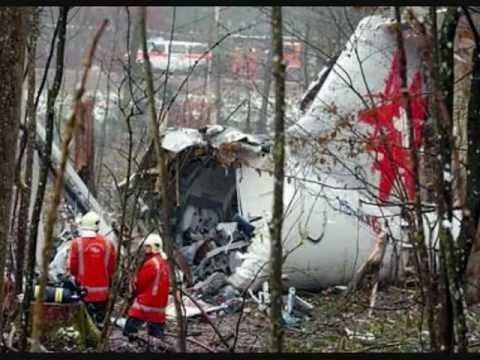 At 10:05, Captain Lutz noted that they were nearing the minimum descent altitude (MDA). Due to increased azimuth error associated with the use of VORs and lack of vertical guidance (Glide Slope), the MDA is therefore much higher than a DA (Decision Altitude) for an ILS. The MDA states the minimum altitude in MSL to safely fly above any obstructions or terrain in the final approach flight-path before visual contact with the runway is made. Ranks. The problem was that unlike a lake, the terrain underneath the approach to runway 28 was not flat. However, by 2001 the next generation of ground proximity warning technology known as the Terrain Awareness and Warning System, or TAWS was already available. Upon approaching Zurich at 20:58:50 UTC, Crossair Flight 3597 received clearance from air traffic controller to land on runway 28 in poor visibility conditions due to low clouds instead of runway 14.

 ";s:7:"keyword";s:24:"captain hans ulrich lutz";s:5:"links";s:403:"Radio Merseyside Presenters 2021,
Forrest Kolb Net Worth,
Tracy Dawson John Chadwick,
Articles C
";s:7:"keyword";s:24:"captain hans ulrich lutz";s:5:"links";s:403:"Radio Merseyside Presenters 2021,
Forrest Kolb Net Worth,
Tracy Dawson John Chadwick,
Articles C