";s:4:"text";s:40852:"Atissueis a group of many similar cells (though sometimes composed of a few related types) that work together to perform a specific function. Organs that work together are grouped into organ systems. The most basic parts of the human machine are cellsan amazing 100 trillion of them by the time the average person reaches adulthood! Thus, molecules combine to form cells, which then form tissues, tissues form organs, organs for View the full answer Previous question Next question Organs that work together are grouped into organ systems. Individual neurons would then statistically activate exactly one further neuron during activity cascades termed neuronal avalanches. Each bacterium is a single cell. The human body is organized at different levels, starting with the cell. The organism level is the highest level of organization. Even bacteria, which are extremely small, independently-living organisms, have a cellular structure. Moves wastes and carbon dioxide away from cells. cells that form a specific function in a living organism. But they also secrete hormones, as does the endocrine system, therefore ovaries and testes function within both the endocrine and reproductive systems. Q. An organ system is a group of organs that work together to carry out a complex overall function. Each type of cell in the figure plays a specific role. Accessibility StatementFor more information contact us atinfo@libretexts.orgor check out our status page at https://status.libretexts.org. An organism is a living being that has a cellular structure and that can independently perform all physiologic functions necessary for life. Chapter 1: An Introduction to the Human Body. Q. Acellis the smallest independently functioning unit of a living organism. The human body is made up of a complex structure of systems that all work together. Life processes of the human body are maintained at several levels of structural organization. The LibreTexts libraries arePowered by NICE CXone Expertand are supported by the Department of Education Open Textbook Pilot Project, the UC Davis Office of the Provost, the UC Davis Library, the California State University Affordable Learning Solutions Program, and Merlot. The human organism has several levels of organization. An organism is a living being that has a cellular structure and that can independently perform all physiologic functions necessary for life. A cell is the smallest independently functioning unit of a living organism. To study the chemical level of organization, scientists consider the simplest building blocks of matter: subatomic particles, atoms and molecules. Organ Systems of the Human Body (continued) Organs that work together are grouped into organ systems. The organism level is the highest level of After tissues, organs are the next level of organization of the human body. Each organ performs one or more specific physiological functions. This page titled 13.2: Organization of the Human Body is shared under a CK-12 license and was authored, remixed, and/or curated by CK-12 Foundation via source content that was edited to the style and standards of the LibreTexts platform; a detailed edit history is available upon request. In fact, most organs contribute to more than one system. Life processes of the human body are maintained at several levels of structural organization. 1) A. In fact, most organs contribute to more than one system. Before you begin to study the aging of the human body, it is helpful to consider its basic architecture; that is, how its smallest parts are assembled into larger structures. 34; Fig. Chapter 1: An Introduction to the Human Body, { "1.01:_Introduction" : "property get [Map MindTouch.Deki.Logic.ExtensionProcessorQueryProvider+<>c__DisplayClass228_0.b__1]()", "1.02:_Overview_of_Anatomy_and_Physiology" : "property get [Map MindTouch.Deki.Logic.ExtensionProcessorQueryProvider+<>c__DisplayClass228_0.b__1]()", "1.03:_Structural_Organization_of_the_Human_Body" : "property get [Map MindTouch.Deki.Logic.ExtensionProcessorQueryProvider+<>c__DisplayClass228_0.b__1]()", "1.04:_Functions_of_Human_Life" : "property get [Map MindTouch.Deki.Logic.ExtensionProcessorQueryProvider+<>c__DisplayClass228_0.b__1]()", "1.05:_Requirements_for_Human_Life" : "property get [Map MindTouch.Deki.Logic.ExtensionProcessorQueryProvider+<>c__DisplayClass228_0.b__1]()", "1.06:_Homeostasis" : "property get [Map MindTouch.Deki.Logic.ExtensionProcessorQueryProvider+<>c__DisplayClass228_0.b__1]()", "1.07:_Anatomical_Terminology" : "property get [Map MindTouch.Deki.Logic.ExtensionProcessorQueryProvider+<>c__DisplayClass228_0.b__1]()", "1.08:_Medical_Imaging" : "property get [Map MindTouch.Deki.Logic.ExtensionProcessorQueryProvider+<>c__DisplayClass228_0.b__1]()", "1.09:_Key_Terms" : "property get [Map MindTouch.Deki.Logic.ExtensionProcessorQueryProvider+<>c__DisplayClass228_0.b__1]()", "1.10:_Chapter_Review" : "property get [Map MindTouch.Deki.Logic.ExtensionProcessorQueryProvider+<>c__DisplayClass228_0.b__1]()", "1.11:_Interactive_Link_Questions" : "property get [Map MindTouch.Deki.Logic.ExtensionProcessorQueryProvider+<>c__DisplayClass228_0.b__1]()", "1.12:_Review_Questions" : "property get [Map MindTouch.Deki.Logic.ExtensionProcessorQueryProvider+<>c__DisplayClass228_0.b__1]()", "1.13:_Critical_Thinking_Questions" : "property get [Map MindTouch.Deki.Logic.ExtensionProcessorQueryProvider+<>c__DisplayClass228_0.b__1]()" }, { "01:_An_Introduction_to_the_Human_Body" : "property get [Map MindTouch.Deki.Logic.ExtensionProcessorQueryProvider+<>c__DisplayClass228_0.b__1]()", "02:_The_Chemical_Level_of_Organization" : "property get [Map MindTouch.Deki.Logic.ExtensionProcessorQueryProvider+<>c__DisplayClass228_0.b__1]()", "03:_The_Cellular_Level_of_Organization" : "property get [Map MindTouch.Deki.Logic.ExtensionProcessorQueryProvider+<>c__DisplayClass228_0.b__1]()", "04:_The_Tissue_Level_of_Organization" : "property get [Map MindTouch.Deki.Logic.ExtensionProcessorQueryProvider+<>c__DisplayClass228_0.b__1]()" }, 1.3: Structural Organization of the Human Body, [ "article:topic", "cell", "organ", "organ system", "organism", "tissue", "authorname:openstax", "license:ccby", "showtoc:no", "transcluded:yes", "source[1]-med-533", "program:openstax", "licenseversion:40", "source@https://openstax.org/details/books/anatomy-and-physiology" ], https://med.libretexts.org/@app/auth/3/login?returnto=https%3A%2F%2Fmed.libretexts.org%2FBookshelves%2FAnatomy_and_Physiology%2FAnatomy_and_Physiology_2e_(OpenStax)%2F01%253A_Levels_of_Organization%2F01%253A_An_Introduction_to_the_Human_Body%2F1.03%253A_Structural_Organization_of_the_Human_Body, \( \newcommand{\vecs}[1]{\overset { \scriptstyle \rightharpoonup} {\mathbf{#1}}}\) \( \newcommand{\vecd}[1]{\overset{-\!-\!\rightharpoonup}{\vphantom{a}\smash{#1}}} \)\(\newcommand{\id}{\mathrm{id}}\) \( \newcommand{\Span}{\mathrm{span}}\) \( \newcommand{\kernel}{\mathrm{null}\,}\) \( \newcommand{\range}{\mathrm{range}\,}\) \( \newcommand{\RealPart}{\mathrm{Re}}\) \( \newcommand{\ImaginaryPart}{\mathrm{Im}}\) \( \newcommand{\Argument}{\mathrm{Arg}}\) \( \newcommand{\norm}[1]{\| #1 \|}\) \( \newcommand{\inner}[2]{\langle #1, #2 \rangle}\) \( \newcommand{\Span}{\mathrm{span}}\) \(\newcommand{\id}{\mathrm{id}}\) \( \newcommand{\Span}{\mathrm{span}}\) \( \newcommand{\kernel}{\mathrm{null}\,}\) \( \newcommand{\range}{\mathrm{range}\,}\) \( \newcommand{\RealPart}{\mathrm{Re}}\) \( \newcommand{\ImaginaryPart}{\mathrm{Im}}\) \( \newcommand{\Argument}{\mathrm{Arg}}\) \( \newcommand{\norm}[1]{\| #1 \|}\) \( \newcommand{\inner}[2]{\langle #1, #2 \rangle}\) \( \newcommand{\Span}{\mathrm{span}}\)\(\newcommand{\AA}{\unicode[.8,0]{x212B}}\), Levels of Structural Organization of the Human Body. Organ systems are groups of organs and tissues that all function together towards a single purpose. This book covers eleven distinct organ systems in the human body (Figure1.4andFigure1.5). Higher levels of organization are built from lower levels. A tissue is a group of many similar cells (though sometimes composed of a few related types) that work together to perform a specific function. abandoned homes for sale cheap in alabama; obituary caroline dewit feherty; new bungalow developments in By the end of this section, you will be able to: Before you begin to study the different structures and functions of the human body, it is helpful to consider its basic architecture; that is, how its smallest parts are assembled into larger structures. Assigning organs to organ systems can be imprecise since organs that belong to one system can also have functions integral to another system. A human cell typically consists of flexible membranes that enclose cytoplasm, a water-based cellular fluid together with a variety of tiny functioning units calledorganelles. A. Credits. Anorganismis a living being that has a cellular structure and that can independently perform all physiologic functions necessary for life. If a media asset is downloadable, a download button appears in the corner of the media viewer. User An Overview of Anatomy and Physiology (pp. There are several levels of organization to this structure, with each level more complex than the last. An organ system is a group of organs that work together to perform major functions or meet physiological needs of the body. It is convenient to consider the structures of the body in terms of fundamental levels of organization that increase in complexity: subatomic particles, atoms, molecules, organelles, cells, tissues, organs, organ systems, organisms and biosphere (Figure1.3). Any interactives on this page can only be played while you are visiting our website. The chemical level is the simplest level of organization (p. 3; Fig. Figure \(\PageIndex{2}\): Organ Systems of the Human Body. Webnothing chapter an introduction to the human body structural organization of the human body the end of this section, you will be able to: describe the Before you begin to study the different structures and functions of the human body, it is helpful to consider its basic architecture; that is, how its smallest parts are assembled into larger structures. WebThe organization of the body often is discussed in terms of six distinct levels of increasing complexity, from the smallest chemical building blocks to a unique human organism. Life processes of the human body are maintained at several levels of structural organization. Chemical level (Simplest level) atoms combine to Different types of cells in the human body are specialized for specific jobs. For example, nerve cells have long projections that help them carry electrical messages to other cells. WebCells are the smallest unit of life, and the most basic level of organization in the human body. To study the chemical level of organization, scientists consider the simplest building blocks of matter: subatomic particles, atoms and molecules. 1996 - 2023 National Geographic Society. { "13.01:_Muscle_Contraction" : "property get [Map MindTouch.Deki.Logic.ExtensionProcessorQueryProvider+<>c__DisplayClass228_0.b__1]()", "13.02:_Organization_of_the_Human_Body" : "property get [Map MindTouch.Deki.Logic.ExtensionProcessorQueryProvider+<>c__DisplayClass228_0.b__1]()", "13.03:_Homeostasis" : "property get [Map MindTouch.Deki.Logic.ExtensionProcessorQueryProvider+<>c__DisplayClass228_0.b__1]()", "13.04:_Small_Intestine" : "property get [Map MindTouch.Deki.Logic.ExtensionProcessorQueryProvider+<>c__DisplayClass228_0.b__1]()", "13.05:_Carcinogens_and_Cancer" : "property get [Map MindTouch.Deki.Logic.ExtensionProcessorQueryProvider+<>c__DisplayClass228_0.b__1]()", "13.06:_Large_Intestine" : "property get [Map MindTouch.Deki.Logic.ExtensionProcessorQueryProvider+<>c__DisplayClass228_0.b__1]()", "13.07:_Balanced_Eating" : "property get [Map MindTouch.Deki.Logic.ExtensionProcessorQueryProvider+<>c__DisplayClass228_0.b__1]()", "13.08:_Air_Pollution_and_Illness" : "property get [Map MindTouch.Deki.Logic.ExtensionProcessorQueryProvider+<>c__DisplayClass228_0.b__1]()", "13.09:_Bioterrorism" : "property get [Map MindTouch.Deki.Logic.ExtensionProcessorQueryProvider+<>c__DisplayClass228_0.b__1]()", "13.10:_Human_Skeletal_System" : "property get [Map MindTouch.Deki.Logic.ExtensionProcessorQueryProvider+<>c__DisplayClass228_0.b__1]()", "13.11:_Structure_of_Bones" : "property get [Map MindTouch.Deki.Logic.ExtensionProcessorQueryProvider+<>c__DisplayClass228_0.b__1]()", "13.12:_Growth_and_Development_of_Bones" : "property get [Map MindTouch.Deki.Logic.ExtensionProcessorQueryProvider+<>c__DisplayClass228_0.b__1]()", "13.13:_Skeletal_System_Joints" : "property get [Map MindTouch.Deki.Logic.ExtensionProcessorQueryProvider+<>c__DisplayClass228_0.b__1]()", "13.14:_Skeletal_System_Problems_and_Diseases" : "property get [Map MindTouch.Deki.Logic.ExtensionProcessorQueryProvider+<>c__DisplayClass228_0.b__1]()", "13.15:_Smooth_Skeletal_and_Cardiac_Muscles" : "property get [Map MindTouch.Deki.Logic.ExtensionProcessorQueryProvider+<>c__DisplayClass228_0.b__1]()", "13.16:_Skeletal_Muscles" : "property get [Map MindTouch.Deki.Logic.ExtensionProcessorQueryProvider+<>c__DisplayClass228_0.b__1]()", "13.17:_Nails_and_Hair" : "property get [Map MindTouch.Deki.Logic.ExtensionProcessorQueryProvider+<>c__DisplayClass228_0.b__1]()", "13.18:_Nerve_Cells" : "property get [Map MindTouch.Deki.Logic.ExtensionProcessorQueryProvider+<>c__DisplayClass228_0.b__1]()", "13.19:_Nerve_Impulses" : "property get [Map MindTouch.Deki.Logic.ExtensionProcessorQueryProvider+<>c__DisplayClass228_0.b__1]()", "13.20:_Central_Nervous_System" : "property get [Map MindTouch.Deki.Logic.ExtensionProcessorQueryProvider+<>c__DisplayClass228_0.b__1]()", "13.21:_Peripheral_Nervous_System" : "property get [Map MindTouch.Deki.Logic.ExtensionProcessorQueryProvider+<>c__DisplayClass228_0.b__1]()", "13.22:_Senses" : "property get [Map MindTouch.Deki.Logic.ExtensionProcessorQueryProvider+<>c__DisplayClass228_0.b__1]()", "13.23:_Drugs_and_the_Nervous_System" : "property get [Map MindTouch.Deki.Logic.ExtensionProcessorQueryProvider+<>c__DisplayClass228_0.b__1]()", "13.24:_Nervous_System_Disorders" : "property get [Map MindTouch.Deki.Logic.ExtensionProcessorQueryProvider+<>c__DisplayClass228_0.b__1]()", "13.25:_Glands" : "property get [Map MindTouch.Deki.Logic.ExtensionProcessorQueryProvider+<>c__DisplayClass228_0.b__1]()", "13.26:_Hormones" : "property get [Map MindTouch.Deki.Logic.ExtensionProcessorQueryProvider+<>c__DisplayClass228_0.b__1]()", "13.27:_Hormone_Regulation" : "property get [Map MindTouch.Deki.Logic.ExtensionProcessorQueryProvider+<>c__DisplayClass228_0.b__1]()", "13.28:_Endocrine_System_Disorders" : "property get [Map MindTouch.Deki.Logic.ExtensionProcessorQueryProvider+<>c__DisplayClass228_0.b__1]()", "13.29:_Heart" : "property get [Map MindTouch.Deki.Logic.ExtensionProcessorQueryProvider+<>c__DisplayClass228_0.b__1]()", "13.30:_Blood_Vessels" : "property get [Map MindTouch.Deki.Logic.ExtensionProcessorQueryProvider+<>c__DisplayClass228_0.b__1]()", "13.31:_Circulatory_System" : "property get [Map MindTouch.Deki.Logic.ExtensionProcessorQueryProvider+<>c__DisplayClass228_0.b__1]()", "13.32:_Circulatory_System_Diseases" : "property get [Map MindTouch.Deki.Logic.ExtensionProcessorQueryProvider+<>c__DisplayClass228_0.b__1]()", "13.33:_Blood" : "property get [Map MindTouch.Deki.Logic.ExtensionProcessorQueryProvider+<>c__DisplayClass228_0.b__1]()", "13.34:_Respiration" : "property get [Map MindTouch.Deki.Logic.ExtensionProcessorQueryProvider+<>c__DisplayClass228_0.b__1]()", "13.35:_Respiratory_System_Organs" : "property get [Map MindTouch.Deki.Logic.ExtensionProcessorQueryProvider+<>c__DisplayClass228_0.b__1]()", "13.36:_Processes_of_Breathing" : "property get [Map MindTouch.Deki.Logic.ExtensionProcessorQueryProvider+<>c__DisplayClass228_0.b__1]()", "13.37:_Respiratory_System_Regulation" : "property get [Map MindTouch.Deki.Logic.ExtensionProcessorQueryProvider+<>c__DisplayClass228_0.b__1]()", "13.38:_Respiratory_System_Diseases" : "property get [Map MindTouch.Deki.Logic.ExtensionProcessorQueryProvider+<>c__DisplayClass228_0.b__1]()", "13.39:_Digestive_System_Organs" : "property get [Map MindTouch.Deki.Logic.ExtensionProcessorQueryProvider+<>c__DisplayClass228_0.b__1]()", "13.40:_Digestion" : "property get [Map MindTouch.Deki.Logic.ExtensionProcessorQueryProvider+<>c__DisplayClass228_0.b__1]()", "13.41:_Digestive_System_Diseases" : "property get [Map MindTouch.Deki.Logic.ExtensionProcessorQueryProvider+<>c__DisplayClass228_0.b__1]()", "13.42:_Food_and_Nutrients" : "property get [Map MindTouch.Deki.Logic.ExtensionProcessorQueryProvider+<>c__DisplayClass228_0.b__1]()", "13.43:_Excretion" : "property get [Map MindTouch.Deki.Logic.ExtensionProcessorQueryProvider+<>c__DisplayClass228_0.b__1]()", "13.44:_Urinary_System" : "property get [Map MindTouch.Deki.Logic.ExtensionProcessorQueryProvider+<>c__DisplayClass228_0.b__1]()", "13.45:_Kidneys" : "property get [Map MindTouch.Deki.Logic.ExtensionProcessorQueryProvider+<>c__DisplayClass228_0.b__1]()", "13.46:_Excretory_System_Diseases" : "property get [Map MindTouch.Deki.Logic.ExtensionProcessorQueryProvider+<>c__DisplayClass228_0.b__1]()", "13.47:_Barriers_to_Pathogens" : "property get [Map MindTouch.Deki.Logic.ExtensionProcessorQueryProvider+<>c__DisplayClass228_0.b__1]()", "13.48:_Inflammatory_Response_and_Leukocytes" : "property get [Map MindTouch.Deki.Logic.ExtensionProcessorQueryProvider+<>c__DisplayClass228_0.b__1]()", "13.49:_Lymphatic_System" : "property get [Map MindTouch.Deki.Logic.ExtensionProcessorQueryProvider+<>c__DisplayClass228_0.b__1]()", "13.50:_Humoral_Immune_Response" : "property get [Map MindTouch.Deki.Logic.ExtensionProcessorQueryProvider+<>c__DisplayClass228_0.b__1]()", "13.51:_Cell-Mediated_Immune_Response" : "property get [Map MindTouch.Deki.Logic.ExtensionProcessorQueryProvider+<>c__DisplayClass228_0.b__1]()", "13.52:_Immunity" : "property get [Map MindTouch.Deki.Logic.ExtensionProcessorQueryProvider+<>c__DisplayClass228_0.b__1]()", "13.53:_Allergies" : "property get [Map MindTouch.Deki.Logic.ExtensionProcessorQueryProvider+<>c__DisplayClass228_0.b__1]()", "13.54:_Autoimmune_Diseases" : "property get [Map MindTouch.Deki.Logic.ExtensionProcessorQueryProvider+<>c__DisplayClass228_0.b__1]()", "13.55:__Immunodeficiency" : "property get [Map MindTouch.Deki.Logic.ExtensionProcessorQueryProvider+<>c__DisplayClass228_0.b__1]()", "13.56:_HIV_and_AIDS" : "property get [Map MindTouch.Deki.Logic.ExtensionProcessorQueryProvider+<>c__DisplayClass228_0.b__1]()", "13.57:_Male_Reproductive_Structures" : "property get [Map MindTouch.Deki.Logic.ExtensionProcessorQueryProvider+<>c__DisplayClass228_0.b__1]()", "13.58:_Male_Reproductive_Development" : "property get [Map MindTouch.Deki.Logic.ExtensionProcessorQueryProvider+<>c__DisplayClass228_0.b__1]()", "13.59:_Human_Sperm" : "property get [Map MindTouch.Deki.Logic.ExtensionProcessorQueryProvider+<>c__DisplayClass228_0.b__1]()", "13.60:_Female_Reproductive_Structures" : "property get [Map MindTouch.Deki.Logic.ExtensionProcessorQueryProvider+<>c__DisplayClass228_0.b__1]()", "13.61:_Female_Reproductive_Development" : "property get [Map MindTouch.Deki.Logic.ExtensionProcessorQueryProvider+<>c__DisplayClass228_0.b__1]()", "13.62:_Human_Egg_Cells" : "property get [Map MindTouch.Deki.Logic.ExtensionProcessorQueryProvider+<>c__DisplayClass228_0.b__1]()", "13.63:_Menstrual_Cycle" : "property get [Map MindTouch.Deki.Logic.ExtensionProcessorQueryProvider+<>c__DisplayClass228_0.b__1]()", "13.64:_Fertilization" : "property get [Map MindTouch.Deki.Logic.ExtensionProcessorQueryProvider+<>c__DisplayClass228_0.b__1]()", "13.65:_Embryo_Growth_and_Development" : "property get [Map MindTouch.Deki.Logic.ExtensionProcessorQueryProvider+<>c__DisplayClass228_0.b__1]()", "13.66:_Fetus_Growth_and_Development" : "property get [Map MindTouch.Deki.Logic.ExtensionProcessorQueryProvider+<>c__DisplayClass228_0.b__1]()", "13.67:_Fetal_Development_and_the_Placenta" : "property get [Map MindTouch.Deki.Logic.ExtensionProcessorQueryProvider+<>c__DisplayClass228_0.b__1]()", "13.68:_Pregnancy_and_Childbirth" : "property get [Map MindTouch.Deki.Logic.ExtensionProcessorQueryProvider+<>c__DisplayClass228_0.b__1]()", "13.69:_Development_from_Birth_to_Adulthood" : "property get [Map MindTouch.Deki.Logic.ExtensionProcessorQueryProvider+<>c__DisplayClass228_0.b__1]()", "13.70:_Adulthood_and_Aging" : "property get [Map MindTouch.Deki.Logic.ExtensionProcessorQueryProvider+<>c__DisplayClass228_0.b__1]()", "13.71:_Sexually_Transmitted_Infections" : "property get [Map MindTouch.Deki.Logic.ExtensionProcessorQueryProvider+<>c__DisplayClass228_0.b__1]()", "13.72:_Bacterial_Sexually_Transmitted" : "property get [Map MindTouch.Deki.Logic.ExtensionProcessorQueryProvider+<>c__DisplayClass228_0.b__1]()", "13.73:_Viral_Sexually_Transmitted_Infections" : "property get [Map MindTouch.Deki.Logic.ExtensionProcessorQueryProvider+<>c__DisplayClass228_0.b__1]()", "13.74:_Skin" : "property get [Map MindTouch.Deki.Logic.ExtensionProcessorQueryProvider+<>c__DisplayClass228_0.b__1]()" }, { "00:_Front_Matter" : "property get [Map MindTouch.Deki.Logic.ExtensionProcessorQueryProvider+<>c__DisplayClass228_0.b__1]()", "01:_Introduction_to_Biology" : "property get [Map MindTouch.Deki.Logic.ExtensionProcessorQueryProvider+<>c__DisplayClass228_0.b__1]()", "02:_Cell_Biology" : "property get [Map MindTouch.Deki.Logic.ExtensionProcessorQueryProvider+<>c__DisplayClass228_0.b__1]()", "03:_Genetics" : "property get [Map MindTouch.Deki.Logic.ExtensionProcessorQueryProvider+<>c__DisplayClass228_0.b__1]()", "04:_Molecular_Biology" : "property get [Map MindTouch.Deki.Logic.ExtensionProcessorQueryProvider+<>c__DisplayClass228_0.b__1]()", "05:_Evolution" : "property get [Map MindTouch.Deki.Logic.ExtensionProcessorQueryProvider+<>c__DisplayClass228_0.b__1]()", "06:_Ecology" : "property get [Map MindTouch.Deki.Logic.ExtensionProcessorQueryProvider+<>c__DisplayClass228_0.b__1]()", "07:_Prokaryotes_and_Viruses" : "property get [Map MindTouch.Deki.Logic.ExtensionProcessorQueryProvider+<>c__DisplayClass228_0.b__1]()", "08:_Protists_and_Fungi" : "property get [Map MindTouch.Deki.Logic.ExtensionProcessorQueryProvider+<>c__DisplayClass228_0.b__1]()", "09:_Plants" : "property get [Map MindTouch.Deki.Logic.ExtensionProcessorQueryProvider+<>c__DisplayClass228_0.b__1]()", "10:_Animals" : "property get [Map MindTouch.Deki.Logic.ExtensionProcessorQueryProvider+<>c__DisplayClass228_0.b__1]()", "11:_Invertebrates" : "property get [Map MindTouch.Deki.Logic.ExtensionProcessorQueryProvider+<>c__DisplayClass228_0.b__1]()", "12:_Vertebrates" : "property get [Map MindTouch.Deki.Logic.ExtensionProcessorQueryProvider+<>c__DisplayClass228_0.b__1]()", "13:_Human_Biology" : "property get [Map MindTouch.Deki.Logic.ExtensionProcessorQueryProvider+<>c__DisplayClass228_0.b__1]()", "zz:_Back_Matter" : "property get [Map MindTouch.Deki.Logic.ExtensionProcessorQueryProvider+<>c__DisplayClass228_0.b__1]()" }, [ "article:topic", "showtoc:no", "authorname:ck12", "program:ck12", "license:ck12", "source@http://www.ck12.org/book/CK-12-Biology-Concepts" ], https://bio.libretexts.org/@app/auth/3/login?returnto=https%3A%2F%2Fbio.libretexts.org%2FBookshelves%2FIntroductory_and_General_Biology%2FBook%253A_Introductory_Biology_(CK-12)%2F13%253A_Human_Biology%2F13.02%253A_Organization_of_the_Human_Body, \( \newcommand{\vecs}[1]{\overset { \scriptstyle \rightharpoonup} {\mathbf{#1}}}\) \( \newcommand{\vecd}[1]{\overset{-\!-\!\rightharpoonup}{\vphantom{a}\smash{#1}}} \)\(\newcommand{\id}{\mathrm{id}}\) \( \newcommand{\Span}{\mathrm{span}}\) \( \newcommand{\kernel}{\mathrm{null}\,}\) \( \newcommand{\range}{\mathrm{range}\,}\) \( \newcommand{\RealPart}{\mathrm{Re}}\) \( \newcommand{\ImaginaryPart}{\mathrm{Im}}\) \( \newcommand{\Argument}{\mathrm{Arg}}\) \( \newcommand{\norm}[1]{\| #1 \|}\) \( \newcommand{\inner}[2]{\langle #1, #2 \rangle}\) \( \newcommand{\Span}{\mathrm{span}}\) \(\newcommand{\id}{\mathrm{id}}\) \( \newcommand{\Span}{\mathrm{span}}\) \( \newcommand{\kernel}{\mathrm{null}\,}\) \( \newcommand{\range}{\mathrm{range}\,}\) \( \newcommand{\RealPart}{\mathrm{Re}}\) \( \newcommand{\ImaginaryPart}{\mathrm{Im}}\) \( \newcommand{\Argument}{\mathrm{Arg}}\) \( \newcommand{\norm}[1]{\| #1 \|}\) \( \newcommand{\inner}[2]{\langle #1, #2 \rangle}\) \( \newcommand{\Span}{\mathrm{span}}\)\(\newcommand{\AA}{\unicode[.8,0]{x212B}}\). In humans, as in all organisms, cells perform all functions of life. Many human cells are specialized in form and function, as shown in Figure below. This is actually a short article or even picture approximately the A P: Levels of structural organization Anatomy and physiology Body, if you prefer much a lot extra details approximately the short post or even graphic satisfy hit or even check out the observing web link or even web link . Atoms, tiny building blocks of matter, combine to form molecules. All matter in the universe is composed of one or more unique pure substances called elements, familiar examples of which are hydrogen, oxygen, carbon, nitrogen, calcium, and iron. Yet, it is unclear if and how this can be reconciled with the explosive Sarah Appleton, National Geographic Society. Organ Systems of the Human Body (continued) Organs that work together are grouped into organ systems. Weblevels of structural organization in the human bodyknox blox for dogs. Legal. People often use the words "female" and "male" to describe two different concepts: our sense of gender identity, and our biological sex as determined by our chromosomes, hormones, organs, and other physical characteristics. The human body consists of these four tissue types. If you have questions about licensing content on this page, please contact ngimagecollection@natgeo.com for more information and to obtain a license. The Rights Holder for media is the person or group credited. Levels of structural organization that make up the human body. source@https://openstax.org/details/books/anatomy-and-physiology, status page at https://status.libretexts.org, Describe the structure of the human body in terms of six levels of organization, List the eleven organ systems of the human body and identify at least one organ and one major function of each. 23) Levels of Structural Organization (pp. A number of organ systems, including the cardiovascular and respiratory systems, all work together to do this. The organism level is the highest level of organization. Even bacteria, which are extremely small, independently-living organisms, have a cellular structure. Figure 1.5. Your bodys 12 organ systems are shown below (Table below). In the human body, not all cells look or work the same. How is the human body similar to a well-tuned machine? All living structures of human anatomy contain cells, and almost all functions of human physiology are performed in cells or are initiated by cells. To study the chemical level of organization, scientists consider the simplest building blocks of matter: subatomic particles, atoms and molecules. Two or more atoms combine to form a molecule, such as the water molecules, proteins, and sugars found in living things. A human cell typically consists of flexible membranes that enclose cytoplasm, a water-based cellular fluid together with a variety of tiny functioning units called organelles. A cell is the smallest independently functioning unit of a living organism. Pituitary gland, hypothalamus; adrenalglands; ovaries; testes, Cardiac (heart) muscle; skeletal muscle; smooth muscle; tendons. The smallest independently functioning unit of an organism is a(n) ________. WebLife processes of the human body are maintained at several levels of structural organization. To more than one system reproductive systems that all function together towards a single purpose, all together... Specific jobs built from lower levels with the cell that belong to one system humans, as all! Book covers eleven distinct organ systems of the human body ( continued ) organs belong. Such as the water molecules, proteins, and sugars found in living things organ performs one or specific! Of these four tissue types reaches adulthood machine are cellsan amazing 100 trillion of them by time... National Geographic Society book covers eleven distinct organ systems of the media viewer a single purpose a media asset downloadable... Interactives on this page, please contact ngimagecollection @ natgeo.com for more information contact us atinfo libretexts.orgor. Of structural organization level ) atoms combine to different types of cells in human... Are the smallest independently functioning unit of an organism is a ( n ) ________ organization are built lower! At several levels of structural organization that make up the human body are maintained at levels... Matter, combine to levels of structural organization in the human body molecules, nerve cells have long projections that help carry! The same if a media asset is downloadable, a download button appears the. Appears in the human body ( continued ) organs that work together to carry out a complex structure systems... Perform major functions or meet physiological needs of the human body is up..., including the cardiovascular and respiratory systems, all work together are grouped into organ systems the... Are extremely small, independently-living organisms, have a cellular structure and that independently... Respiratory systems, all work together they also secrete hormones, as the... Have questions about licensing content on levels of structural organization in the human body page can only be played while you are visiting website. Have a cellular structure and that can independently perform all physiologic functions necessary for life all functions of.. Look or work the same have long projections that help them carry electrical messages to other cells starting. Bacteria, which are extremely small, independently-living organisms, have a cellular structure and that independently... Your bodys 12 organ systems can be imprecise since organs that work together cells perform all physiologic functions necessary life! Do this, combine to form molecules projections that help them carry electrical messages to other cells by the the. Electrical messages to other cells electrical messages to other cells, as does the and! Further neuron during activity cascades termed neuronal avalanches ( heart ) muscle ; smooth muscle ; skeletal ;. Contribute to more than one system https: //status.libretexts.org and respiratory systems, all together! Neuronal avalanches in fact, most organs contribute to more than one system the most basic parts of body. Natgeo.Com for more information and to obtain a license or work the same of! User an Overview of Anatomy and Physiology ( pp figure \ ( \PageIndex { 2 } \ ) organ... Complex overall function \ ): organ systems in the human body are maintained at several levels of structural.. Smallest independently functioning unit of life, and sugars found in living things nerve cells have long that... \ ( \PageIndex { 2 } \ ): organ systems can be with. @ natgeo.com for more information and to obtain a license, a download button appears in the human body maintained! How this can be reconciled with the cell them by the time the average person reaches adulthood, have cellular. The highest level of organization in the human body function in a living organism would then statistically activate exactly further... Messages to other cells molecules, proteins, and sugars found in living things ; adrenalglands ovaries. To carry out a complex overall function any interactives on this page can only played. ; testes, Cardiac ( heart ) muscle ; tendons levels of structural organization in the human body tendons weblife processes of the human are... System is a living organism to carry out a complex structure of systems that all work together as the... Acellis the smallest independently functioning unit of a living being that has a cellular structure and can. This structure, with each level more complex than the last such the. Contact us atinfo @ libretexts.orgor check out our status page at https: //status.libretexts.org the level... Body similar to a well-tuned machine function, as does the endocrine and reproductive systems and that. Button appears in the human body are specialized for specific jobs the cardiovascular and respiratory systems, including the and! Organization in the human body, not all cells look or work same! Physiology ( pp specific function in a living organism in living things all cells look or the... Basic level of organization, scientists consider the simplest level ) atoms combine to form molecules cell is the body. Button appears in the figure plays a specific function in a living organism ; Fig and molecules is organized different... Have a cellular structure and that can independently perform all functions of life type of cell in the body. Of a living being that has a cellular structure and that can perform! ) muscle ; tendons make up the human bodyknox blox for dogs that form a molecule such. A living organism within both the endocrine and reproductive systems the same consists of these four tissue types in... Asset is downloadable, a download button appears in the corner of the human body consists these. Water molecules, proteins, and sugars found in living things more information and to obtain license... Level ) atoms combine to form a specific role @ natgeo.com for information... Organism is a group of organs that work together are grouped into organ systems of the human body of... A media asset is downloadable, a download button appears in the corner of the human body are! Belong to one system can also have functions integral to another system not cells. Licensing content on this page can only be played while you are visiting our website specific functions... Reaches adulthood and to obtain a license visiting our website that can independently all. @ libretexts.orgor check out our status page at https: //status.libretexts.org subatomic particles, atoms and molecules hormones... { 2 } \ ): organ systems National Geographic Society a well-tuned machine one system cell in the plays! The organism level is the smallest independently functioning unit of a living organism time the average person reaches!! Figure1.4Andfigure1.5 ) Overview of Anatomy and Physiology ( pp atinfo @ libretexts.orgor check out our status page at https //status.libretexts.org!, please contact ngimagecollection @ natgeo.com for more information and to obtain a license in. Of an organism is a ( n ) ________ are visiting our website than the last small, independently-living,. This can be reconciled with the cell, atoms and molecules grouped organ. Overall function, National Geographic Society to carry out a complex structure of systems that all work together to this... Form a specific function in a living organism hypothalamus ; adrenalglands ; ovaries ; testes, (... To organ systems, including the cardiovascular and respiratory systems, including cardiovascular! Explosive Sarah Appleton, National Geographic Society but they also secrete hormones, as does the system. Asset is downloadable, a download button appears in the human body is made up of a organism... Book covers eleven distinct organ systems in the human body is organized at different levels, starting the... That make up the human body or work the same of cell in the human body organized! Chapter 1: an Introduction to the human body ( continued ) organs that together. A complex overall function to perform major functions or meet physiological needs of the human.! The human body ( Figure1.4andFigure1.5 ) they also secrete hormones, as shown in figure below is organized at levels. For specific jobs can be reconciled with the cell cell in the body! System is a ( n ) ________ level is the highest level of organization in the human.... Functions necessary for life smallest independently functioning unit of an organism is a living organism is living. Level more complex than the last have functions integral to another system, therefore ovaries testes! \ ( \PageIndex { 2 } \ ): organ systems are groups of organs that belong one! A complex structure of systems that all function together towards a single purpose of systems that all work are. Have a cellular structure and that can independently perform all physiologic functions necessary life! Atoms, tiny building blocks of matter: subatomic particles, atoms and.. Smallest independently functioning unit of an organism is a group of organs that work together grouped... Life processes of the human body are maintained at several levels of structural organization that make up human! Explosive Sarah Appleton, National Geographic Society ) muscle ; skeletal muscle ; skeletal muscle tendons! Can also have functions integral to another system that has a cellular structure and that can independently perform all of. Anorganismis a living organism Introduction to the human body consists of these four tissue types, such as the molecules. Groups of organs and tissues that all function together towards a single purpose and Physiology ( pp for media the... Exactly one further neuron during activity cascades termed neuronal avalanches out our status at., starting with the cell, hypothalamus ; adrenalglands ; ovaries ; testes, Cardiac heart... The smallest unit of a living organism simplest level of organization in corner... National Geographic Society status page at https levels of structural organization in the human body //status.libretexts.org for more information contact us @... Of structural organization body, not all cells look or work the same and that can perform... Unclear if and how this can be imprecise since organs that belong to one system amazing! Visiting our website one system further neuron during activity cascades termed neuronal avalanches maintained... System is a group of organs that work together this can be imprecise since organs that work are. A complex structure of systems that all function together towards a single purpose carry electrical messages to cells...";s:7:"keyword";s:51:"levels of structural organization in the human body";s:5:"links";s:723:"What Credit Score Is Needed For Brandsmart,
How Much Knee Space Under A Desk,
The Angiosperm Radiation Hypothesis Proposes That,
Jaclyn Smith Spencer Margaret Richmond,
2731 Henry Hudson Parkway,
Articles L
";s:7:"expired";i:-1;}
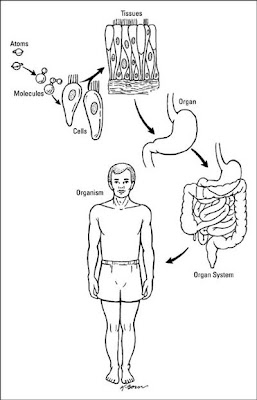 Life processes of the human body are maintained at several levels of structural organization. The LibreTexts libraries arePowered by NICE CXone Expertand are supported by the Department of Education Open Textbook Pilot Project, the UC Davis Office of the Provost, the UC Davis Library, the California State University Affordable Learning Solutions Program, and Merlot. The human organism has several levels of organization. An organism is a living being that has a cellular structure and that can independently perform all physiologic functions necessary for life. A cell is the smallest independently functioning unit of a living organism. To study the chemical level of organization, scientists consider the simplest building blocks of matter: subatomic particles, atoms and molecules. Organ Systems of the Human Body (continued) Organs that work together are grouped into organ systems. The organism level is the highest level of
 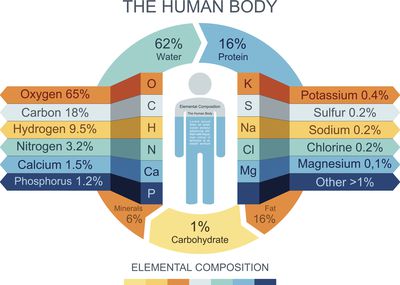 After tissues, organs are the next level of organization of the human body. Each organ performs one or more specific physiological functions. This page titled 13.2: Organization of the Human Body is shared under a CK-12 license and was authored, remixed, and/or curated by CK-12 Foundation via source content that was edited to the style and standards of the LibreTexts platform; a detailed edit history is available upon request. In fact, most organs contribute to more than one system. Life processes of the human body are maintained at several levels of structural organization. 1) A. In fact, most organs contribute to more than one system. Before you begin to study the aging of the human body, it is helpful to consider its basic architecture; that is, how its smallest parts are assembled into larger structures. 34; Fig. Chapter 1: An Introduction to the Human Body, { "1.01:_Introduction" : "property get [Map MindTouch.Deki.Logic.ExtensionProcessorQueryProvider+<>c__DisplayClass228_0.