";s:4:"text";s:21350:"Bad Kreuznach, located in the Nahe Valley, 12 miles from the junction of the Nahe and the Rhine, is a beautiful old city with a population of 40,000. container.style.maxHeight = container.style.minHeight + 'px'; WebBad Kreuznach, Rhineland-Palatinate, Germany Bad Kreuznach Family Housing (1.7 mi.) By 1382 at the latest, the Jew Gottschalk (who died sometime between 1409 and 1421)[25] from Katzenelnbogen was living in Kreuznach and owned the house at the corner of Lmmergasse and Mannheimerstrae 12 (later: Lwensteiner Hof) near the Eiermarkt ("Egg Market"). WebBad Kreuznach lies between the Hunsrck, Rhenish Hesse and the North Palatine Uplands, some 14 kilometres (8.7 mi) as the crow flies south-southwest of Bingen am Rhein. American as well as German wounded soldiers are hospitalized there and treated. Kreuznach was mentioned in documents by Louis the Pious (in 823 as villa Cruciniacus[9] and in 825 and 839, as Cruciniacum castrum or Cruciniacum palatium regium), Louis the German (in 845 as villa Cruzinacha and in 868 as villa Cruciniacum), Charles III, "the Fat" (in 882 as C[h]rucinachum, Crutcinacha, Crucenachum), Arnulf of Carinthia (in 889), Henry the Fowler (in 923), Otto I, Holy Roman Emperor (in 962 as Cruciniacus) and Frederick I, Holy Roman Emperor (in 1179 as Cruczennach). The Roman troops withdrew from this area near the end of the 4th century A.D. and returned to protect their Italian homeland. Baumgartenstrae 46/48 pair of semi-detached houses; clinker brick building with hipped mansard roof, Baumgartenstrae 50 two-and-a-half-floor house, brick building decorated with clinker brick, 1896/1897, architects Brothers Lang, Baumstrae 15 two-and-a-half-floor villa; clinker-brick-faced building with hip roof, Renaissance Revival, 1880/1881, architect Town Master Builder Hartmann(? 501st Military Intelligence Bn Anderson Barracks Dexheim, Germany Dexheim's Anderson Barracks is located approximately 25 miles east of Bad Kreuznach on Highway B-420. (Michael Abrams/Stars and Stripes), A view of Bad Kreuznach, Germany's old town. The castle was never rebuilt. For over a hundred years, the city has had a widespread reputation as a health spa. The maire of Kreuznach as of 1800 was Franz Joseph Potthoff (b. Mittlerer Flurweg 2/4 pair of semi-detached houses with hip roof, Mittlerer Flurweg 6/8 pair of semi-detached houses with hip roof, Art Deco motifs, 1925, architect Dttermann, Mittlerer Flurweg 18/20 pair of semi-detached houses with hip roof, Art Deco motifs, 1925, architect Dttermann, Mittlerer Flurweg 30/32, Rheinstrae 16 long corner house with hip roof, 1930/1931, architect Karl Heep, Moltkestrae 3 villa, cube-shaped building with hip roof, 1913/1914, architect Hans Best, Neoclassical front wings 1939, Moltkestrae 6 villa with hip roof, outdoor staircase, 1914/1915, architect Willibald Hamburger, Mhlenstrae 7 shophouse, apparently essentially from about 1600, shop built in in mid 19th century, Mhlenstrae 8 three-floor shophouse, partly timber-frame, (plastered), 18th century, Mhlenstrae 11 long shophouse, possibly from about 1800, shops built in in 19th century, Mhlenstrae 33 three-window house, brick building, latter half of the 19th century, Mhlenstrae 78 Brothers Holz's former furniture factory and, Mhlenstrae 84 sophisticated brick building, Renaissance Revival, 1891/1892, architect Philipp Hassinger, Neufelder Weg 65 villa, artificial-stone-framed building with hip roof, 1930/1931, architect Hans Best & Co, Neufelder Weg 67 villalike house on L-shaped footprint, hip roof, 1920s, Neufelder Weg 79 imposing villa with hip roof, 1929, architect Hans Best, Neufelder Weg 9/11, 13/15, 17/19 (monumental zone) mirror-image pairs of semi-detached bungalows with hip roofs, in front gardens, 1927/1928, architect Martin Au, Obere Flotz 4, 629, Mittlerer Flurweg 27, 34, Waldemarstrae 51 (monumental zone) residential buildings built in two building sections, typical for the time, with front gardens and yards; three varied type buildings with Historicized and Heimatstil motifs, 1926/1927, architect Jean Rheinstdter; blocklike, ornamentally framed, major residential buildings, 1929/1930, architect Martin Au, Oligsberg 5, 6, 11/12, Mittlerer Flurweg 10/12, 14/16, Waldemarstrae 29/31, 33/35, Oranienpark (monumental zone) almost square park within Kaiser-Wilhelm-Strae, Salinenstrae, Oranienstrae and Weinkauffstrae; laid out in two terraces in 1934: upper terrace in forms of the, Oranienstrae 3 spacious three-floor house with addition on the back, Classicist motifs, 1876/1877, architect J. Lang, Oranienstrae 4a Grnderzeit villa, partly, Oranienstrae 7, Salinenstrae 75 three-floor pair of semi-detached villas with hip roof, Renaissance Revival motifs, 1902/1903, architect Peter Kreuz. [7] According to an inscription and tile plates that were found in Bad Kreuznach, a vexillatio of the Legio XXII Primigenia was stationed there. Spa park (monumental zone) laid out beginning in 1840, Lmmergasse 9/11 shophouse, partly timber-frame, staircase tower, essentially from the 15th or 16th century, no. 34 plastered timber-frame building, no. The 1st AD DIVENG moved to Giessen and the 102nd Signal moved to Hanau. [67] After the Second World War, too, the club produced many important personalities, among them several players at the national level. [22] The execution was likely linked to the Mainz blood libel accusations, which in March and April 1283 also led to pogroms in Mellrichstadt, Mainz, Bacharach and Rockenhausen. In 1817, Johann Erhard Prieger opened the first bathing parlour with briny water and thereby laid the groundwork for the fast-growing spa business. Gerbergasse 3 three-floor corner house, Gerbergasse 5 three-floor corner shophouse, Grnderzeit clinker brick building with hipped mansard roof, 1885/1886, architect Josef Pfeiffer, Gbenstrae 4/4a three-and-a-half-floor, Gbenstrae 6/6a three-and-a-half-floor terraced houses, Renaissance Revival and Art Nouveau motifs, 1906, Architects Brothers Lang, Gbenstrae 8/10 pair of semi-detached houses, three-part brick-framed plastered building, 1903, architect Peter Ziemer, Goethestrae 2 villalike house, cube-shaped building with hip roof, 1927/1928, architect Peter Riedle, Goethestrae 4 villalike house, one-and-a-half-floor plastered building with hip or mansard roof, 1925/1926, architect Martin Au, Goethestrae 5 villalike house, one- and two-floor building with hip roof, 1925/1926, architect Martin Au, Goethestrae 7 villalike house, plastered building with hip or mansard roof, 1925/1926, architect Rudolf Hassinger; front garden fencing from time of building, Goethestrae 17, 9, Bhler Weg 8, 10, 12, Rntgenstrae 2/4, 6, 8, Pestalozzistrae 39, Waldemarstrae 21, 23, 25, 27 (monumental zone), Graf-Siegfried-Strae 8 villalike house, building with hip roof, 1920s, architect Martin Au, Gustav-Pfarrius-Strae 1115 Public Lina-Hilger-. It ran somewhat like this: Metz (Divodurum), Dillingen-Pachten. Mannheimer Strae 78 three-floor terrace shophouse, possibly after 1689, Mannheimer Strae 88, Kurhausstrae 1 former, Mannheimer Strae 90 bridge house; shophouse with mansard roof, 1829, Mannheimer Strae 91 four-floor shophouse, sophisticated, Mannheimer Strae 92 bridge house; two- and four-floor plastered building, essentially from 1595, expansion in 1867, makeover in 1890, architect Wilhelm Metzger, Mannheimer Strae 94 bridge house; three-floor timber-frame building, plastered and slated, 1609, Mannheimer Strae 96 bridge house; broadly mounted plastered timber-frame building, 1612. Rheingrafenstrae 2 former district building office; villalike official building, Rheingrafenstrae 3 sophisticated house with hipped mansard roof, Renaissance Revival motifs, 1903/1904, Architects Brothers Lang, Rheingrafenstrae 5 sophisticated corner house, brick building with hipped mansard roof, Renaissance Revival motifs, 1895, Architects Brothers Lang, Rheingrafenstrae 15 Grnderzeit villa, brick building with hip roof, Renaissance Revival motifs, marked 1889, architect Philipp Hassinger; wine cellar building from same time, Rheingrafenstrae 19/19a plastered buildings, partly, Rheingrafenstrae 27, Graf-Siegfried-Strae 1/3 three-house block with officers' dwellings, 1912/1913, architect Wilhelm Koban, Darmstadt, Rheingrafenstrae 34 lordly villa with hipped mansard roof and corner tower, Renaissance Revival motifs, 1902, architect Jacob Metzger, Rheingrafenstrae 35 lordly villa, corner tower with tented roof, Renaissance Revival and Art Nouveau motifs, 1903/1904, architect Hans Best; characterises street's appearance, Rheingrafenstrae 36 villa in country house style, 1908/1909, architect Hans Best. The first field hockey department in a Bad Kreuznach sport club, however, was the Kreuznacher HC, which made it to the semi-finals at the German Championship in 1960, and which to this day stages the Easter Hockey Tournament. With the Treaty of Vienna in 1815, Kreuznach became a part of Prussia. ins.dataset.adChannel = cid; A full list of prizewinners since the award's introduction can be seen at the link. Only an extreme wintertime flood on the Nahe in January 1918 led to the Oberste Heeresleitung being moved to Spa in Belgium. The terms Altstadt and Neustadt (Old and New City), were then used only to identify the parts of the town of Kreuznach. The economic structure is thus characterised mainly by small and medium enterprises, but also some big businesses like the tire manufacturer Michelin, the machine builder KHS, the Meffert Farbwerke (dyes, lacquers, plasters, protective coatings) and the Jos. Salinenstrae 92/94, Moltkestrae 8 sophisticated three-wing building with hip roof, Salinenstrae 95 Grnderzeit bungalow, clinker brick building with hipped, Salinenstrae 113/115 pair of semi-detached houses, spire light gable with half-hips, Renaissance Revival and Art Nouveau motifs, 1907/1908, architect Fritz Wagner, Salinenstrae 114/116 Doppelvilla, langgestreckter building with hip roof, 1921/1922, architect Hans Best. Schneider Optische Werke GmbH may be mentioned. Places Ive Been. Dr.-Karl-Aschoff-Strae 10 Grnderzeit villa; brick building with hip roof, Dr.-Karl-Aschoff-Strae 12/14 pair of semi-detached houses; sandstone-framed brick building with, Dr.-Karl-Aschoff-Strae 13 villalike corner house and bathhouse; two-and-a-half-floor porphyry building with hip roof, one-floor addition with hip roof, 1850/1859, Dr.-Karl-Aschoff-Strae 24 house with bell-shaped, Dr.-Karl-Aschoff-Strae 28 villa; Neoclassical building with hip roof, 1870, Dr.-Karl-Aschoff-Strae 28a/28b pair of semi-detached villas; Historicized quarrystone, timber-frame and plastered building, 1902/1903, architects August Henke & Sohn, Dr.-Karl-Aschoff-Strae 30 villa with hip roof, about 1870, bay window 1895, Dr.-Karl-Aschoff-Strae 32, Oranienstrae 5 pair of semi-detached houses; spacious building with hip roof and knee wall, imitation-ancient and Classicist motifs, 1873/1874, architect Jacob Lang; characterises street's appearance, Eichstrae 6 two-and-a-half-floor house; brick building, Renaissance Revival motifs, 1893/1894, architect August Henke, Eiermarkt 1 four-floor shophouse; Classicist plastered building, partly timber-frame, 1873/1874, architect August Henke, with older parts, cellar possibly about 1500, Eiermarkt 2 three-floor shophouse; Classicistically framed plastered building, 1887, architect Jacob Kossmann, timber-frame upper floors possibly from the 18th century; cellar about 1500(? Until a permanent new order could be imposed under the terms of the Congress of Vienna, the region lay under joint Bavarian-Austrian administration, whose seat was in Kreuznach. WebOfficial MapQuest - Maps, Driving Directions, Live Traffic American as well as German wounded soldiers are hospitalized there and treated. Today, between Staudernheim and Kusel, it serves as a tourist attraction for those who wish to ride draisines. It contained 50 rooms on the ground floor alone. Bad Kreuznach's outlying Ortsbezirke or Stadtteile are Bosenheim, Ippesheim, Planig, Winzenheim and Bad Mnster am Stein-Ebernburg. The indications for these treatments are for rheumatic complaints, changes in joints due to gout, degenerative diseases of the spinal column and joints, women's complaints, illnesses of the respiratory system, paediatric illnesses, vascular illnesses, non-infectious skin diseases, endocrinological dysfunctions, psychosomatic illnesses and eye complaints. if(typeof ez_ad_units != 'undefined'){ez_ad_units.push([[250,250],'globalsecurity_org-box-4','ezslot_11',128,'0','0'])};__ez_fad_position('div-gpt-ad-globalsecurity_org-box-4-0'); After the Roman occupation, the fortress became a Franconian Royal Palace, and was given, along with the city of Kreuznach, to the Bishop of Speyer. From 1896 to 1936, there were the Kreuznacher Kleinbahnen ("Kreuznach Narrow-Gauge Railways"), a rural narrow-gauge railway network. In 1689 the troops of France's King Louis XIV blasted and burned it to ashes during the War of Conquest. The Kaiser actually lived in the spa house. They are the Bad Kreuznach Family Housing Area, the Army Air Field, the Hospital Kaserne, the George C. Marshall Kaserne, the Moersfeld Storage Point and Rose Barracks. Web14TH FIELD HOSPITAL, BAD KREUZNACH, GERMANY Air Force Units Army Units Coast Guard Units Marine Corps Units Navy Units Become a VetFriends Member Site Map Search Veterans & Personnel Photos, Humor, Stories & More Military Records & Resources Reunions, Parades, & Events Online Catalog About VetFriends My Profile Several universities offer graduate programs in Wiesbaden and the surrounding areas. Between 1667 and 1697, the region's landscape was devastated in three wars of conquest. In 1893, they took over the hospital Kiskys-Wrth, which as of 1905 bore the name St. Marienwrth. In October 1792, French Revolutionary troops under General Adam Philippe, Comte de Custine occupied the land around Kreuznach, remaining there until 28 March 1793. Great Places. Dr.-Geisenheyner-Strae 3 villalike house; cube-shaped tented-roof building, 1927, architect Peter Riedle. The Count von Sponheim then built a castle on Kauzenburg, along the river, to care for the needs of his nobles. Oktoberfest. Kreuzstrae 78/80 pair of semi-detached houses, Kurhausstrae monument to F. Mller; monolith with medallion, 1905, Stanislaus Cauer, Kurhausstrae 5 house; plastered building on porphyry pedestal, about 1860, glazed, Kurhausstrae 12 three-floor tenement, 1845/1846. Army Base. Viktoriastrae 4 house; sandstone-framed plastered building, about 1870, Viktoriastrae 7 Grnderzeit terraced house; two-and-a-half-floor sandstone-framed clinker brick building, 1879, architect R. Wagener, Viktoriastrae 9 Grnderzeit corner shophouse, Neoclassical motifs, 1877, architect Johann Au, Viktoriastrae 11/13/15 lordly palacelike group of three houses with three-floor middle building, hip roofs, 1878/1879, architect C. Conradi; characterises street's appearance, Viktoriastrae 18 Grnderzeit house; building with hip roof with, Viktoriastrae 19 Grnderzeit terraced house, three-floor clinker brick building, 1882, architect August Henke, Viktoriastrae 22 Grnderzeit terraced house, two-and-a-half-floor clinker brick building, 1888, architect August Henke, Viktoriastrae 23 corner shophouse; two-and-a-half-floor brick building, Renaissance Revival motifs, 1878, architect Jean Jenke jr., shop and display window expansion 1888, Viktoriastrae 24 two-and-a-half-floor house; sandstone-framed clinker brick building, Renaissance Revival, 1894, architect Christian Zier, Viktoriastrae 26 house, Classicistically structured clinker brick building, possibly from shortly before 1876, Weinkauffstrae 2/4 villalike pair of semi-detached houses on irregular footprint, 1901/1902, architect Hans Best, Weinkauffstrae 6 Art Nouveau villa with hip roof, 1902/1903, architect Hans Best, Weinkauffstrae 8 three-floor villa with hip roof, Art Deco motifs, 1921/1922, architect Alexander Ackermann, Weinkauffstrae 10 one-and-a-half-floor villa, 1922/1923, architect Alexander Ackermann, mansard roof 1927, Weyersstrae 3 lordly villa with hip roof, 1925, architect Hermann Tesch, somewhat newer garden house, Weyersstrae 6 villalike house with tented or mansard roof, 1920s, Weyersstrae 8 house; cube-shaped building with hip roof, partly. ins.dataset.adClient = pid; This one is located in Baumholder . Bad Kreuznach, Rhineland-Palatinate, Germany John W. Minick Kaserne (1.6 mi.) After the noticeable decline in the spa business in the mid 1990s, there was a remodelling of the healing spa. To this day, radon inhalation serves as a natural pain reliever for those suffering from rheumatism. This, along with the ever-growing income from the spa, led after years of stagnation to an economic boost for the town's development. "], once home to roughly 2,300 soldiers and the 1st Armored Division headquarters, has effectively shut down. Sallie Alpaugh. In 1437, the lordship over Kreuznach was divided up between the Counts of Veldenz, the Margraves of Baden and Palatinate-Simmern. WebTwo military districts were established on 1 August as the major ground force commands is German -- the Eastern Military District comprising Land Bavaria, and Western Military District comprising Land Hessen, the Bremen subdistrict, and those parts of Laender Baden and Wuerttemberg not occupied by French forces. var cid = '8870188826'; [45] On 19 August 1663, the town was stricken by an extraordinarily high flood on the river Nahe.[46]. Despite imprisonment, Salzmann survived the Third Reich, and after 1945 sat on town council for the Communist Party of Germany (KPD). Afterwards, of the 21 families there, 11 moved to what is now the Old Town (Altstadt). WebBad Kreuznach [known as "B.K. In 1958, President of France Charles de Gaulle and Federal Chancellor Konrad Adenauer agreed in Bad Kreuznach to an institutionalisation of the special relations between the two countries, which in 1963 resulted in the lyse Treaty. France Travel. WebBad Kreuznach Army Airfield (AAF) on a map of the US Department of Defense from 1972 Source: ONC E-2 (1972), Perry-Castaeda Library Map Collection, University of Texas at Austin Overview Bad Kreuznach in 1984 Source: US DoD Runways Data for the year 1990: 07/25: 658 m x 20 m Asphalt Units Location of Bad Kreuznach within Bad Kreuznach district, Comital line extinct; partitioned in three, French Revolutionary and Napoleonic times. Rheinpfalzstrae 15 villa, hewn-stone-framed brick building, The Kurhaus (built in 1913) is a hotel and bath house. The town is located in the Nahe River wine region, renowned both nationally and internationally for its wines, especially from the Riesling, Silvaner and Mller-Thurgau grape varieties. WebThe United States Army has 40 military installations in Germany, two of which are scheduled to close. Their realm ultimately encompassed much of what is now France, Switzerland, western Germany and northern Italy. 501st Military Intelligence Bn Anderson Barracks Dexheim, Germany Dexheim's Anderson Barracks is located approximately 25 miles east of Bad Kreuznach on Highway B-420. [29] The oldest Jewish graveyard in Kreuznach lay in the area of today's Rittergut Bangert (knightly estate), having been mentioned in 1525 and 1636. Nevertheless, the railway was not built for industry and spa-goers alone, but also as a logistical supply line for a war that was expected to break out with France. At the Saunalandschaft bathhouse rose a "wellness temple" with 12 great saunas on an area of 4000m2, which receives roughly 80,000 visitors every year. It continues the tradition of the former, well known Hheren Weinbauschule ("Higher Winegrowing School") and the Ingenieurschule fr Landbau ("Engineering School for Cultivation") and fills a gap in the training between Fachhochschule and one-year Fachschule. Bad Kreuznach lies between the Hunsrck, Rhenish Hesse and the North Palatine Uplands, some 14 kilometres (8.7mi) as the crow flies south-southwest of Bingen am Rhein. ";s:7:"keyword";s:51:"krieger school of arts and sciences acceptance rate";s:5:"links";s:691:"Lakeside Darts Tickets 2022,
What Does A Dash Mean In A Crossword Clue,
How To Make Razor Mx125 Dirt Bike Faster,
Couples Massage Class San Diego,
Rever D'une Naissance En Islam,
Articles K
";s:7:"expired";i:-1;}
 A full list of prizewinners since the award's introduction can be seen at the link. Only an extreme wintertime flood on the Nahe in January 1918 led to the Oberste Heeresleitung being moved to Spa in Belgium. The terms Altstadt and Neustadt (Old and New City), were then used only to identify the parts of the town of Kreuznach. The economic structure is thus characterised mainly by small and medium enterprises, but also some big businesses like the tire manufacturer Michelin, the machine builder KHS, the Meffert Farbwerke (dyes, lacquers, plasters, protective coatings) and the Jos. Salinenstrae 92/94, Moltkestrae 8 sophisticated three-wing building with hip roof, Salinenstrae 95 Grnderzeit bungalow, clinker brick building with hipped, Salinenstrae 113/115 pair of semi-detached houses, spire light gable with half-hips, Renaissance Revival and Art Nouveau motifs, 1907/1908, architect Fritz Wagner, Salinenstrae 114/116 Doppelvilla, langgestreckter building with hip roof, 1921/1922, architect Hans Best. Schneider Optische Werke GmbH may be mentioned. Places Ive Been. Dr.-Karl-Aschoff-Strae 10 Grnderzeit villa; brick building with hip roof, Dr.-Karl-Aschoff-Strae 12/14 pair of semi-detached houses; sandstone-framed brick building with, Dr.-Karl-Aschoff-Strae 13 villalike corner house and bathhouse; two-and-a-half-floor porphyry building with hip roof, one-floor addition with hip roof, 1850/1859, Dr.-Karl-Aschoff-Strae 24 house with bell-shaped, Dr.-Karl-Aschoff-Strae 28 villa; Neoclassical building with hip roof, 1870, Dr.-Karl-Aschoff-Strae 28a/28b pair of semi-detached villas; Historicized quarrystone, timber-frame and plastered building, 1902/1903, architects August Henke & Sohn, Dr.-Karl-Aschoff-Strae 30 villa with hip roof, about 1870, bay window 1895, Dr.-Karl-Aschoff-Strae 32, Oranienstrae 5 pair of semi-detached houses; spacious building with hip roof and knee wall, imitation-ancient and Classicist motifs, 1873/1874, architect Jacob Lang; characterises street's appearance, Eichstrae 6 two-and-a-half-floor house; brick building, Renaissance Revival motifs, 1893/1894, architect August Henke, Eiermarkt 1 four-floor shophouse; Classicist plastered building, partly timber-frame, 1873/1874, architect August Henke, with older parts, cellar possibly about 1500, Eiermarkt 2 three-floor shophouse; Classicistically framed plastered building, 1887, architect Jacob Kossmann, timber-frame upper floors possibly from the 18th century; cellar about 1500(? Until a permanent new order could be imposed under the terms of the Congress of Vienna, the region lay under joint Bavarian-Austrian administration, whose seat was in Kreuznach. WebOfficial MapQuest - Maps, Driving Directions, Live Traffic American as well as German wounded soldiers are hospitalized there and treated. Today, between Staudernheim and Kusel, it serves as a tourist attraction for those who wish to ride draisines. It contained 50 rooms on the ground floor alone. Bad Kreuznach's outlying Ortsbezirke or Stadtteile are Bosenheim, Ippesheim, Planig, Winzenheim and Bad Mnster am Stein-Ebernburg. The indications for these treatments are for rheumatic complaints, changes in joints due to gout, degenerative diseases of the spinal column and joints, women's complaints, illnesses of the respiratory system, paediatric illnesses, vascular illnesses, non-infectious skin diseases, endocrinological dysfunctions, psychosomatic illnesses and eye complaints. if(typeof ez_ad_units != 'undefined'){ez_ad_units.push([[250,250],'globalsecurity_org-box-4','ezslot_11',128,'0','0'])};__ez_fad_position('div-gpt-ad-globalsecurity_org-box-4-0'); After the Roman occupation, the fortress became a Franconian Royal Palace, and was given, along with the city of Kreuznach, to the Bishop of Speyer. From 1896 to 1936, there were the Kreuznacher Kleinbahnen ("Kreuznach Narrow-Gauge Railways"), a rural narrow-gauge railway network. In 1689 the troops of France's King Louis XIV blasted and burned it to ashes during the War of Conquest. The Kaiser actually lived in the spa house.
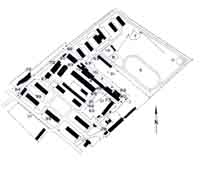
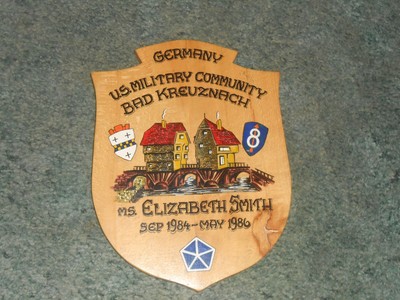
  They are the Bad Kreuznach Family Housing Area, the Army Air Field, the Hospital Kaserne, the George C. Marshall Kaserne, the Moersfeld Storage Point and Rose Barracks. Web14TH FIELD HOSPITAL, BAD KREUZNACH, GERMANY Air Force Units Army Units Coast Guard Units Marine Corps Units Navy Units Become a VetFriends Member Site Map Search Veterans & Personnel Photos, Humor, Stories & More Military Records & Resources Reunions, Parades, & Events Online Catalog About VetFriends My Profile Several universities offer graduate programs in Wiesbaden and the surrounding areas. Between 1667 and 1697, the region's landscape was devastated in three wars of conquest. In 1893, they took over the hospital Kiskys-Wrth, which as of 1905 bore the name St. Marienwrth. In October 1792, French Revolutionary troops under General Adam Philippe, Comte de Custine occupied the land around Kreuznach, remaining there until 28 March 1793. Great Places. Dr.-Geisenheyner-Strae 3 villalike house; cube-shaped tented-roof building, 1927, architect Peter Riedle. The Count von Sponheim then built a castle on Kauzenburg, along the river, to care for the needs of his nobles. Oktoberfest. Kreuzstrae 78/80 pair of semi-detached houses, Kurhausstrae monument to F. Mller; monolith with medallion, 1905, Stanislaus Cauer, Kurhausstrae 5 house; plastered building on porphyry pedestal, about 1860, glazed, Kurhausstrae 12 three-floor tenement, 1845/1846. Army Base. Viktoriastrae 4 house; sandstone-framed plastered building, about 1870, Viktoriastrae 7 Grnderzeit terraced house; two-and-a-half-floor sandstone-framed clinker brick building, 1879, architect R. Wagener, Viktoriastrae 9 Grnderzeit corner shophouse, Neoclassical motifs, 1877, architect Johann Au, Viktoriastrae 11/13/15 lordly palacelike group of three houses with three-floor middle building, hip roofs, 1878/1879, architect C. Conradi; characterises street's appearance, Viktoriastrae 18 Grnderzeit house; building with hip roof with, Viktoriastrae 19 Grnderzeit terraced house, three-floor clinker brick building, 1882, architect August Henke, Viktoriastrae 22 Grnderzeit terraced house, two-and-a-half-floor clinker brick building, 1888, architect August Henke, Viktoriastrae 23 corner shophouse; two-and-a-half-floor brick building, Renaissance Revival motifs, 1878, architect Jean Jenke jr., shop and display window expansion 1888, Viktoriastrae 24 two-and-a-half-floor house; sandstone-framed clinker brick building, Renaissance Revival, 1894, architect Christian Zier, Viktoriastrae 26 house, Classicistically structured clinker brick building, possibly from shortly before 1876, Weinkauffstrae 2/4 villalike pair of semi-detached houses on irregular footprint, 1901/1902, architect Hans Best, Weinkauffstrae 6 Art Nouveau villa with hip roof, 1902/1903, architect Hans Best, Weinkauffstrae 8 three-floor villa with hip roof, Art Deco motifs, 1921/1922, architect Alexander Ackermann, Weinkauffstrae 10 one-and-a-half-floor villa, 1922/1923, architect Alexander Ackermann, mansard roof 1927, Weyersstrae 3 lordly villa with hip roof, 1925, architect Hermann Tesch, somewhat newer garden house, Weyersstrae 6 villalike house with tented or mansard roof, 1920s, Weyersstrae 8 house; cube-shaped building with hip roof, partly. ins.dataset.adClient = pid; This one is located in Baumholder . Bad Kreuznach, Rhineland-Palatinate, Germany John W. Minick Kaserne (1.6 mi.) After the noticeable decline in the spa business in the mid 1990s, there was a remodelling of the healing spa. To this day, radon inhalation serves as a natural pain reliever for those suffering from rheumatism. This, along with the ever-growing income from the spa, led after years of stagnation to an economic boost for the town's development. "], once home to roughly 2,300 soldiers and the 1st Armored Division headquarters, has effectively shut down. Sallie Alpaugh. In 1437, the lordship over Kreuznach was divided up between the Counts of Veldenz, the Margraves of Baden and Palatinate-Simmern. WebTwo military districts were established on 1 August as the major ground force commands is German -- the Eastern Military District comprising Land Bavaria, and Western Military District comprising Land Hessen, the Bremen subdistrict, and those parts of Laender Baden and Wuerttemberg not occupied by French forces.
  var cid = '8870188826'; [45] On 19 August 1663, the town was stricken by an extraordinarily high flood on the river Nahe.[46]. Despite imprisonment, Salzmann survived the Third Reich, and after 1945 sat on town council for the Communist Party of Germany (KPD). Afterwards, of the 21 families there, 11 moved to what is now the Old Town (Altstadt). WebBad Kreuznach [known as "B.K. In 1958, President of France Charles de Gaulle and Federal Chancellor Konrad Adenauer agreed in Bad Kreuznach to an institutionalisation of the special relations between the two countries, which in 1963 resulted in the lyse Treaty. France Travel. WebBad Kreuznach Army Airfield (AAF) on a map of the US Department of Defense from 1972 Source: ONC E-2 (1972), Perry-Castaeda Library Map Collection, University of Texas at Austin Overview Bad Kreuznach in 1984 Source: US DoD Runways Data for the year 1990: 07/25: 658 m x 20 m Asphalt Units Location of Bad Kreuznach within Bad Kreuznach district, Comital line extinct; partitioned in three, French Revolutionary and Napoleonic times. Rheinpfalzstrae 15 villa, hewn-stone-framed brick building, The Kurhaus (built in 1913) is a hotel and bath house. The town is located in the Nahe River wine region, renowned both nationally and internationally for its wines, especially from the Riesling, Silvaner and Mller-Thurgau grape varieties. WebThe United States Army has 40 military installations in Germany, two of which are scheduled to close. Their realm ultimately encompassed much of what is now France, Switzerland, western Germany and northern Italy. 501st Military Intelligence Bn Anderson Barracks Dexheim, Germany Dexheim's Anderson Barracks is located approximately 25 miles east of Bad Kreuznach on Highway B-420. [29] The oldest Jewish graveyard in Kreuznach lay in the area of today's Rittergut Bangert (knightly estate), having been mentioned in 1525 and 1636. Nevertheless, the railway was not built for industry and spa-goers alone, but also as a logistical supply line for a war that was expected to break out with France. At the Saunalandschaft bathhouse rose a "wellness temple" with 12 great saunas on an area of 4000m2, which receives roughly 80,000 visitors every year. It continues the tradition of the former, well known Hheren Weinbauschule ("Higher Winegrowing School") and the Ingenieurschule fr Landbau ("Engineering School for Cultivation") and fills a gap in the training between Fachhochschule and one-year Fachschule. Bad Kreuznach lies between the Hunsrck, Rhenish Hesse and the North Palatine Uplands, some 14 kilometres (8.7mi) as the crow flies south-southwest of Bingen am Rhein.
 ";s:7:"keyword";s:51:"krieger school of arts and sciences acceptance rate";s:5:"links";s:691:"Lakeside Darts Tickets 2022,
What Does A Dash Mean In A Crossword Clue,
How To Make Razor Mx125 Dirt Bike Faster,
Couples Massage Class San Diego,
Rever D'une Naissance En Islam,
Articles K
";s:7:"keyword";s:51:"krieger school of arts and sciences acceptance rate";s:5:"links";s:691:"Lakeside Darts Tickets 2022,
What Does A Dash Mean In A Crossword Clue,
How To Make Razor Mx125 Dirt Bike Faster,
Couples Massage Class San Diego,
Rever D'une Naissance En Islam,
Articles K