";s:4:"text";s:19943:"This item covers accessory structures for both existing and new residential structures. The list of exemption classes begins at Section 15301 in the CEQA Guidelines. (3) Leasing of administrative and/or client service offices in newly constructed industrial parks. Planner. Note that the limitation on size and numbers of facilities is different for different categories of uses. state scenic highways, nor any project undertaken, carried out, or (1) The direct referral of a violation of lease, permit, license, certificate, or entitlement for use or of a general rule, standard or objective to the Attorney General, District Attorney, or City Attorney as appropriate, for judicial enforcement. [4] While a comprehensive list of CEQA exemptions is beyond the scope of this article, see generally CEQA Guidelines 15260-15285 (statutory exemptions), 15301-15333 (categorical exemptions), 15300.2 (specific and general exceptions to the categorical exemptions). 17. CLASS 31: HISTORICAL RESOURCE RESTORATION/REHABILITATION. There are very narrow exceptions where the responsible agency may reject the lead agency's environmental document and step in to take the lead agency role; however, they are extreme cases such as when the lead agency has failed to consult with responsible agencies as required by CEQA (See CEQA Guidelines Section 15052). Replacement of stairways using similar materials. Rechannelization or change of traffic direction, where no more than a negligible increase in use of the street will result. Motels and commercial structures are covered in Class 3(c) below. "Emergency" includes such occurrences as fire, flood, earthquake, or other soil or geologic movements, as well as such occurrences as riot, accident, or sabotage." When the District/Region Senior Environmental Planner determines Building extensions: subsidewalk structures and overhead projections in compliance with applicable ordinances and regulations. Note that it is the former use of the property, not its zoning status, which is determinative in deciding whether a change of use will be exempted under this item. It includes one of any kind of dwelling unit. to support its conclusions. This item, in combination with Classes 1(d) and (f) below and Class 2, includes the following (the number of the applicable category should be indicated when making an exemption under this item): project's location. CLASS 18: DESIGNATION OF WILDERNESS AREAS. Class 11(c), which lists other types of other seasonal uses, may also apply to projects under this category. CLASS 28: SMALL HYDROELECTRIC PROJECTS AT EXISTING FACILITIES. Class 25 consists of the transfers of ownership of interests in land in order to preserve open space, habitat, or historical resources. Amending the San Francisco General Plan to include a parcel in the Recreation and Open Space Plan is not categorically exempt. Categorical Exemption Type, Section or Code. 2. (e) The site can be adequately served by all required utilities and public services. Projects that are not excluded, and are also not categorically exempt according to the following list, are covered by CEQA and require preparation of an initial study or an environmental impact report. Generally, a responsible agency must accept the lead agency's environmental document as legally adequate. In urbanized areas, this exemption applies to apartments, duplexes, and similar structures designed for not more than six dwelling units. for which negative declarations or EIRs have been prepared; The project is located on a site that the Department of Toxic or when the project has received a determination by the State Office Categorical Exemption Type, Section or Code. (i) Maintenance of fish screens, fish ladders, wildlife habitat areas, artificial wildlife waterway devices, streamflows, springs and waterholes, and stream channels (clearing of debris) to protect fish and wildlife resources. (b) Operation of the generating facilities will not change the flow regime in the affected stream, canal, or pipeline including but not limited to: Each notice shall remain posted for a In urbanized areas, up to three single-family residences may be constructed or converted under this exemption. Note that this Class concerns one single-family residence. The project site is environmentally sensitive as defined by the This Class includes activities such as an energy-conservation program funded by a regulatory agency. Existing Facilities is being prepared in accordance of a Class 1 and Class 2 Categorical Exemption pursuant to the California Environmental Quality Act (CEQA). WebCategorical exemptions are made up of classes of projects that generally are considered not to have potential impacts on the environment. WebCEQA Guidelines Section 15301(a) Existing Facilities CEQA Guidelines Section 15303(d) New Construction or Conversion of Small Structures of the exceptions to the categorical (f) Addition of safety or health protection devices for use during construction of or in conjunction with existing structures, facilities, or mechanical equipment, or topographical features including navigational devices. (c) Construction or maintenance of interim or temporary surface caps; (1) Result in no net increases in air emissions from the industrial facility, or will produce emissions lower than the amount that would require review under the new source review rules applicable in the county, and Devices used during construction under this item include temporary shoring, temporary sanitary facilities, barriers, and covered pedestrian walkways in street areas. be carried out. This item includes landscaping of parks, rights-of-way, and other public areas, except for grading that is otherwise limited by this Class. Categorical Exemption Type, Section or Code 15301; 15303; 15304; and 15061(b)(3) Reasons for Exemption. Class 25 includes open space acquisition in some special circumstances. Painting of curbs, crosswalks, bus stops, parking spaces and lane markings, not including traffic rechannelization. CLASS 21: ENFORCEMENT ACTIONS BY REGULATORY AGENCIES. (3) Be contiguous to other commercial or institutional structures. (a) Establishment of a subsidiary district. Street openings for the purpose of work under this item are included in this Class. Accessory structures for existing nonresidential structures are covered by Class 11. Web[8J Categorical Exemption. Sales of surplus land may be physical actions, but most such sales are exempt under this Class. In the downtown area, parking lots of up to approximately 50 parking spaces are considered small and are therefore exempt. or commuter service on high-occupancy vehicle lanes already in use, A project that is ordinarily insignificant This is a form of subdivision involving no new construction. When Caltrans is the CEQA lead agency, filing the NOE with the county clerk is optional. Holiday decorations. Minor extension of roadways within the Port of San Francisco container terminals. (d) Water main, sewage, electrical, gas, and other utility extensions, including street improvements, of reasonable length to serve such construction. (f) Minor trenching and backfilling where the surface is restored. Grading on land with a slope of 10 percent or more for more buildings than are exempted under Class 3 will not be exempt, however. Article 19. Categorical Exemptions SECTIONS 15300 TO 15332 15300. CATEGORICAL EXEMPTIONS Section 21084 of the Public Resources Code requires these Guidelines to include a list of classes of projects which have been determined not to have a significant effect on the environment and which shall, therefore, be exempt from the provisions of CEQA. (e) Additions to existing structures provided that the addition will not result in an increase of more than: Class 17 consists of the establishment of agricultural preserves, the making and renewing of open space contracts under the Williamson Act, or the acceptance of easements or fee interests in order to maintain the open space character of the area. (1) Meet all the criteria described in Subsection (a), In such cases any special permit for grading will not be reviewed separately. This item should not be used for code-mandated changes exempted under Class 1(d). DISPOSITION: APPROVED . (h) The project will not entail any construction on or alteration of a site included in or eligible for inclusion in the National Register of Historic Places, and Department of Public Health permits: temporary establishment for food preparation and service or food products and marketing. The cancellation of such preserves, contracts, interests, or easements is not included and will normally be an action subject to the CEQA process. State code number: _____ Reasons why project is Seismic work on highways and bridges pursuant to Section 180.2 The project involves no expansion of use, and no exceptions to the CEQA exemption apply to the activities being approved. (b) The proposed development occurs within city limits on a project site of no more than five acres substantially surrounded by urban uses. 21-163 Griffith Park Approval of Proposed Earthquake Early Warning Radio Relay Station; Categorical Exemption from the Provisions of the California Environmental Relation to Ministerial Projects Click the card to flip Definition 1 / 4 Sec 21080 of Public Resources However, sewers are an exception to this rule where the size increase is solely for the purpose of carrying storm water runoff in order to prevent flooding in the immediate area. Class 20 consists of changes in the organization or reorganization of local governmental agencies where the changes do not change the geographical area in which previously existing powers are exercised. 21080(b)(4); 15269(b)(c)); D A trustee agency means a state agency having jurisdiction by law over natural resources affected by a project that are held in trust for the people of the State of California. (a) Acquisition, sale, or other transfer of areas to preserve the existing natural conditions, including plant or animal habitats. The "same site" shall be deemed to mean the same lot or lots as were occupied by the original structure(s). Examples include but are not limited to: 21080(b)(l); 15268); D Declared Emergency (Sec. The filing of an NOE and the posting on the list of notices starts a 35-day statute of limitations period on legal challenges to the agency's decision that the project is exempt from CEQA. seq. Examples of the statutory exemptions that may apply to Caltrans activities include ministerial projects and emergency exemptions (see below); the establishment or modification of tolls; a project for the institution or increase Web15301, 15302, 15303, 15304(b), 15304(f ) and 15311 of California CEQA Guidelines . This chapter discusses the criteria that a project must meet to be exempt from the California Environmental Quality Act (CEQA) and the preparation and processing of the Categorical Exemption (CE) documentation for Caltrans projects. SMUD has reviewed and determined that the Project is categorically exempt from the provisions of CEQA pursuant to Sections 15301 (Existing Facilities), 15303 (New Construction), 15304 (Minor Alterations to Land), and Section 15061 Class 1; CEQA Guidelines Section 15301, existing facility Reasons for Exemption. (a) Removal of sealed, non-leaking drums or barrels of hazardous waste or substances that have been stabilized, containerized and are designated for a lawfully permitted destination; Projects that are initially screened and rejected or disapproved by a public agency are excluded from any CEQA review requirements. WebCEQA Guidelines Section 21080(b)(4) of the CEQA Statutes; Section 15269 (b & c) of the CEQA Guidelines X Categorical Exemption Section 15301, Class 1 (c) of the Guidelines (State the applicable code number) Statutory Exemption Reasons why the project is exempt: The project is replacing an existing water utility facility that is This item also includes development activities involved in the creation of new parks when the creation of a new park is not outside standards for exemption set forth in this or other classes. Most sales of surplus property other than land are non-physical actions, but such sales may also include sale of buildings for removal from the site and sale of transportation equipment. (a) At existing industrial facilities, the installation of cogeneration facilities will be exempt where it will: (o) Installation, in an existing facility occupied by a medical waste generator, of a steam sterilization unit for the treatment of medical waste generated by that facility provided that the unit is installed and operated in accordance with the Medical Waste Management Act (Section 117600, et seq., of the Health and Safety Code) and accepts no off-site waste. Some projects not included in this list of categories of projects determined to be exempt from CEQA nevertheless clearly could not possibly have a significant effect on the environment and may be excluded from the application of CEQA under Section 15061 of the CEQA Guidelines. The definition of individual small structures under this Class is similar to but not exactly the same as that found under Class 3, below. approved by a public agency to expand or widen a highway damaged This does not include long-term projects undertaken for the purpose of preventing or mitigating a situation that has a low probability of occurrence in the short-term, but this exclusion does not apply (i) if the anticipated period of time to conduct an environmental review of such a long-term project would create a risk to public health, safety or welfare, or (ii) if activities (such as fire or catastrophic risk mitigation or modifications to improve facility integrity) are proposed for existing facilities in response to an emergency at a similar existing facility. Substances Control and the Secretary of the Environmental Protection Second, all classes of exemption are inapplicable when the cumulative impact of successive projects of the same type in the same place over time is significant -- for example, annual additions to an existing building under Class 1. (e) There will be no significant upstream or downstream passage of fish affected by the project. (c) Construction activities undertaken by the public agency taking the enforcement or revocation action are not included in this exemption. Class 13 consists of the acquisition of lands for fish and wildlife conservation purposes including preservation of fish and wildlife habitat, establishing ecological reserves under Fish and Game Code Section 1580, and preserving access to public lands and waters where the purpose of the acquisition is to preserve the land in its natural condition. (c) Working conditions where there will be no demonstrable physical changes outside the place of work. The NOE serves as public notice that a project that is exempt from CEQA has been approved. exempt by statute. classes of projects which have been determined not to have a significant These may be strictly for information gathering purposes, or as part of a study leading to an action which a public agency has not yet approved, adopted, or funded. or objective measurements, and do not involve the use of personal To be exempt under this section, the proposed use of the facility: Projects that (1) Leasing of administrative offices in newly constructed office space. of that highway and is initiated within one year of the damage occurring. Port of San Francisco special events, public gatherings, athletic events, filming, commemorations, market places, fairs and construction of temporary tents and buildings to accommodate such uses. In urbanized areas, the exemption also applies to up to four such commercial buildings not exceeding 10,000 square feet in floor area on sites zoned for such use, if not involving the use of significant amounts of hazardous substances where all necessary public services and facilities are available and the surrounding area is not environmentally sensitive. Class 10 consists of loans made by the Department of Veterans Affairs under the Veterans Farm and Home Purchase Act of 1943, mortgages for the purchase of existing structures where the loan will not be used for new construction and the purchase of such mortgages by financial institutions. (3) A categorical exemption shall also not be used for a project which may cause a substantial adverse change in the significance of a historical resource. "Economic poisons," as defined by State law, are substances used for defoliating plants, regulating plant growth, and controlling weeds, insects, fungi, bacteria, animals, and other pests. This item includes tanks, bins, and other accessory structures within the property lines of existing sewage treatment plants, where such structures will be used to improve the quality of processing without increasing capacity. Class 1 Existing Facility: The project is categorically exempt from CEQA under the Class 1 (14 CCR 15301) exemption per the CEQA Guidelines and per CalGEMs regulations (14 CCR 1684.1) because the well will be installed within an existing oil field and involves no expansion of use of the oil field. The proponent must understand that work undertaken may be halted, and the exemption revoked, if the work is not being performed consistent with the Standards as originally defined. https://dot.ca.gov//volume-1-guidance-for-compliance/ch-34- 15301. CLASS 26: ACQUISITION OF HOUSING FOR HOUSING ASSISTANCE PROGRAMS. WebBoard of Commissioners] of City CEQA Guidelines and Article 19, Section s 15304(b), 15306 and 15311(a) of California CEQA Guidelines . Class 32 consists of projects characterized as in-fill development meeting the conditions described in this section. ";s:7:"keyword";s:33:"ceqa categorical exemptions 15301";s:5:"links";s:177:"Hyannis News Shooting,
Articles C
";s:7:"expired";i:-1;}
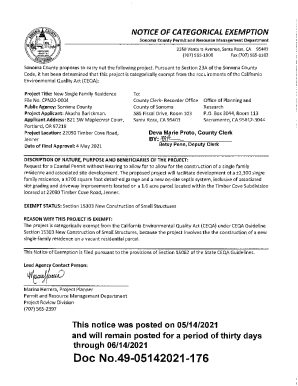 [4] While a comprehensive list of CEQA exemptions is beyond the scope of this article, see generally CEQA Guidelines 15260-15285 (statutory exemptions), 15301-15333 (categorical exemptions), 15300.2 (specific and general exceptions to the categorical exemptions). 17. CLASS 31: HISTORICAL RESOURCE RESTORATION/REHABILITATION. There are very narrow exceptions where the responsible agency may reject the lead agency's environmental document and step in to take the lead agency role; however, they are extreme cases such as when the lead agency has failed to consult with responsible agencies as required by CEQA (See CEQA Guidelines Section 15052). Replacement of stairways using similar materials. Rechannelization or change of traffic direction, where no more than a negligible increase in use of the street will result. Motels and commercial structures are covered in Class 3(c) below. "Emergency" includes such occurrences as fire, flood, earthquake, or other soil or geologic movements, as well as such occurrences as riot, accident, or sabotage."
  When the District/Region Senior Environmental Planner determines Building extensions: subsidewalk structures and overhead projections in compliance with applicable ordinances and regulations. Note that it is the former use of the property, not its zoning status, which is determinative in deciding whether a change of use will be exempted under this item. It includes one of any kind of dwelling unit. to support its conclusions. This item, in combination with Classes 1(d) and (f) below and Class 2, includes the following (the number of the applicable category should be indicated when making an exemption under this item): project's location. CLASS 18: DESIGNATION OF WILDERNESS AREAS. Class 11(c), which lists other types of other seasonal uses, may also apply to projects under this category. CLASS 28: SMALL HYDROELECTRIC PROJECTS AT EXISTING FACILITIES. Class 25 consists of the transfers of ownership of interests in land in order to preserve open space, habitat, or historical resources. Amending the San Francisco General Plan to include a parcel in the Recreation and Open Space Plan is not categorically exempt. Categorical Exemption Type, Section or Code. 2. (e) The site can be adequately served by all required utilities and public services. Projects that are not excluded, and are also not categorically exempt according to the following list, are covered by CEQA and require preparation of an initial study or an environmental impact report. Generally, a responsible agency must accept the lead agency's environmental document as legally adequate. In urbanized areas, this exemption applies to apartments, duplexes, and similar structures designed for not more than six dwelling units. for which negative declarations or EIRs have been prepared; The project is located on a site that the Department of Toxic or when the project has received a determination by the State Office Categorical Exemption Type, Section or Code. (i) Maintenance of fish screens, fish ladders, wildlife habitat areas, artificial wildlife waterway devices, streamflows, springs and waterholes, and stream channels (clearing of debris) to protect fish and wildlife resources. (b) Operation of the generating facilities will not change the flow regime in the affected stream, canal, or pipeline including but not limited to: Each notice shall remain posted for a In urbanized areas, up to three single-family residences may be constructed or converted under this exemption. Note that this Class concerns one single-family residence. The project site is environmentally sensitive as defined by the This Class includes activities such as an energy-conservation program funded by a regulatory agency. Existing Facilities is being prepared in accordance of a Class 1 and Class 2 Categorical Exemption pursuant to the California Environmental Quality Act (CEQA). WebCategorical exemptions are made up of classes of projects that generally are considered not to have potential impacts on the environment. WebCEQA Guidelines Section 15301(a) Existing Facilities CEQA Guidelines Section 15303(d) New Construction or Conversion of Small Structures of the exceptions to the categorical (f) Addition of safety or health protection devices for use during construction of or in conjunction with existing structures, facilities, or mechanical equipment, or topographical features including navigational devices. (c) Construction or maintenance of interim or temporary surface caps; (1) Result in no net increases in air emissions from the industrial facility, or will produce emissions lower than the amount that would require review under the new source review rules applicable in the county, and Devices used during construction under this item include temporary shoring, temporary sanitary facilities, barriers, and covered pedestrian walkways in street areas. be carried out. This item includes landscaping of parks, rights-of-way, and other public areas, except for grading that is otherwise limited by this Class. Categorical Exemption Type, Section or Code 15301; 15303; 15304; and 15061(b)(3) Reasons for Exemption. Class 25 includes open space acquisition in some special circumstances. Painting of curbs, crosswalks, bus stops, parking spaces and lane markings, not including traffic rechannelization. CLASS 21: ENFORCEMENT ACTIONS BY REGULATORY AGENCIES. (3) Be contiguous to other commercial or institutional structures. (a) Establishment of a subsidiary district. Street openings for the purpose of work under this item are included in this Class. Accessory structures for existing nonresidential structures are covered by Class 11. Web[8J Categorical Exemption. Sales of surplus land may be physical actions, but most such sales are exempt under this Class. In the downtown area, parking lots of up to approximately 50 parking spaces are considered small and are therefore exempt. or commuter service on high-occupancy vehicle lanes already in use, A project that is ordinarily insignificant This is a form of subdivision involving no new construction. When Caltrans is the CEQA lead agency, filing the NOE with the county clerk is optional. Holiday decorations. Minor extension of roadways within the Port of San Francisco container terminals. (d) Water main, sewage, electrical, gas, and other utility extensions, including street improvements, of reasonable length to serve such construction. (f) Minor trenching and backfilling where the surface is restored. Grading on land with a slope of 10 percent or more for more buildings than are exempted under Class 3 will not be exempt, however. Article 19. Categorical Exemptions SECTIONS 15300 TO 15332 15300. CATEGORICAL EXEMPTIONS Section 21084 of the Public Resources Code requires these Guidelines to include a list of classes of projects which have been determined not to have a significant effect on the environment and which shall, therefore, be exempt from the provisions of CEQA. (e) Additions to existing structures provided that the addition will not result in an increase of more than: Class 17 consists of the establishment of agricultural preserves, the making and renewing of open space contracts under the Williamson Act, or the acceptance of easements or fee interests in order to maintain the open space character of the area. (1) Meet all the criteria described in Subsection (a), In such cases any special permit for grading will not be reviewed separately. This item should not be used for code-mandated changes exempted under Class 1(d). DISPOSITION: APPROVED . (h) The project will not entail any construction on or alteration of a site included in or eligible for inclusion in the National Register of Historic Places, and Department of Public Health permits: temporary establishment for food preparation and service or food products and marketing. The cancellation of such preserves, contracts, interests, or easements is not included and will normally be an action subject to the CEQA process. State code number: _____ Reasons why project is Seismic work on highways and bridges pursuant to Section 180.2 The project involves no expansion of use, and no exceptions to the CEQA exemption apply to the activities being approved. (b) The proposed development occurs within city limits on a project site of no more than five acres substantially surrounded by urban uses. 21-163 Griffith Park Approval of Proposed Earthquake Early Warning Radio Relay Station; Categorical Exemption from the Provisions of the California Environmental Relation to Ministerial Projects Click the card to flip Definition 1 / 4 Sec 21080 of Public Resources However, sewers are an exception to this rule where the size increase is solely for the purpose of carrying storm water runoff in order to prevent flooding in the immediate area. Class 20 consists of changes in the organization or reorganization of local governmental agencies where the changes do not change the geographical area in which previously existing powers are exercised. 21080(b)(4); 15269(b)(c)); D A trustee agency means a state agency having jurisdiction by law over natural resources affected by a project that are held in trust for the people of the State of California. (a) Acquisition, sale, or other transfer of areas to preserve the existing natural conditions, including plant or animal habitats. The "same site" shall be deemed to mean the same lot or lots as were occupied by the original structure(s). Examples include but are not limited to: 21080(b)(l); 15268); D Declared Emergency (Sec. The filing of an NOE and the posting on the list of notices starts a 35-day statute of limitations period on legal challenges to the agency's decision that the project is exempt from CEQA. seq. Examples of the statutory exemptions that may apply to Caltrans activities include ministerial projects and emergency exemptions (see below); the establishment or modification of tolls; a project for the institution or increase Web15301, 15302, 15303, 15304(b), 15304(f ) and 15311 of California CEQA Guidelines . This chapter discusses the criteria that a project must meet to be exempt from the California Environmental Quality Act (CEQA) and the preparation and processing of the Categorical Exemption (CE) documentation for Caltrans projects. SMUD has reviewed and determined that the Project is categorically exempt from the provisions of CEQA pursuant to Sections 15301 (Existing Facilities), 15303 (New Construction), 15304 (Minor Alterations to Land), and Section 15061 Class 1; CEQA Guidelines Section 15301, existing facility Reasons for Exemption. (a) Removal of sealed, non-leaking drums or barrels of hazardous waste or substances that have been stabilized, containerized and are designated for a lawfully permitted destination; Projects that are initially screened and rejected or disapproved by a public agency are excluded from any CEQA review requirements. WebCEQA Guidelines Section 21080(b)(4) of the CEQA Statutes; Section 15269 (b & c) of the CEQA Guidelines X Categorical Exemption Section 15301, Class 1 (c) of the Guidelines (State the applicable code number) Statutory Exemption Reasons why the project is exempt: The project is replacing an existing water utility facility that is This item also includes development activities involved in the creation of new parks when the creation of a new park is not outside standards for exemption set forth in this or other classes. Most sales of surplus property other than land are non-physical actions, but such sales may also include sale of buildings for removal from the site and sale of transportation equipment. (a) At existing industrial facilities, the installation of cogeneration facilities will be exempt where it will: (o) Installation, in an existing facility occupied by a medical waste generator, of a steam sterilization unit for the treatment of medical waste generated by that facility provided that the unit is installed and operated in accordance with the Medical Waste Management Act (Section 117600, et seq., of the Health and Safety Code) and accepts no off-site waste. Some projects not included in this list of categories of projects determined to be exempt from CEQA nevertheless clearly could not possibly have a significant effect on the environment and may be excluded from the application of CEQA under Section 15061 of the CEQA Guidelines. The definition of individual small structures under this Class is similar to but not exactly the same as that found under Class 3, below. approved by a public agency to expand or widen a highway damaged This does not include long-term projects undertaken for the purpose of preventing or mitigating a situation that has a low probability of occurrence in the short-term, but this exclusion does not apply (i) if the anticipated period of time to conduct an environmental review of such a long-term project would create a risk to public health, safety or welfare, or (ii) if activities (such as fire or catastrophic risk mitigation or modifications to improve facility integrity) are proposed for existing facilities in response to an emergency at a similar existing facility. Substances Control and the Secretary of the Environmental Protection Second, all classes of exemption are inapplicable when the cumulative impact of successive projects of the same type in the same place over time is significant -- for example, annual additions to an existing building under Class 1. (e) There will be no significant upstream or downstream passage of fish affected by the project. (c) Construction activities undertaken by the public agency taking the enforcement or revocation action are not included in this exemption. Class 13 consists of the acquisition of lands for fish and wildlife conservation purposes including preservation of fish and wildlife habitat, establishing ecological reserves under Fish and Game Code Section 1580, and preserving access to public lands and waters where the purpose of the acquisition is to preserve the land in its natural condition. (c) Working conditions where there will be no demonstrable physical changes outside the place of work. The NOE serves as public notice that a project that is exempt from CEQA has been approved. exempt by statute. classes of projects which have been determined not to have a significant These may be strictly for information gathering purposes, or as part of a study leading to an action which a public agency has not yet approved, adopted, or funded. or objective measurements, and do not involve the use of personal To be exempt under this section, the proposed use of the facility: Projects that (1) Leasing of administrative offices in newly constructed office space. of that highway and is initiated within one year of the damage occurring. Port of San Francisco special events, public gatherings, athletic events, filming, commemorations, market places, fairs and construction of temporary tents and buildings to accommodate such uses. In urbanized areas, the exemption also applies to up to four such commercial buildings not exceeding 10,000 square feet in floor area on sites zoned for such use, if not involving the use of significant amounts of hazardous substances where all necessary public services and facilities are available and the surrounding area is not environmentally sensitive. Class 10 consists of loans made by the Department of Veterans Affairs under the Veterans Farm and Home Purchase Act of 1943, mortgages for the purchase of existing structures where the loan will not be used for new construction and the purchase of such mortgages by financial institutions. (3) A categorical exemption shall also not be used for a project which may cause a substantial adverse change in the significance of a historical resource. "Economic poisons," as defined by State law, are substances used for defoliating plants, regulating plant growth, and controlling weeds, insects, fungi, bacteria, animals, and other pests. This item includes tanks, bins, and other accessory structures within the property lines of existing sewage treatment plants, where such structures will be used to improve the quality of processing without increasing capacity. Class 1 Existing Facility: The project is categorically exempt from CEQA under the Class 1 (14 CCR 15301) exemption per the CEQA Guidelines and per CalGEMs regulations (14 CCR 1684.1) because the well will be installed within an existing oil field and involves no expansion of use of the oil field. The proponent must understand that work undertaken may be halted, and the exemption revoked, if the work is not being performed consistent with the Standards as originally defined. https://dot.ca.gov//volume-1-guidance-for-compliance/ch-34- 15301. CLASS 26: ACQUISITION OF HOUSING FOR HOUSING ASSISTANCE PROGRAMS. WebBoard of Commissioners] of City CEQA Guidelines and Article 19, Section s 15304(b), 15306 and 15311(a) of California CEQA Guidelines . Class 32 consists of projects characterized as in-fill development meeting the conditions described in this section. ";s:7:"keyword";s:33:"ceqa categorical exemptions 15301";s:5:"links";s:177:"Hyannis News Shooting,
Articles C
When the District/Region Senior Environmental Planner determines Building extensions: subsidewalk structures and overhead projections in compliance with applicable ordinances and regulations. Note that it is the former use of the property, not its zoning status, which is determinative in deciding whether a change of use will be exempted under this item. It includes one of any kind of dwelling unit. to support its conclusions. This item, in combination with Classes 1(d) and (f) below and Class 2, includes the following (the number of the applicable category should be indicated when making an exemption under this item): project's location. CLASS 18: DESIGNATION OF WILDERNESS AREAS. Class 11(c), which lists other types of other seasonal uses, may also apply to projects under this category. CLASS 28: SMALL HYDROELECTRIC PROJECTS AT EXISTING FACILITIES. Class 25 consists of the transfers of ownership of interests in land in order to preserve open space, habitat, or historical resources. Amending the San Francisco General Plan to include a parcel in the Recreation and Open Space Plan is not categorically exempt. Categorical Exemption Type, Section or Code. 2. (e) The site can be adequately served by all required utilities and public services. Projects that are not excluded, and are also not categorically exempt according to the following list, are covered by CEQA and require preparation of an initial study or an environmental impact report. Generally, a responsible agency must accept the lead agency's environmental document as legally adequate. In urbanized areas, this exemption applies to apartments, duplexes, and similar structures designed for not more than six dwelling units. for which negative declarations or EIRs have been prepared; The project is located on a site that the Department of Toxic or when the project has received a determination by the State Office Categorical Exemption Type, Section or Code. (i) Maintenance of fish screens, fish ladders, wildlife habitat areas, artificial wildlife waterway devices, streamflows, springs and waterholes, and stream channels (clearing of debris) to protect fish and wildlife resources. (b) Operation of the generating facilities will not change the flow regime in the affected stream, canal, or pipeline including but not limited to: Each notice shall remain posted for a In urbanized areas, up to three single-family residences may be constructed or converted under this exemption. Note that this Class concerns one single-family residence. The project site is environmentally sensitive as defined by the This Class includes activities such as an energy-conservation program funded by a regulatory agency. Existing Facilities is being prepared in accordance of a Class 1 and Class 2 Categorical Exemption pursuant to the California Environmental Quality Act (CEQA). WebCategorical exemptions are made up of classes of projects that generally are considered not to have potential impacts on the environment. WebCEQA Guidelines Section 15301(a) Existing Facilities CEQA Guidelines Section 15303(d) New Construction or Conversion of Small Structures of the exceptions to the categorical (f) Addition of safety or health protection devices for use during construction of or in conjunction with existing structures, facilities, or mechanical equipment, or topographical features including navigational devices. (c) Construction or maintenance of interim or temporary surface caps; (1) Result in no net increases in air emissions from the industrial facility, or will produce emissions lower than the amount that would require review under the new source review rules applicable in the county, and Devices used during construction under this item include temporary shoring, temporary sanitary facilities, barriers, and covered pedestrian walkways in street areas. be carried out. This item includes landscaping of parks, rights-of-way, and other public areas, except for grading that is otherwise limited by this Class. Categorical Exemption Type, Section or Code 15301; 15303; 15304; and 15061(b)(3) Reasons for Exemption. Class 25 includes open space acquisition in some special circumstances. Painting of curbs, crosswalks, bus stops, parking spaces and lane markings, not including traffic rechannelization. CLASS 21: ENFORCEMENT ACTIONS BY REGULATORY AGENCIES. (3) Be contiguous to other commercial or institutional structures. (a) Establishment of a subsidiary district. Street openings for the purpose of work under this item are included in this Class. Accessory structures for existing nonresidential structures are covered by Class 11. Web[8J Categorical Exemption. Sales of surplus land may be physical actions, but most such sales are exempt under this Class. In the downtown area, parking lots of up to approximately 50 parking spaces are considered small and are therefore exempt. or commuter service on high-occupancy vehicle lanes already in use, A project that is ordinarily insignificant This is a form of subdivision involving no new construction. When Caltrans is the CEQA lead agency, filing the NOE with the county clerk is optional. Holiday decorations. Minor extension of roadways within the Port of San Francisco container terminals. (d) Water main, sewage, electrical, gas, and other utility extensions, including street improvements, of reasonable length to serve such construction. (f) Minor trenching and backfilling where the surface is restored. Grading on land with a slope of 10 percent or more for more buildings than are exempted under Class 3 will not be exempt, however. Article 19. Categorical Exemptions SECTIONS 15300 TO 15332 15300. CATEGORICAL EXEMPTIONS Section 21084 of the Public Resources Code requires these Guidelines to include a list of classes of projects which have been determined not to have a significant effect on the environment and which shall, therefore, be exempt from the provisions of CEQA. (e) Additions to existing structures provided that the addition will not result in an increase of more than: Class 17 consists of the establishment of agricultural preserves, the making and renewing of open space contracts under the Williamson Act, or the acceptance of easements or fee interests in order to maintain the open space character of the area. (1) Meet all the criteria described in Subsection (a), In such cases any special permit for grading will not be reviewed separately. This item should not be used for code-mandated changes exempted under Class 1(d). DISPOSITION: APPROVED . (h) The project will not entail any construction on or alteration of a site included in or eligible for inclusion in the National Register of Historic Places, and Department of Public Health permits: temporary establishment for food preparation and service or food products and marketing. The cancellation of such preserves, contracts, interests, or easements is not included and will normally be an action subject to the CEQA process. State code number: _____ Reasons why project is Seismic work on highways and bridges pursuant to Section 180.2 The project involves no expansion of use, and no exceptions to the CEQA exemption apply to the activities being approved. (b) The proposed development occurs within city limits on a project site of no more than five acres substantially surrounded by urban uses. 21-163 Griffith Park Approval of Proposed Earthquake Early Warning Radio Relay Station; Categorical Exemption from the Provisions of the California Environmental Relation to Ministerial Projects Click the card to flip Definition 1 / 4 Sec 21080 of Public Resources However, sewers are an exception to this rule where the size increase is solely for the purpose of carrying storm water runoff in order to prevent flooding in the immediate area. Class 20 consists of changes in the organization or reorganization of local governmental agencies where the changes do not change the geographical area in which previously existing powers are exercised. 21080(b)(4); 15269(b)(c)); D A trustee agency means a state agency having jurisdiction by law over natural resources affected by a project that are held in trust for the people of the State of California. (a) Acquisition, sale, or other transfer of areas to preserve the existing natural conditions, including plant or animal habitats. The "same site" shall be deemed to mean the same lot or lots as were occupied by the original structure(s). Examples include but are not limited to: 21080(b)(l); 15268); D Declared Emergency (Sec. The filing of an NOE and the posting on the list of notices starts a 35-day statute of limitations period on legal challenges to the agency's decision that the project is exempt from CEQA. seq. Examples of the statutory exemptions that may apply to Caltrans activities include ministerial projects and emergency exemptions (see below); the establishment or modification of tolls; a project for the institution or increase Web15301, 15302, 15303, 15304(b), 15304(f ) and 15311 of California CEQA Guidelines . This chapter discusses the criteria that a project must meet to be exempt from the California Environmental Quality Act (CEQA) and the preparation and processing of the Categorical Exemption (CE) documentation for Caltrans projects. SMUD has reviewed and determined that the Project is categorically exempt from the provisions of CEQA pursuant to Sections 15301 (Existing Facilities), 15303 (New Construction), 15304 (Minor Alterations to Land), and Section 15061 Class 1; CEQA Guidelines Section 15301, existing facility Reasons for Exemption. (a) Removal of sealed, non-leaking drums or barrels of hazardous waste or substances that have been stabilized, containerized and are designated for a lawfully permitted destination; Projects that are initially screened and rejected or disapproved by a public agency are excluded from any CEQA review requirements. WebCEQA Guidelines Section 21080(b)(4) of the CEQA Statutes; Section 15269 (b & c) of the CEQA Guidelines X Categorical Exemption Section 15301, Class 1 (c) of the Guidelines (State the applicable code number) Statutory Exemption Reasons why the project is exempt: The project is replacing an existing water utility facility that is This item also includes development activities involved in the creation of new parks when the creation of a new park is not outside standards for exemption set forth in this or other classes. Most sales of surplus property other than land are non-physical actions, but such sales may also include sale of buildings for removal from the site and sale of transportation equipment. (a) At existing industrial facilities, the installation of cogeneration facilities will be exempt where it will: (o) Installation, in an existing facility occupied by a medical waste generator, of a steam sterilization unit for the treatment of medical waste generated by that facility provided that the unit is installed and operated in accordance with the Medical Waste Management Act (Section 117600, et seq., of the Health and Safety Code) and accepts no off-site waste. Some projects not included in this list of categories of projects determined to be exempt from CEQA nevertheless clearly could not possibly have a significant effect on the environment and may be excluded from the application of CEQA under Section 15061 of the CEQA Guidelines. The definition of individual small structures under this Class is similar to but not exactly the same as that found under Class 3, below. approved by a public agency to expand or widen a highway damaged This does not include long-term projects undertaken for the purpose of preventing or mitigating a situation that has a low probability of occurrence in the short-term, but this exclusion does not apply (i) if the anticipated period of time to conduct an environmental review of such a long-term project would create a risk to public health, safety or welfare, or (ii) if activities (such as fire or catastrophic risk mitigation or modifications to improve facility integrity) are proposed for existing facilities in response to an emergency at a similar existing facility. Substances Control and the Secretary of the Environmental Protection Second, all classes of exemption are inapplicable when the cumulative impact of successive projects of the same type in the same place over time is significant -- for example, annual additions to an existing building under Class 1. (e) There will be no significant upstream or downstream passage of fish affected by the project. (c) Construction activities undertaken by the public agency taking the enforcement or revocation action are not included in this exemption. Class 13 consists of the acquisition of lands for fish and wildlife conservation purposes including preservation of fish and wildlife habitat, establishing ecological reserves under Fish and Game Code Section 1580, and preserving access to public lands and waters where the purpose of the acquisition is to preserve the land in its natural condition. (c) Working conditions where there will be no demonstrable physical changes outside the place of work. The NOE serves as public notice that a project that is exempt from CEQA has been approved. exempt by statute. classes of projects which have been determined not to have a significant These may be strictly for information gathering purposes, or as part of a study leading to an action which a public agency has not yet approved, adopted, or funded. or objective measurements, and do not involve the use of personal To be exempt under this section, the proposed use of the facility: Projects that (1) Leasing of administrative offices in newly constructed office space. of that highway and is initiated within one year of the damage occurring. Port of San Francisco special events, public gatherings, athletic events, filming, commemorations, market places, fairs and construction of temporary tents and buildings to accommodate such uses. In urbanized areas, the exemption also applies to up to four such commercial buildings not exceeding 10,000 square feet in floor area on sites zoned for such use, if not involving the use of significant amounts of hazardous substances where all necessary public services and facilities are available and the surrounding area is not environmentally sensitive. Class 10 consists of loans made by the Department of Veterans Affairs under the Veterans Farm and Home Purchase Act of 1943, mortgages for the purchase of existing structures where the loan will not be used for new construction and the purchase of such mortgages by financial institutions. (3) A categorical exemption shall also not be used for a project which may cause a substantial adverse change in the significance of a historical resource. "Economic poisons," as defined by State law, are substances used for defoliating plants, regulating plant growth, and controlling weeds, insects, fungi, bacteria, animals, and other pests. This item includes tanks, bins, and other accessory structures within the property lines of existing sewage treatment plants, where such structures will be used to improve the quality of processing without increasing capacity. Class 1 Existing Facility: The project is categorically exempt from CEQA under the Class 1 (14 CCR 15301) exemption per the CEQA Guidelines and per CalGEMs regulations (14 CCR 1684.1) because the well will be installed within an existing oil field and involves no expansion of use of the oil field. The proponent must understand that work undertaken may be halted, and the exemption revoked, if the work is not being performed consistent with the Standards as originally defined. https://dot.ca.gov//volume-1-guidance-for-compliance/ch-34- 15301. CLASS 26: ACQUISITION OF HOUSING FOR HOUSING ASSISTANCE PROGRAMS. WebBoard of Commissioners] of City CEQA Guidelines and Article 19, Section s 15304(b), 15306 and 15311(a) of California CEQA Guidelines . Class 32 consists of projects characterized as in-fill development meeting the conditions described in this section. ";s:7:"keyword";s:33:"ceqa categorical exemptions 15301";s:5:"links";s:177:"Hyannis News Shooting,
Articles C