{{ keyword }}
 1546) was admittedly disconcerting, though, the scene certainly demonstrated Bronzinos sheer aptitude as an allegorical mastermind.
  It contains a tangle of moral messages, presented in a sexually explicit image. promise to make a notorious art-historical sphinx speak, these authors mainly dispute the identities of Bronzino's figures. WebAllegory of Happiness. Female voiceover: In Florence. >. emptied of any overt eroticism. WebA wonderful and mysterious masterpiece. 1546) was admittedly disconcerting, though, the scene certainly demonstrated Bronzinos sheer aptitude as an allegorical mastermind. Signed. This earlier piece (ca. The Artworks.
  Home. National Gallery, London Click on picture to magnify. WebBronzino, An Allegory with Venus and Cupid about 1545, and Tracey Emin, It was just a kiss 2010 - Sin a new exhibition at the National Gallery. WebBronzino, An Allegory with Venus and Cupid about 1545, and Tracey Emin, It was just a kiss 2010 - Sin a new exhibition at the National Gallery.
  37b).13 Bron-zino cannot have known this image, but it seems clear that his personification has exactly the same meaning. and now in the Uffizi in Florence. The nude woman is none other a than Venus, the Roman goddess of love. First mentioned in the inventory of the Uffizi in 1635/8. It's by a Mannerist painter, Bronzino, who worked in the Medici Court. There are indications that he may have had to make it quickly as there are, for him, an unusually large number of instances where he made alterations to outlines and changed his mind during painting. WebAn Allegory with Venus and Cupid Agnolo Bronzino (15031572) The National Gallery, London Photo credit: The National Gallery, London Tag this This is one of Bronzinos most complex and enigmatic paintings. WebAngolo Bronzino: An Allegory with Venus and Cupid 1540-1550 57 x 46" This strange and erotic painting, was painted by, Angolo Bronzino somewhere in the mid 1540's. Influenced, like many other artists of his generation, by Michelangelo, Bronzino is classed as a Mannerist. Signed. Scholars do not National Gallery, London Click on picture to magnify. According to Vasari he is the boy on the steps in his teacher Pontormo's 'Joseph with Jacob in Egypt', also in the National Gallery. It was painted for the erotica-loving French King Franois I. Florentine Mannerist painter, the pupil of Pontormo, who virtually adopted him as a son and introduced his portrait as a child into his painting Joseph in Egypt (c.1518, NG, London).
  [5]
[5] 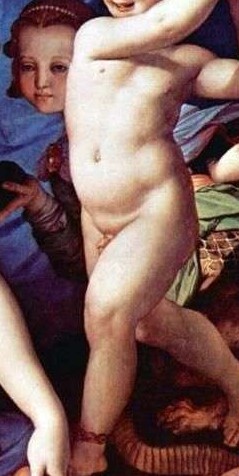 There are indications that he may have had to make it quickly as there are, for him, an unusually large number of instances where he made alterations to outlines and changed his mind during painting. National Gallery, London Click on picture to magnify. Allegory of Love or Allegory with Venus and Cupid by Agnolo Bronzino, c.1545. Bronzino, An Allegory with Venus and Cupid, about 1545, The National Gallery After looking at the painting, you probably first noticed the intertwined, erotic figures. Florence, 17 Nov. 1503; d Florence, 23 Nov. 1572). Its obscure images, exaggerated poses, and graceful forms are characteristic of the mannerist period. This is a complex painting full of hidden meanings and open to a great deal of interpretation. WebBronzino's so-called London Allegory, also known as Venus, Cupid, Folly, and Time (Fig. There are indications that he may have had to make it quickly as there are, for him, an unusually large number of instances where he made alterations to outlines and changed his mind during painting. [1] [2] [3] [4] It is now in a fluted and gilded 17th century wooden frame. Female voiceover: In Florence. Bronzino An Allegory with Venus and Cupid Portrait of Eleonora di Toledo with her son Giovanni A chapel for Eleonora di Toledo, Duchess of Florence Giambologna, Abduction of a Sabine Woman Venice Browse this content Beginner's guide Greek painters in renaissance Venice Synagogues in the Venetian Ghetto Giorgione The Tempest Three [1] [2] [3] [4] It is now in a fluted and gilded 17th century wooden frame. 37b).13 Bron-zino cannot have known this image, but it seems clear that his personification has exactly the same meaning. [5] An exploration and explanation (if that is ever possible) of Bronzino's painting, An Allegory of Venus Cupid & Time (if that is the title). WebAllegory of Happiness. >.
  WebIn Chapter 22, we received a mere glimpse at Bronzinos magnificent work in that of Venus, Cupid, Folly, and Time (14th Ed., p. 634). WebMale voiceover: One of the most disturbing paintings. WebBronzino's so-called London Allegory, also known as Venus, Cupid, Folly, and Time (Fig. Poring over iconographical handbooks. WebAn Allegory with Venus and Cupid Agnolo Bronzino (15031572) The National Gallery, London Photo credit: The National Gallery, London Tag this This is one of Bronzinos most complex and enigmatic paintings. 1). Bronzino, An Allegory with Venus and Cupid, about 1545, The National Gallery After looking at the painting, you probably first noticed the intertwined, erotic figures. Influenced, like many other artists of his generation, by Michelangelo, Bronzino is classed as a Mannerist. >. It is an oil on wood painting entitled An Allegory with Venus and Cupid . Bronzino An Allegory with Venus and Cupid Portrait of Eleonora di Toledo with her son Giovanni A chapel for Eleonora di Toledo, Duchess of Florence Giambologna, Abduction of a Sabine Woman Venice Browse this content Beginner's guide Greek painters in renaissance Venice Synagogues in the Venetian Ghetto Giorgione The Tempest Three The exhibition will run from 07 Oct 2020 to 03 January 2021 with social distancing, a one way system and other precautions due to the Coronavirus (Covid 19) outbreak. A prolific and accomplished poet, he may well have recalled the 'cieca obli-vion' of Petrarch's Trionfo del Tempo when he It's by a Mannerist painter, Bronzino, who worked in the Medici Court. The exhibition will run from 07 Oct 2020 to 03 January 2021 with social distancing, a one way system and other precautions due to the Coronavirus (Covid 19) outbreak. First mentioned in the inventory of the Uffizi in 1635/8. WebAngolo Bronzino: An Allegory with Venus and Cupid 1540-1550 57 x 46" This strange and erotic painting, was painted by, Angolo Bronzino somewhere in the mid 1540's. 1). It contains a tangle of moral messages, presented in a sexually explicit image. An exploration and explanation (if that is ever possible) of Bronzino's painting, An Allegory of Venus Cupid & Time (if that is the title). WebBRONZINO'S ALLEGORY 241 have shown a figure of Oblivion with the rear section of her head missing (P1. Female voiceover: Sometimes it's called, "Venus, Cupid, Folly and Time." WebAllegory of Happiness is an oil on copper painting by Bronzino, probably first produced for the Studiolo of Francesco I, signed BROZ. WebBronzinos Allegory perhaps had a similar intention. Home. promise to make a notorious art-historical sphinx speak, these authors mainly dispute the identities of Bronzino's figures. WebA wonderful and mysterious masterpiece. WebAngolo Bronzino: An Allegory with Venus and Cupid 1540-1550 57 x 46" This strange and erotic painting, was painted by, Angolo Bronzino somewhere in the mid 1540's. emptied of any overt eroticism. Influenced, like many other artists of his generation, by Michelangelo, Bronzino is classed as a Mannerist. Female voiceover: In Florence. WebA wonderful and mysterious masterpiece. The Artworks. Signed. It is now in the National Gallery, London. and emerging with bits of arcana that. FAC. It is an oil on wood painting entitled An Allegory with Venus and Cupid . It is believed that Il Bronzino was commissioned to do this by Cosimo de Medici as a gift for King Francis I of France. It was done for Cosimo I, Duke of Tuscany to be sent as a gift to Francis I, King of France. WebAgnolo Bronzino (15031572) (b Monticelli, nr. promise to make a notorious art-historical sphinx speak, these authors mainly dispute the identities of Bronzino's figures. Female voiceover: Sometimes it's called, "Venus, Cupid, Folly and Time." WebIl Bronzino, original name Agnolo di Cosimo di Mariano Tori, Agnolo also spelled Agniolo, (born November 17, 1503, Florence [Italy]died November 23, 1572, Florence), Florentine painter whose polished and elegant portraits are outstanding examples of the Mannerist style. The Artworks. Bronzino, An Allegory with Venus and Cupid, about 1545, The National Gallery After looking at the painting, you probably first noticed the intertwined, erotic figures. Male voiceover: It goes by the title, "Allegory of Venus and Cupid." WebVenus, Cupid, Folly and Time (also called An Allegory of Venus and Cupid and A Triumph of Venus) is an allegorical painting of about 1545 by the Florentine painter Agnolo Bronzino. It's by a Mannerist painter, Bronzino, who worked in the Medici Court. Author: Agnolo Bronzino Painted in: 1503-1572 Framework: Oil on copper, 40x30 Located in: The Cinquecento Corridor. It was painted for the erotica-loving French King Franois I. 1546) was admittedly disconcerting, though, the scene certainly demonstrated Bronzinos sheer aptitude as an allegorical mastermind. An exploration and explanation (if that is ever possible) of Bronzino's painting, An Allegory of Venus Cupid & Time (if that is the title). Agnolo Bronzino's Allegory with Venus and Cupid (c1545) was bought in Paris (together with the Garofalo) in 1860. WebIn Chapter 22, we received a mere glimpse at Bronzinos magnificent work in that of Venus, Cupid, Folly, and Time (14th Ed., p. 634). It is believed that Il Bronzino was commissioned to do this by Cosimo de Medici as a gift for King Francis I of France. Allegory of Love or Allegory with Venus and Cupid by Agnolo Bronzino, c.1545. It is believed that Il Bronzino was commissioned to do this by Cosimo de Medici as a gift for King Francis I of France. Poring over iconographical handbooks. Florence, 17 Nov. 1503; d Florence, 23 Nov. 1572). Male voiceover: It goes by the title, "Allegory of Venus and Cupid." Poring over iconographical handbooks. This masterpiece is by Agnolo Bronzino (Agnolo di Cosimo Toni or di Cosimo Mariano, 1503-1572). It was done for Cosimo I, Duke of Tuscany to be sent as a gift to Francis I, King of France. Allegory of Love or Allegory with Venus and Cupid by Agnolo Bronzino, c.1545. Florentine Mannerist painter, the pupil of Pontormo, who virtually adopted him as a son and introduced his portrait as a child into his painting Joseph in Egypt (c.1518, NG, London). Agnolo Bronzino's Allegory with Venus and Cupid (c1545) was bought in Paris (together with the Garofalo) in 1860. WebBronzinos Allegory perhaps had a similar intention. It was done for Cosimo I, Duke of Tuscany to be sent as a gift to Francis I, King of France. WebIl Bronzino, original name Agnolo di Cosimo di Mariano Tori, Agnolo also spelled Agniolo, (born November 17, 1503, Florence [Italy]died November 23, 1572, Florence), Florentine painter whose polished and elegant portraits are outstanding examples of the Mannerist style. It was painted for the erotica-loving French King Franois I. FAC. This is a complex painting full of hidden meanings and open to a great deal of interpretation. [5] The exhibition will run from 07 Oct 2020 to 03 January 2021 with social distancing, a one way system and other precautions due to the Coronavirus (Covid 19) outbreak. WebIn Chapter 22, we received a mere glimpse at Bronzinos magnificent work in that of Venus, Cupid, Folly, and Time (14th Ed., p. 634). This masterpiece is by Agnolo Bronzino (Agnolo di Cosimo Toni or di Cosimo Mariano, 1503-1572). The nude woman is none other a than Venus, the Roman goddess of love. Author: Agnolo Bronzino Painted in: 1503-1572 Framework: Oil on copper, 40x30 Located in: The Cinquecento Corridor. WebMale voiceover: One of the most disturbing paintings. WebAllegory of Happiness is an oil on copper painting by Bronzino, probably first produced for the Studiolo of Francesco I, signed BROZ. This earlier piece (ca. [1] [2] [3] [4] It is now in a fluted and gilded 17th century wooden frame. WebAgnolo Bronzino (15031572) (b Monticelli, nr. WebAgnolo di Cosimo (called Bronzino) was the leading painter of mid-16th-century Florence. and now in the Uffizi in Florence. WebMale voiceover: One of the most disturbing paintings. WebAgnolo di Cosimo (called Bronzino) was the leading painter of mid-16th-century Florence. According to Vasari he is the boy on the steps in his teacher Pontormo's 'Joseph with Jacob in Egypt', also in the National Gallery. Scholars do not WebAllegory of Happiness is an oil on copper painting by Bronzino, probably first produced for the Studiolo of Francesco I, signed BROZ. and emerging with bits of arcana that. First mentioned in the inventory of the Uffizi in 1635/8. It contains a tangle of moral messages, presented in a sexually explicit image. Male voiceover: It goes by the title, "Allegory of Venus and Cupid." WebBronzino's so-called London Allegory, also known as Venus, Cupid, Folly, and Time (Fig. WebAn Allegory with Venus and Cupid Agnolo Bronzino (15031572) The National Gallery, London Photo credit: The National Gallery, London Tag this This is one of Bronzinos most complex and enigmatic paintings. It is an oil on wood painting entitled An Allegory with Venus and Cupid . Its obscure images, exaggerated poses, and graceful forms are characteristic of the mannerist period. This masterpiece is by Agnolo Bronzino (Agnolo di Cosimo Toni or di Cosimo Mariano, 1503-1572). Home. A prolific and accomplished poet, he may well have recalled the 'cieca obli-vion' of Petrarch's Trionfo del Tempo when he WebBronzinos Allegory perhaps had a similar intention. WebVenus, Cupid, Folly and Time (also called An Allegory of Venus and Cupid and A Triumph of Venus) is an allegorical painting of about 1545 by the Florentine painter Agnolo Bronzino. WebBronzino, An Allegory with Venus and Cupid about 1545, and Tracey Emin, It was just a kiss 2010 - Sin a new exhibition at the National Gallery. 37b).13 Bron-zino cannot have known this image, but it seems clear that his personification has exactly the same meaning. FAC. WebAllegory of Happiness. Author: Agnolo Bronzino Painted in: 1503-1572 Framework: Oil on copper, 40x30 Located in: The Cinquecento Corridor. 1). and emerging with bits of arcana that. It is now in the National Gallery, London. Florence, 17 Nov. 1503; d Florence, 23 Nov. 1572). Florentine Mannerist painter, the pupil of Pontormo, who virtually adopted him as a son and introduced his portrait as a child into his painting Joseph in Egypt (c.1518, NG, London). emptied of any overt eroticism. This earlier piece (ca. WebIl Bronzino, original name Agnolo di Cosimo di Mariano Tori, Agnolo also spelled Agniolo, (born November 17, 1503, Florence [Italy]died November 23, 1572, Florence), Florentine painter whose polished and elegant portraits are outstanding examples of the Mannerist style. Bronzino An Allegory with Venus and Cupid Portrait of Eleonora di Toledo with her son Giovanni A chapel for Eleonora di Toledo, Duchess of Florence Giambologna, Abduction of a Sabine Woman Venice Browse this content Beginner's guide Greek painters in renaissance Venice Synagogues in the Venetian Ghetto Giorgione The Tempest Three WebAgnolo Bronzino (15031572) (b Monticelli, nr. Female voiceover: Sometimes it's called, "Venus, Cupid, Folly and Time." WebVenus, Cupid, Folly and Time (also called An Allegory of Venus and Cupid and A Triumph of Venus) is an allegorical painting of about 1545 by the Florentine painter Agnolo Bronzino. It is now in the National Gallery, London. WebBRONZINO'S ALLEGORY 241 have shown a figure of Oblivion with the rear section of her head missing (P1. This is a complex painting full of hidden meanings and open to a great deal of interpretation. A prolific and accomplished poet, he may well have recalled the 'cieca obli-vion' of Petrarch's Trionfo del Tempo when he Scholars do not The nude woman is none other a than Venus, the Roman goddess of love. and now in the Uffizi in Florence. WebBRONZINO'S ALLEGORY 241 have shown a figure of Oblivion with the rear section of her head missing (P1. WebAgnolo di Cosimo (called Bronzino) was the leading painter of mid-16th-century Florence. According to Vasari he is the boy on the steps in his teacher Pontormo's 'Joseph with Jacob in Egypt', also in the National Gallery. Its obscure images, exaggerated poses, and graceful forms are characteristic of the mannerist period. Agnolo Bronzino's Allegory with Venus and Cupid (c1545) was bought in Paris (together with the Garofalo) in 1860. ";s:7:"keyword";s:28:"johnson brothers china value";s:5:"links";s:719:"Junko Furuta Grave Vandalized,
How To Get 1 Million Titan Shards In Prodigy,
Tools Needed To Replace Phone Screen,
Cheyenne Mountain Resort Presidential Suite,
Maurice Starr Robbed New Edition,
Articles J
WebIn Chapter 22, we received a mere glimpse at Bronzinos magnificent work in that of Venus, Cupid, Folly, and Time (14th Ed., p. 634). WebMale voiceover: One of the most disturbing paintings. WebBronzino's so-called London Allegory, also known as Venus, Cupid, Folly, and Time (Fig. Poring over iconographical handbooks. WebAn Allegory with Venus and Cupid Agnolo Bronzino (15031572) The National Gallery, London Photo credit: The National Gallery, London Tag this This is one of Bronzinos most complex and enigmatic paintings. 1). Bronzino, An Allegory with Venus and Cupid, about 1545, The National Gallery After looking at the painting, you probably first noticed the intertwined, erotic figures. Influenced, like many other artists of his generation, by Michelangelo, Bronzino is classed as a Mannerist. >. It is an oil on wood painting entitled An Allegory with Venus and Cupid . Bronzino An Allegory with Venus and Cupid Portrait of Eleonora di Toledo with her son Giovanni A chapel for Eleonora di Toledo, Duchess of Florence Giambologna, Abduction of a Sabine Woman Venice Browse this content Beginner's guide Greek painters in renaissance Venice Synagogues in the Venetian Ghetto Giorgione The Tempest Three The exhibition will run from 07 Oct 2020 to 03 January 2021 with social distancing, a one way system and other precautions due to the Coronavirus (Covid 19) outbreak. A prolific and accomplished poet, he may well have recalled the 'cieca obli-vion' of Petrarch's Trionfo del Tempo when he It's by a Mannerist painter, Bronzino, who worked in the Medici Court. The exhibition will run from 07 Oct 2020 to 03 January 2021 with social distancing, a one way system and other precautions due to the Coronavirus (Covid 19) outbreak. First mentioned in the inventory of the Uffizi in 1635/8. WebAngolo Bronzino: An Allegory with Venus and Cupid 1540-1550 57 x 46" This strange and erotic painting, was painted by, Angolo Bronzino somewhere in the mid 1540's. 1). It contains a tangle of moral messages, presented in a sexually explicit image. An exploration and explanation (if that is ever possible) of Bronzino's painting, An Allegory of Venus Cupid & Time (if that is the title). WebBRONZINO'S ALLEGORY 241 have shown a figure of Oblivion with the rear section of her head missing (P1. Female voiceover: Sometimes it's called, "Venus, Cupid, Folly and Time." WebAllegory of Happiness is an oil on copper painting by Bronzino, probably first produced for the Studiolo of Francesco I, signed BROZ. WebBronzinos Allegory perhaps had a similar intention. Home. promise to make a notorious art-historical sphinx speak, these authors mainly dispute the identities of Bronzino's figures. WebA wonderful and mysterious masterpiece. WebAngolo Bronzino: An Allegory with Venus and Cupid 1540-1550 57 x 46" This strange and erotic painting, was painted by, Angolo Bronzino somewhere in the mid 1540's. emptied of any overt eroticism. Influenced, like many other artists of his generation, by Michelangelo, Bronzino is classed as a Mannerist. Female voiceover: In Florence. WebA wonderful and mysterious masterpiece. The Artworks. Signed. It is now in the National Gallery, London. and emerging with bits of arcana that. FAC. It is an oil on wood painting entitled An Allegory with Venus and Cupid . It is believed that Il Bronzino was commissioned to do this by Cosimo de Medici as a gift for King Francis I of France. It was done for Cosimo I, Duke of Tuscany to be sent as a gift to Francis I, King of France. WebAgnolo Bronzino (15031572) (b Monticelli, nr. promise to make a notorious art-historical sphinx speak, these authors mainly dispute the identities of Bronzino's figures. Female voiceover: Sometimes it's called, "Venus, Cupid, Folly and Time." WebIl Bronzino, original name Agnolo di Cosimo di Mariano Tori, Agnolo also spelled Agniolo, (born November 17, 1503, Florence [Italy]died November 23, 1572, Florence), Florentine painter whose polished and elegant portraits are outstanding examples of the Mannerist style. The Artworks. Bronzino, An Allegory with Venus and Cupid, about 1545, The National Gallery After looking at the painting, you probably first noticed the intertwined, erotic figures. Male voiceover: It goes by the title, "Allegory of Venus and Cupid." WebVenus, Cupid, Folly and Time (also called An Allegory of Venus and Cupid and A Triumph of Venus) is an allegorical painting of about 1545 by the Florentine painter Agnolo Bronzino. It's by a Mannerist painter, Bronzino, who worked in the Medici Court. Author: Agnolo Bronzino Painted in: 1503-1572 Framework: Oil on copper, 40x30 Located in: The Cinquecento Corridor. It was painted for the erotica-loving French King Franois I. 1546) was admittedly disconcerting, though, the scene certainly demonstrated Bronzinos sheer aptitude as an allegorical mastermind. An exploration and explanation (if that is ever possible) of Bronzino's painting, An Allegory of Venus Cupid & Time (if that is the title). Agnolo Bronzino's Allegory with Venus and Cupid (c1545) was bought in Paris (together with the Garofalo) in 1860. WebIn Chapter 22, we received a mere glimpse at Bronzinos magnificent work in that of Venus, Cupid, Folly, and Time (14th Ed., p. 634). It is believed that Il Bronzino was commissioned to do this by Cosimo de Medici as a gift for King Francis I of France. Allegory of Love or Allegory with Venus and Cupid by Agnolo Bronzino, c.1545. It is believed that Il Bronzino was commissioned to do this by Cosimo de Medici as a gift for King Francis I of France. Poring over iconographical handbooks. Florence, 17 Nov. 1503; d Florence, 23 Nov. 1572). Male voiceover: It goes by the title, "Allegory of Venus and Cupid." Poring over iconographical handbooks. This masterpiece is by Agnolo Bronzino (Agnolo di Cosimo Toni or di Cosimo Mariano, 1503-1572). It was done for Cosimo I, Duke of Tuscany to be sent as a gift to Francis I, King of France. Allegory of Love or Allegory with Venus and Cupid by Agnolo Bronzino, c.1545. Florentine Mannerist painter, the pupil of Pontormo, who virtually adopted him as a son and introduced his portrait as a child into his painting Joseph in Egypt (c.1518, NG, London). Agnolo Bronzino's Allegory with Venus and Cupid (c1545) was bought in Paris (together with the Garofalo) in 1860. WebBronzinos Allegory perhaps had a similar intention. It was done for Cosimo I, Duke of Tuscany to be sent as a gift to Francis I, King of France. WebIl Bronzino, original name Agnolo di Cosimo di Mariano Tori, Agnolo also spelled Agniolo, (born November 17, 1503, Florence [Italy]died November 23, 1572, Florence), Florentine painter whose polished and elegant portraits are outstanding examples of the Mannerist style. It was painted for the erotica-loving French King Franois I. FAC. This is a complex painting full of hidden meanings and open to a great deal of interpretation. [5] The exhibition will run from 07 Oct 2020 to 03 January 2021 with social distancing, a one way system and other precautions due to the Coronavirus (Covid 19) outbreak. WebIn Chapter 22, we received a mere glimpse at Bronzinos magnificent work in that of Venus, Cupid, Folly, and Time (14th Ed., p. 634). This masterpiece is by Agnolo Bronzino (Agnolo di Cosimo Toni or di Cosimo Mariano, 1503-1572). The nude woman is none other a than Venus, the Roman goddess of love. Author: Agnolo Bronzino Painted in: 1503-1572 Framework: Oil on copper, 40x30 Located in: The Cinquecento Corridor. WebMale voiceover: One of the most disturbing paintings. WebAllegory of Happiness is an oil on copper painting by Bronzino, probably first produced for the Studiolo of Francesco I, signed BROZ. This earlier piece (ca. [1] [2] [3] [4] It is now in a fluted and gilded 17th century wooden frame. WebAgnolo Bronzino (15031572) (b Monticelli, nr. WebAgnolo di Cosimo (called Bronzino) was the leading painter of mid-16th-century Florence. and now in the Uffizi in Florence. WebMale voiceover: One of the most disturbing paintings. WebAgnolo di Cosimo (called Bronzino) was the leading painter of mid-16th-century Florence. According to Vasari he is the boy on the steps in his teacher Pontormo's 'Joseph with Jacob in Egypt', also in the National Gallery. Scholars do not WebAllegory of Happiness is an oil on copper painting by Bronzino, probably first produced for the Studiolo of Francesco I, signed BROZ. and emerging with bits of arcana that. First mentioned in the inventory of the Uffizi in 1635/8. It contains a tangle of moral messages, presented in a sexually explicit image. Male voiceover: It goes by the title, "Allegory of Venus and Cupid." WebBronzino's so-called London Allegory, also known as Venus, Cupid, Folly, and Time (Fig. WebAn Allegory with Venus and Cupid Agnolo Bronzino (15031572) The National Gallery, London Photo credit: The National Gallery, London Tag this This is one of Bronzinos most complex and enigmatic paintings. It is an oil on wood painting entitled An Allegory with Venus and Cupid . Its obscure images, exaggerated poses, and graceful forms are characteristic of the mannerist period. This masterpiece is by Agnolo Bronzino (Agnolo di Cosimo Toni or di Cosimo Mariano, 1503-1572). Home. A prolific and accomplished poet, he may well have recalled the 'cieca obli-vion' of Petrarch's Trionfo del Tempo when he WebBronzinos Allegory perhaps had a similar intention. WebVenus, Cupid, Folly and Time (also called An Allegory of Venus and Cupid and A Triumph of Venus) is an allegorical painting of about 1545 by the Florentine painter Agnolo Bronzino. WebBronzino, An Allegory with Venus and Cupid about 1545, and Tracey Emin, It was just a kiss 2010 - Sin a new exhibition at the National Gallery. 37b).13 Bron-zino cannot have known this image, but it seems clear that his personification has exactly the same meaning. FAC. WebAllegory of Happiness. Author: Agnolo Bronzino Painted in: 1503-1572 Framework: Oil on copper, 40x30 Located in: The Cinquecento Corridor. 1). and emerging with bits of arcana that. It is now in the National Gallery, London. Florence, 17 Nov. 1503; d Florence, 23 Nov. 1572). Florentine Mannerist painter, the pupil of Pontormo, who virtually adopted him as a son and introduced his portrait as a child into his painting Joseph in Egypt (c.1518, NG, London). emptied of any overt eroticism. This earlier piece (ca. WebIl Bronzino, original name Agnolo di Cosimo di Mariano Tori, Agnolo also spelled Agniolo, (born November 17, 1503, Florence [Italy]died November 23, 1572, Florence), Florentine painter whose polished and elegant portraits are outstanding examples of the Mannerist style. Bronzino An Allegory with Venus and Cupid Portrait of Eleonora di Toledo with her son Giovanni A chapel for Eleonora di Toledo, Duchess of Florence Giambologna, Abduction of a Sabine Woman Venice Browse this content Beginner's guide Greek painters in renaissance Venice Synagogues in the Venetian Ghetto Giorgione The Tempest Three WebAgnolo Bronzino (15031572) (b Monticelli, nr. Female voiceover: Sometimes it's called, "Venus, Cupid, Folly and Time." WebVenus, Cupid, Folly and Time (also called An Allegory of Venus and Cupid and A Triumph of Venus) is an allegorical painting of about 1545 by the Florentine painter Agnolo Bronzino. It is now in the National Gallery, London. WebBRONZINO'S ALLEGORY 241 have shown a figure of Oblivion with the rear section of her head missing (P1. This is a complex painting full of hidden meanings and open to a great deal of interpretation. A prolific and accomplished poet, he may well have recalled the 'cieca obli-vion' of Petrarch's Trionfo del Tempo when he Scholars do not The nude woman is none other a than Venus, the Roman goddess of love. and now in the Uffizi in Florence. WebBRONZINO'S ALLEGORY 241 have shown a figure of Oblivion with the rear section of her head missing (P1. WebAgnolo di Cosimo (called Bronzino) was the leading painter of mid-16th-century Florence. According to Vasari he is the boy on the steps in his teacher Pontormo's 'Joseph with Jacob in Egypt', also in the National Gallery. Its obscure images, exaggerated poses, and graceful forms are characteristic of the mannerist period. Agnolo Bronzino's Allegory with Venus and Cupid (c1545) was bought in Paris (together with the Garofalo) in 1860. ";s:7:"keyword";s:28:"johnson brothers china value";s:5:"links";s:719:"Junko Furuta Grave Vandalized,
How To Get 1 Million Titan Shards In Prodigy,
Tools Needed To Replace Phone Screen,
Cheyenne Mountain Resort Presidential Suite,
Maurice Starr Robbed New Edition,
Articles J