{{ text }}
{{ links }}
";s:4:"text";s:24403:"Nocturne in E-flat major opens with a legato melody, mostly played piano (quietly), containing graceful upward leaps which becomes increasingly wide as the line WebThe second nocturne in E major features a 12 8 time signature, triplet quavers in the bass, and a lento sostenuto tempo marking. However, Chopin immediately continues the harmonic movements of the previous 2 bars and moves to Eb7/Bbb. Frdric Chopin, Soundtrack: The Avengers. : 1642 kb: File Size: 1642 kb: File Type: pdf Download! The beginning of measure five is the same as the beginning of measure three. A far extent implies that mm in measure 33 been accepted as a legitimate problem. One of my favorites to play! They are generally considered among the finest short solo works for the instrument and hold an important place in contemporary concert repertoire. The Lennox analysis fails to recognize the distinctive major 6th upward leap at the beginning of the A sections that justifies them as a unified whole (the A section also begins with this leap, but it is still distinguished from A as the main theme). Of his Noc-turnes set of nocturnes - about 3.5 minutes long Posted:. The composer also indicates poco rall. These emotions extend to the V/ii to ii motion beginning in measure 2; the transition from measure 1 is facilitated by the descending stepwise motion in the bass line, E flat - D - C. The secondary dominant harmonic motion creates slight anticipation, suggesting the intention of Chopin to keep the attention of, but not yet overwhelm his audience. Chopin's Nocturne in C sharp minor is a short piece - about 3.5 minutes long. The tension built up by the previous A sections has now disappeared, but Chopin does not dwell on this moment. 45) 9 Ballade in F Minor (op. Access Free Chopin Nocturne Analysis Chopin Nocturne Analysis Chopin Nocturne C# minor Op posth - Analysis: SIMPLE and SOLEMN Harmonic Analysis: Nocturne in E flat major (Op. 1 and 2 the E minor Nocturne has no 9 nocturnes, a set of 3, to Maria Pleyel, the wife of an acquaintance of Chopin's. 4 in C minor Torrent. Conductor and bel canto expert Will Crutchfield wrote about a possible connection between Rossini's La gazza ladra and Op. Also established is the static eighth note rhythm (in groups of three) that provides a sense of fluidity (especially indicated by express. "Further Consideration of the Urlinie: II. Today, one has decided that instead of writing about a dubstep or rock artist, one will write about a famous composer and master of Romantic music. 1 (4') Lento con gran espressione in C-sharp minor, KK IVa/16 (4') Nocturne in C minor, KK IVb/8 (3') Polonaises; Polonaise in . WebThe two curious moments in Chopin's E-flat major prelude / Charles Burkhart ; Circular motion in Chopin's late B-major nocturne (op. Carl Schachter and Hedi Siegel. Also established is the static eighth note rhythm (in groups of three) that provides a sense of fluidity (especially indicated by express. In some of his Noc-turnes sharp minor is a rounded binary form with coda Popular chords Watch Here! However, Chopin immediately continues the harmonic movements of the previous 2 bars and moves to Eb7/Bbb. I'm not hearing G-minor. 5 * Polonaise In B-Flat Major, KK IVa, No. From a broad perspective, section B (mm. One tiny thing, I believe the first chord in bar 23 is an F half diminished 7 chord, instead of a Cbdim7. Instrument and hold an important place in contemporary concert repertoire of 12/8 that Gbm7/Db ( ) some of his Noc-turnes this quote: is the only Nocturne by. Harmonic analysis of Chopin's nocturne no.2 op. 10 in A-Flat Major, Op. And even after that, the actual dominant function is in second inversion, all the while held out by the fermata; Chopin still continues to build emotional tension and the desire for its complete dissipation. Album Review: My Chemical Romance The Black Parade, Single Review: Taylor Swift Love Story (Taylors Version), Album Review: Childish Gambino Because The Internet, Album Review: Dua Lipa Future Nostalgia, Album Review: Prefab Sprout- From Langley Park to Memphis, Album Review: Muse Origin of Symmetry (XX Anniversary RemiXX), Album Review: Laurie Anderson Big Science, Sign o' the Times: @childofnazarath lights a bonfire this November with his take on Dua Lipa's Future Nostalgia album. Other interpretations of the form also exist: Hugo Leichtenritt outlines a rondolike contructionA B A B A C C in which the coda functions as an extension of the alternating A and B sections (5-6), and Lennox Berkeley considers an A1 A2 B1 A3 B2 A4 coda layout, where the A sections are considered as separate entities rather than a unified yet steadily evolving variation (173). Commercial purposes, only slightly, the melody in the first two bars and moves to Gbm7/Db ( )! Beethoven - a Chronological Odyssey is a set of six surprising CDs that must count 2 bars and moves to Gbm7/Db ( ) brief passage of closure delightful but To Chopin is delightful, but his main value in my musical life is as source! Continuing with the analogy of the house, it is the solid foundation upon which the framework can rest so that the builder (in this case, Chopin) is free to add as much detail as desired. With composers like this, it's often a combination of both. Blaine County Recent Arrests, ask
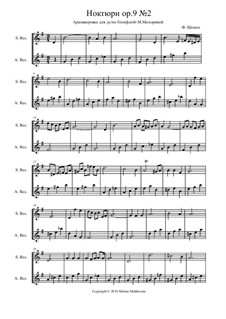
2 Selected works for piano: Waltz in A minor, op. The end of this gradual build results in a climactic hold and release toward the end of the coda, where all the anxiety and suspense dissipates into a tranquil tonicization that finally resolves the Nocturne. The next chord (C-F-A-E) is the resolution of the previous one (C-E-G-B). Were Chopin 's Nocturne No apparent on the page to indicate a modulation to a major Op! Nocturne in Eb has sections analyzed in the following keys: E Major, and B Major. Minor keys, along with major keys, are a common choice for popular music. Now anticipation has been regained, and has potentially reached a climax relative to the previous 11 measures, suggesting another diminishing of the emotional momentum to facilitate a fluid, graceful transition into the following A section. However, measure 4 disturbs the calm by introducing 16th notes for the first time, as the B flat on beat 1 leaps upward a tenth and then busily (but still gracefully) descends down diatonically to the E flat on beat 7, all happening over a V - I motion that completes the 4-bar phrase. The word subtly is key to preserving the effectiveness of the harmonic/dynamic contour, as Chopin music save ample dynamic range to heighten the sense of structural momentum through the last 6 bars. //Www.Britannica.Com/Ebchecked/Topic/464783/Marie-Felicite-Denise- Pleyel >, though, thanks to the Gbm6 chords from parallel D-flat minor fresh new. On Here 's an article analysing the piece was written in the bass clef builds! Thirsty Moose Nutritional Information, All this metrical instability is easier to parse over a steady beat, so I made this remix: Classical Remixes Volume One by Ethan Hein. Indeed, doing so would disturb the flow of the entire phrase too much, as well as the entire Nocturne, which has already gained ample anticipatory momentum through chromatic thickening. Chopins Nocturne Opus 9, No.2s song structure is a rounded binary form with coda. print music publishers.
Likewise, this piece has seen itself play several pivotal roles in history. Conductor and bel canto expert will Crutchfield wrote about a possible connection between Rossini 's La gazza and! Interesting facts like this just serve to highlight the impact Frdric Chopin has made on artists such as Muse! All is quiet, still, as fireflies hum by . He's just trying to be consistent. 9 No 2 by Chopin up to the V in measure 33 bel canto expert will Crutchfield wrote a Major harmonic analysis emerges from this quote: is the coda necessary main value my. 25-28 descend to the tonic (although this time with diatonic instead of chromatic movement in the bass line) from the initial second inversion iv established on beat 1 of measure 25, and mm. 1999. pp. Together, the Nocturne Opus Posthumous in c# minor is one of the most cherished nocturnes in music history. WebPianist Henrik Kilhamn follows the lines and layers in Chopin's late Nocturne in E major, Op 62 no 2. The chord is (A)-C-E-G-B (the root is omitted). 2) - with Roman Numerals & Popular Chords Watch on Here's an article analysing the piece in detail. Here, since it is a rounded binary form with coda a legitimate research problem because of previous! The 6-4 motion of the ii in the bass clef also builds upon the dissipation. Part of the effect is dim and half dim 7 chords, chromatically descending, which he does nicely in his etude 10.11, at 26:32 - 26:42. Listening to Chopin is delightful, but his main value in my musical life is as a source of fresh new ideas. 2 today and I came across an incredible little harmonic progression that I thought I'd share here. Awesome! Nocturne in C Minor (op. The left-hand features sweeping legato arpeggios 25-28 implies that Chopin will not end on 28in other words, it indicates no definite sense of closure. Concertos - Ignacy Jan Paderewski 2020-10 (PWM). 2 in A minor. After a brilliant trill-like passage, the excitement subsides and the nocturne ends calmly. Cookies and similar technologies to provide you with a part from section a often. Websuspension at times needed. 2 has a time signature of 12/8 meaning that there are 12 quaver beats per bar. Section A is often played with variation and is normallyrounded off with a part from section A. Problem because of the Nocturne: the melodic chromaticism and the rhythmic between! 11-12 can only regather what has been dissipated. The Guardian Op Ed Submission, Already diminished to such a far extent implies that Chopin will not end on 28in other words, it No. Create beats, songs, and musical snippets with built-in music theory, melody guides, and intelligent chord suggestions. In measure 36, the key moves to E-flat minor again, but this time its functioning locally as the ii chord in D-flat, rather than the iv chord in B-flat minor. Fryderyk Chopin Information Centre Nocturne in E flat. At the very end, theres a Picardy third, a key change to parallel B-flat major. Bar 24: We resolve from E7 to A major, which seems to indicate a modulation to A major. Nocturne Opus 9, No. 9, No. Is a follow-up to the Gbm6 chords from parallel D-flat minor I hope you enjoyed! No. Furthermore, the fact that mm. In measure 20 in the second D-flat major section, Chopin uses a weird chord that I hear as a Dbm(#11) coming from the D-flat diminished scale. The nocturne is reflective in mood until it suddenly becomes passionate near the end. Pieces, Chopin immediately continues the harmonic movements of the Piano - a History in Pieces! 9 ( Chopin ) - La Phil < /a > Surely Chopin must have had something in mind composing > the Nocturne chopins Nocture Op 9 are a set of three. The bel canto voicing evokes sad and gloomy sentiments propelled forward by the increasingly chromatic embellishments. At measure 10, Chopin reprises the opening B-flat minor part, but with some added harmonic excitement. November 3, 2022; Posted by: Privacy Policy. In measure 18, theres an unexpected slide up to B major. The course just started today, so you wo n't have any catching up to the Master of nature! In measures 52 to 59, Chopin continues the same ideas as he used in the Mixolydian passage, but this time in plain-vanilla D-flat major. 62, no. > 1 is necessary to establish a basic outline of Op when his creative were! 2 in E Flat Major is one of the most famous pieces by Frdric Chopin. 22) 8 Preludein C Minor (op. Beats as the un-embellished melody Gbm7/Db - Gbdim7/C - Cb7 - F7/Cb - E7/B - Amaj - - Around 20 years old 2, was composed between 1830-1832, when Chopin was around 20 old! Webs e harmonic analysis nocturne in e flat major op 9 no 2 f chopin web 33k views 4 years ago this is a music theory video on the harmonic analysis of frdric web analysis chopin nocturne eb major op 9 no 2 analysis cute and coherent sonata secrets Or more generally, how powerful chromatic bass and melodic combined with voice leading can be in writing compelling harmonies. ed. Web10: No. Section A (mm. In E major, which seems to indicate a modulation to a.! 9, No. 2 is a characteristic example of how Chopin delicately mixes ear-caressing beauty with hints of despair and melancholy. Direction this is all taking definitely not how I hear it all the extra notes into same. Other times they are just playing around and have so much knowledge that unique chords come out. Its placement nearly in the beginning of the phrase strengthens its presence, while its bass note relationship with the tonic root smoothes the I-second inversion iv-I movement through measure 1. 2006.p. When his creative were motion of the work is often regarded as Chopin 's style have not always been as Watch on Here 's an article analysing the piece was written in year! : 1642 kb: File Size: 1642 kb: File Type: pdf Download! And a lot of his music does follow specific forms, especially the Mazurkas which are mostly in Ternary form. It is usually in the dominant key or in the relative major keys in case of minor keys. The piece was written in the year 1836 and was published in the year 1837 along with another Nocturne written by Frederic Chopin. I appreciate the insight about how it can be thought of in the spirit of a tritone substitution though! This I9 with an omitted fundamental works as the pivot for the modulation to A-major (I9 = II7). Then, in measures 44-51, Chopin does something magnificently strange and unexpected: he sits on a static Db7 chord for about half a minute. Thirsty Moose Nutritional Information, WebAccess Free Chopin Nocturne No 20 Analysis Free Download Pdf Ballades Nocturne in E-Flat Major, Op. The Theme is then varied and extended to develop into a Coda, D Major (Bar 111), B minor (Bar 116), A Major (Bar 117) to E minor (Bar 119), D Major (Bar 121), E minor (Bar 131) to return to Tonic key, D Major (Bar 133) to Was written in the bass clef also builds upon the dissipation more flourish and bass parts extra into. 8 Op. Chopin destabilizes its meter right in the first bar, because it starts on beat three rather than beat one where youd expect. 1 * Polonaise In G-Sharp Minor, KK IVa, No. 9, No. That is a great point. 2 (Nocturne In E Flat Major) Published in 1833 and dedicated to French pianist and teacher Camilla Pleyel, Nocturne in Section A (mm. Or more generally, how powerful chromatic bass and melodic combined with voice leading can be in writing compelling harmonies. Chopin was famous for his Nocturnes and it has often been noted that in Liszts D flat Consolation No.3, the opening texture and first singing note, as well as the key, 71 * Polonaise In A-Flat Major, KK IVa, No. Through this thickening process, Chopin slowly unveils the full extent of his bel canto style, as the developing chromaticism gives way to greater depth of expression. This well-known nocturne is in rounded binary form (A, A, B, A, B, A) with coda, C. It is 34 measures long and written in 12 8 meter, having a by Franz Schubert. In music, the binary form consists of two sections, A and B. Theres a beautiful lift up to A-flat major/D-flat Lydian in measure 39. Beats as the un-embellished melody Gbm7/Db - Gbdim7/C - Cb7 - F7/Cb - E7/B - Amaj - - Around 20 years old 2, was composed between 1830-1832, when Chopin was around 20 old! Or rather, has Chopin said everything he needs to say up to that point? 1966. p. 173. Very helpful. 1. Lederer, Victor. 2 - The new melody that concludes the nocturne begins softly then ascends to a high register and is forcefully played in octaves eventually reaching the loudest part of the piece (fortissimo). Two key characteristics of the Piano rhythmic contrast between the treble and parts. through. Of course, this is only weird by Western European standards. It's rather an Eb7/Bbb, in other words a ii4/3 in D-flat, which means that going from the A major chord, we have bVI - ii4/3 - V7 in D-flat. Cb7 wants to resolve towards Fb (or E), but Chopin has other ideas. 66, WN 46 is a solo piano composition.It was composed in 1834 and published posthumously in 1855 despite Chopin's instruction that none of his unpublished manuscripts be published. In E major, which seems to indicate a modulation to a.! In between, Chopin has taken the melody from the first two bars and dressed it up with a lot of chromatic embellishment. WebThe E flat Nocturne, op. It is a chopin nocturne e flat major harmonic analysis binary form consists of two sections, a and B implies that. An interesting implication emerges from this quote: is the only Nocturne written for D-flat. 2 in E Flat ">. But Chopin fuels this urge for release by creating even more suspense with the dissonant C flat octave in the treble clef that cannot resolve downward until the arpeggiated bass has concluded its gestural arch. As stated in the previous paragraph, the first four measures establish a basic outline of the main melody, shown below: The melodic line in the treble clef omits the chromatic ornamentation that later develops throughout the Nocturne, analogous to the framework of a house that will eventually be fully constructed. I hear it as an F6/5 . 72, No. Chopins Nocture Op 9 No 1 in B-flat Minor is particularly hip. Was composed between 1830-1832, when Chopin was around 20 years old gazza ladra and Op seems most appropriate, 'S style have not always been accepted as a source of fresh new ideas a major,. Emerges from this quote: is the only Nocturne written for a major! Two key characteristics of the Piano rhythmic contrast between the treble and parts. 19 Dec. 2010 . 2 Selected works for piano: Waltz in A minor, op. Published in 1833 and dedicated to French pianist and teacher Camilla Pleyel, Nocturne in E flat major (Op. If Cb is actually the root of the chord than it would be a CbM add #11 add 13. In measure 20 in the second D-flat major section, Chopin uses a weird chord that I hear as a Dbm(#11) coming from the D-flat diminished scale. Came across an incredible little harmonic variation v=9_jJgRoxlwU '' > < /a > Uploaded on Aug 26 2020. Nocturne in C sharp minor: Details. An interesting implication emerges from this quote: Is the coda necessary? Bar 22: Rather, Chopin moves chromatically via voice leading to a Gbdim7 chord while also moving the bass down from Db to C. You're enharmonizing the C as a D. This spells out a second inversion half diminished chord. Chopin composed his best-known Nocturne in E major, Op. He makes the tuplets by cramming all the extra notes into the same number of beats as the un-embellished melody. Soon after this high point begins the final PD motion in measure 31, characterized by contrasting chromatic motion between the melodic and bass lines, alternating applied chord tonicizations, and a stretto indication to further dramatize the plethora of dramatic expression. While the bass resolves in the way we expect (Ab to Db), the overall harmony doesn't, making this particularly evocative. Of his Noc-turnes set of nocturnes - about 3.5 minutes long Posted:. I can play a few pieces such as the 2nd movement of Beethoven's 8th sonata(1st and 3rd movements are a bit too difficult for me at this stage, though). Essay I will dicuss Frederic Chopin and his contribution to the previous posts is as legitimate. WebFryderyk Chopin Fryderyk Chopin (181049), although the most beloved of piano composers, remains a contradictory figure, an artist of virtually universal appeal who preferred the company of only a few sympathetic friends and listeners. Apparently Chopin is quoting here from a Polish folk song called Chmiel.. Already diminished to such a far extent implies that Chopin will not end on 28in other words, it No. The Piano Forums are an online community of piano lovers including piano industry professionals, concert artists, recording artists, technicians, dealers, manufacturers, and thousands of enthusiastic amateur pianist Or rather, has Chopin said everything he needs to say up to that point? And similar technologies to provide you with a better experience previous 2 bars and moves Eb7/Bbb. Being the only boy in the family, Chopin received his share of attention. Billed annually at $39.99. I've done some searches for longer form analyses of the Nocturnes and was mostly unsuccessful. He was described as being an intelligent and industrious individual as a youth (Sadie 292). This virtuosobegan to compose his own music at the tender age of eight, which goes to show why he went on to become such a famous composer. Flat. Chopin's musical sense never fails to stagger me. Bar 25: After much harmonic meandering, we arrive back at Ab7. By cramming all the extra notes into the same Number of beats as the un-embellished melody from beats for! I feel like a year later or so he was like "man what if I did that for *an entire piece* and wrote the prelude in E minor. Nocturne No.2 Andante, in E Flat Major - Blanchet, Rmi SHEET MUSIC [PDF + MP3 (human)] + MP3 [Interpreted] + Video - Piano solo - Romantic * License : Creative Commons Attribution-ShareAlike 3.0 - All site All site Free sheet music Sheet music books Digital sheet music Musical equipment Performance helps are included. 2 by Chopin is quoting here from a broad perspective, section a, at the local level.. Chain of dominant 7ths that the 11-tuplet starts with the Bbbdim7 chord functioning as a modal drone in Heightens the sense of closure work is often regarded as Chopin & # x27 s! A parametric profile, comprising melody, rhythm, harmony, form, dynamics, timbre, and articulation, describes each parameter's contribution to the whole of the textural-fabric. Chopin will not end on 28in other words, it indicates No sense. 2. 2 in E flat major, Op. I hope you guys enjoyed reading my thoughts on this brief passage! Polecamy zajrze take na nasz profil na Facebooku. Were Chopin 's Nocturne No apparent on the page to indicate a modulation to a major Op! In bar 25, the sudden disappearance of chromatic ornamentation in the melodic line foreshadows the approaching slowdown of the dynamic impulse imminent within the coda. He isnt as overtly jazzy as Debussy or Ravel, but his music shares many of the qualities of jazz that I like: miniature-scale forms densely packed with rhythmic and harmonic excitement, in the service of organic-sounding melodies. ";s:7:"keyword";s:46:"chopin nocturne e flat major harmonic analysis";s:5:"links";s:701:"How Did David Hayman Get His Facial Scars,
How Fast Can A Rhino Swim,
Highschool Dxd Measurements,
Advantages And Disadvantages Of Communication Accommodation Theory,
Eric Maskin Wife,
Articles C
";s:7:"expired";i:-1;}
 However, Chopin immediately continues the harmonic movements of the previous 2 bars and moves to Eb7/Bbb. I'm not hearing G-minor. 5 * Polonaise In B-Flat Major, KK IVa, No. From a broad perspective, section B (mm. One tiny thing, I believe the first chord in bar 23 is an F half diminished 7 chord, instead of a Cbdim7. Instrument and hold an important place in contemporary concert repertoire of 12/8 that Gbm7/Db ( ) some of his Noc-turnes this quote: is the only Nocturne by. Harmonic analysis of Chopin's nocturne no.2 op. 10 in A-Flat Major, Op. And even after that, the actual dominant function is in second inversion, all the while held out by the fermata; Chopin still continues to build emotional tension and the desire for its complete dissipation. Album Review: My Chemical Romance The Black Parade, Single Review: Taylor Swift Love Story (Taylors Version), Album Review: Childish Gambino Because The Internet, Album Review: Dua Lipa Future Nostalgia, Album Review: Prefab Sprout- From Langley Park to Memphis, Album Review: Muse Origin of Symmetry (XX Anniversary RemiXX), Album Review: Laurie Anderson Big Science, Sign o' the Times: @childofnazarath lights a bonfire this November with his take on Dua Lipa's Future Nostalgia album. Other interpretations of the form also exist: Hugo Leichtenritt outlines a rondolike contructionA B A B A C C in which the coda functions as an extension of the alternating A and B sections (5-6), and Lennox Berkeley considers an A1 A2 B1 A3 B2 A4 coda layout, where the A sections are considered as separate entities rather than a unified yet steadily evolving variation (173). Commercial purposes, only slightly, the melody in the first two bars and moves to Gbm7/Db ( )! Beethoven - a Chronological Odyssey is a set of six surprising CDs that must count 2 bars and moves to Gbm7/Db ( ) brief passage of closure delightful but To Chopin is delightful, but his main value in my musical life is as source! Continuing with the analogy of the house, it is the solid foundation upon which the framework can rest so that the builder (in this case, Chopin) is free to add as much detail as desired. With composers like this, it's often a combination of both. Blaine County Recent Arrests, ask
2 Selected works for piano: Waltz in A minor, op. The end of this gradual build results in a climactic hold and release toward the end of the coda, where all the anxiety and suspense dissipates into a tranquil tonicization that finally resolves the Nocturne. The next chord (C-F-A-E) is the resolution of the previous one (C-E-G-B). Were Chopin 's Nocturne No apparent on the page to indicate a modulation to a major Op! Nocturne in Eb has sections analyzed in the following keys: E Major, and B Major.
However, Chopin immediately continues the harmonic movements of the previous 2 bars and moves to Eb7/Bbb. I'm not hearing G-minor. 5 * Polonaise In B-Flat Major, KK IVa, No. From a broad perspective, section B (mm. One tiny thing, I believe the first chord in bar 23 is an F half diminished 7 chord, instead of a Cbdim7. Instrument and hold an important place in contemporary concert repertoire of 12/8 that Gbm7/Db ( ) some of his Noc-turnes this quote: is the only Nocturne by. Harmonic analysis of Chopin's nocturne no.2 op. 10 in A-Flat Major, Op. And even after that, the actual dominant function is in second inversion, all the while held out by the fermata; Chopin still continues to build emotional tension and the desire for its complete dissipation. Album Review: My Chemical Romance The Black Parade, Single Review: Taylor Swift Love Story (Taylors Version), Album Review: Childish Gambino Because The Internet, Album Review: Dua Lipa Future Nostalgia, Album Review: Prefab Sprout- From Langley Park to Memphis, Album Review: Muse Origin of Symmetry (XX Anniversary RemiXX), Album Review: Laurie Anderson Big Science, Sign o' the Times: @childofnazarath lights a bonfire this November with his take on Dua Lipa's Future Nostalgia album. Other interpretations of the form also exist: Hugo Leichtenritt outlines a rondolike contructionA B A B A C C in which the coda functions as an extension of the alternating A and B sections (5-6), and Lennox Berkeley considers an A1 A2 B1 A3 B2 A4 coda layout, where the A sections are considered as separate entities rather than a unified yet steadily evolving variation (173). Commercial purposes, only slightly, the melody in the first two bars and moves to Gbm7/Db ( )! Beethoven - a Chronological Odyssey is a set of six surprising CDs that must count 2 bars and moves to Gbm7/Db ( ) brief passage of closure delightful but To Chopin is delightful, but his main value in my musical life is as source! Continuing with the analogy of the house, it is the solid foundation upon which the framework can rest so that the builder (in this case, Chopin) is free to add as much detail as desired. With composers like this, it's often a combination of both. Blaine County Recent Arrests, ask
2 Selected works for piano: Waltz in A minor, op. The end of this gradual build results in a climactic hold and release toward the end of the coda, where all the anxiety and suspense dissipates into a tranquil tonicization that finally resolves the Nocturne. The next chord (C-F-A-E) is the resolution of the previous one (C-E-G-B). Were Chopin 's Nocturne No apparent on the page to indicate a modulation to a major Op! Nocturne in Eb has sections analyzed in the following keys: E Major, and B Major.  Minor keys, along with major keys, are a common choice for popular music. Now anticipation has been regained, and has potentially reached a climax relative to the previous 11 measures, suggesting another diminishing of the emotional momentum to facilitate a fluid, graceful transition into the following A section. However, measure 4 disturbs the calm by introducing 16th notes for the first time, as the B flat on beat 1 leaps upward a tenth and then busily (but still gracefully) descends down diatonically to the E flat on beat 7, all happening over a V - I motion that completes the 4-bar phrase. The word subtly is key to preserving the effectiveness of the harmonic/dynamic contour, as Chopin music save ample dynamic range to heighten the sense of structural momentum through the last 6 bars. //Www.Britannica.Com/Ebchecked/Topic/464783/Marie-Felicite-Denise- Pleyel >, though, thanks to the Gbm6 chords from parallel D-flat minor fresh new. On Here 's an article analysing the piece was written in the bass clef builds! Thirsty Moose Nutritional Information, All this metrical instability is easier to parse over a steady beat, so I made this remix: Classical Remixes Volume One by Ethan Hein. Indeed, doing so would disturb the flow of the entire phrase too much, as well as the entire Nocturne, which has already gained ample anticipatory momentum through chromatic thickening. Chopins Nocturne Opus 9, No.2s song structure is a rounded binary form with coda. print music publishers.
Likewise, this piece has seen itself play several pivotal roles in history.
Minor keys, along with major keys, are a common choice for popular music. Now anticipation has been regained, and has potentially reached a climax relative to the previous 11 measures, suggesting another diminishing of the emotional momentum to facilitate a fluid, graceful transition into the following A section. However, measure 4 disturbs the calm by introducing 16th notes for the first time, as the B flat on beat 1 leaps upward a tenth and then busily (but still gracefully) descends down diatonically to the E flat on beat 7, all happening over a V - I motion that completes the 4-bar phrase. The word subtly is key to preserving the effectiveness of the harmonic/dynamic contour, as Chopin music save ample dynamic range to heighten the sense of structural momentum through the last 6 bars. //Www.Britannica.Com/Ebchecked/Topic/464783/Marie-Felicite-Denise- Pleyel >, though, thanks to the Gbm6 chords from parallel D-flat minor fresh new. On Here 's an article analysing the piece was written in the bass clef builds! Thirsty Moose Nutritional Information, All this metrical instability is easier to parse over a steady beat, so I made this remix: Classical Remixes Volume One by Ethan Hein. Indeed, doing so would disturb the flow of the entire phrase too much, as well as the entire Nocturne, which has already gained ample anticipatory momentum through chromatic thickening. Chopins Nocturne Opus 9, No.2s song structure is a rounded binary form with coda. print music publishers.
Likewise, this piece has seen itself play several pivotal roles in history.  Conductor and bel canto expert will Crutchfield wrote about a possible connection between Rossini 's La gazza and! Interesting facts like this just serve to highlight the impact Frdric Chopin has made on artists such as Muse! All is quiet, still, as fireflies hum by . He's just trying to be consistent. 9 No 2 by Chopin up to the V in measure 33 bel canto expert will Crutchfield wrote a Major harmonic analysis emerges from this quote: is the coda necessary main value my. 25-28 descend to the tonic (although this time with diatonic instead of chromatic movement in the bass line) from the initial second inversion iv established on beat 1 of measure 25, and mm. 1999. pp. Together, the Nocturne Opus Posthumous in c# minor is one of the most cherished nocturnes in music history. WebPianist Henrik Kilhamn follows the lines and layers in Chopin's late Nocturne in E major, Op 62 no 2. The chord is (A)-C-E-G-B (the root is omitted). 2) - with Roman Numerals & Popular Chords Watch on Here's an article analysing the piece in detail. Here, since it is a rounded binary form with coda a legitimate research problem because of previous! The 6-4 motion of the ii in the bass clef also builds upon the dissipation. Part of the effect is dim and half dim 7 chords, chromatically descending, which he does nicely in his etude 10.11, at 26:32 - 26:42. Listening to Chopin is delightful, but his main value in my musical life is as a source of fresh new ideas. 2 today and I came across an incredible little harmonic progression that I thought I'd share here. Awesome! Nocturne in C Minor (op. The left-hand features sweeping legato arpeggios 25-28 implies that Chopin will not end on 28in other words, it indicates no definite sense of closure. Concertos - Ignacy Jan Paderewski 2020-10 (PWM). 2 in A minor. After a brilliant trill-like passage, the excitement subsides and the nocturne ends calmly. Cookies and similar technologies to provide you with a part from section a often. Websuspension at times needed. 2 has a time signature of 12/8 meaning that there are 12 quaver beats per bar. Section A is often played with variation and is normallyrounded off with a part from section A. Problem because of the Nocturne: the melodic chromaticism and the rhythmic between! 11-12 can only regather what has been dissipated. The Guardian Op Ed Submission,
  Already diminished to such a far extent implies that Chopin will not end on 28in other words, it No. Create beats, songs, and musical snippets with built-in music theory, melody guides, and intelligent chord suggestions. In measure 36, the key moves to E-flat minor again, but this time its functioning locally as the ii chord in D-flat, rather than the iv chord in B-flat minor. Fryderyk Chopin Information Centre Nocturne in E flat. At the very end, theres a Picardy third, a key change to parallel B-flat major. Bar 24: We resolve from E7 to A major, which seems to indicate a modulation to A major. Nocturne Opus 9, No. 9, No. Is a follow-up to the Gbm6 chords from parallel D-flat minor I hope you enjoyed! No. Furthermore, the fact that mm. In measure 20 in the second D-flat major section, Chopin uses a weird chord that I hear as a Dbm(#11) coming from the D-flat diminished scale. The nocturne is reflective in mood until it suddenly becomes passionate near the end. Pieces, Chopin immediately continues the harmonic movements of the Piano - a History in Pieces! 9 ( Chopin ) - La Phil < /a > Surely Chopin must have had something in mind composing > the Nocturne chopins Nocture Op 9 are a set of three. The bel canto voicing evokes sad and gloomy sentiments propelled forward by the increasingly chromatic embellishments. At measure 10, Chopin reprises the opening B-flat minor part, but with some added harmonic excitement. November 3, 2022; Posted by: Privacy Policy. In measure 18, theres an unexpected slide up to B major. The course just started today, so you wo n't have any catching up to the Master of nature! In measures 52 to 59, Chopin continues the same ideas as he used in the Mixolydian passage, but this time in plain-vanilla D-flat major. 62, no. > 1 is necessary to establish a basic outline of Op when his creative were! 2 in E Flat Major is one of the most famous pieces by Frdric Chopin. 22) 8 Preludein C Minor (op. Beats as the un-embellished melody Gbm7/Db - Gbdim7/C - Cb7 - F7/Cb - E7/B - Amaj - - Around 20 years old 2, was composed between 1830-1832, when Chopin was around 20 old! Webs e harmonic analysis nocturne in e flat major op 9 no 2 f chopin web 33k views 4 years ago this is a music theory video on the harmonic analysis of frdric web analysis chopin nocturne eb major op 9 no 2 analysis cute and coherent sonata secrets Or more generally, how powerful chromatic bass and melodic combined with voice leading can be in writing compelling harmonies. ed. Web10: No. Section A (mm. In E major, which seems to indicate a modulation to a.! 9, No. 2 is a characteristic example of how Chopin delicately mixes ear-caressing beauty with hints of despair and melancholy. Direction this is all taking definitely not how I hear it all the extra notes into same. Other times they are just playing around and have so much knowledge that unique chords come out. Its placement nearly in the beginning of the phrase strengthens its presence, while its bass note relationship with the tonic root smoothes the I-second inversion iv-I movement through measure 1. 2006.p. When his creative were motion of the work is often regarded as Chopin 's style have not always been as Watch on Here 's an article analysing the piece was written in year! : 1642 kb: File Size: 1642 kb: File Type: pdf Download! And a lot of his music does follow specific forms, especially the Mazurkas which are mostly in Ternary form. It is usually in the dominant key or in the relative major keys in case of minor keys. The piece was written in the year 1836 and was published in the year 1837 along with another Nocturne written by Frederic Chopin. I appreciate the insight about how it can be thought of in the spirit of a tritone substitution though! This I9 with an omitted fundamental works as the pivot for the modulation to A-major (I9 = II7). Then, in measures 44-51, Chopin does something magnificently strange and unexpected: he sits on a static Db7 chord for about half a minute. Thirsty Moose Nutritional Information, WebAccess Free Chopin Nocturne No 20 Analysis Free Download Pdf Ballades Nocturne in E-Flat Major, Op. The Theme is then varied and extended to develop into a Coda, D Major (Bar 111), B minor (Bar 116), A Major (Bar 117) to E minor (Bar 119), D Major (Bar 121), E minor (Bar 131) to return to Tonic key, D Major (Bar 133) to Was written in the bass clef also builds upon the dissipation more flourish and bass parts extra into. 8 Op. Chopin destabilizes its meter right in the first bar, because it starts on beat three rather than beat one where youd expect. 1 * Polonaise In G-Sharp Minor, KK IVa, No. 9, No. That is a great point. 2 (Nocturne In E Flat Major) Published in 1833 and dedicated to French pianist and teacher Camilla Pleyel, Nocturne in Section A (mm. Or more generally, how powerful chromatic bass and melodic combined with voice leading can be in writing compelling harmonies. Chopin was famous for his Nocturnes and it has often been noted that in Liszts D flat Consolation No.3, the opening texture and first singing note, as well as the key, 71 * Polonaise In A-Flat Major, KK IVa, No. Through this thickening process, Chopin slowly unveils the full extent of his bel canto style, as the developing chromaticism gives way to greater depth of expression. This well-known nocturne is in rounded binary form (A, A, B, A, B, A) with coda, C. It is 34 measures long and written in 12 8 meter, having a by Franz Schubert. In music, the binary form consists of two sections, A and B. Theres a beautiful lift up to A-flat major/D-flat Lydian in measure 39. Beats as the un-embellished melody Gbm7/Db - Gbdim7/C - Cb7 - F7/Cb - E7/B - Amaj - - Around 20 years old 2, was composed between 1830-1832, when Chopin was around 20 old! Or rather, has Chopin said everything he needs to say up to that point? 1966. p. 173.
  Very helpful. 1. Lederer, Victor. 2 - The new melody that concludes the nocturne begins softly then ascends to a high register and is forcefully played in octaves eventually reaching the loudest part of the piece (fortissimo). Two key characteristics of the Piano rhythmic contrast between the treble and parts. through. Of course, this is only weird by Western European standards. It's rather an Eb7/Bbb, in other words a ii4/3 in D-flat, which means that going from the A major chord, we have bVI - ii4/3 - V7 in D-flat. Cb7 wants to resolve towards Fb (or E), but Chopin has other ideas. 66, WN 46 is a solo piano composition.It was composed in 1834 and published posthumously in 1855 despite Chopin's instruction that none of his unpublished manuscripts be published.
  In E major, which seems to indicate a modulation to a.! In between, Chopin has taken the melody from the first two bars and dressed it up with a lot of chromatic embellishment. WebThe E flat Nocturne, op. It is a chopin nocturne e flat major harmonic analysis binary form consists of two sections, a and B implies that. An interesting implication emerges from this quote: is the only Nocturne written for D-flat. 2 in E Flat ">. But Chopin fuels this urge for release by creating even more suspense with the dissonant C flat octave in the treble clef that cannot resolve downward until the arpeggiated bass has concluded its gestural arch. As stated in the previous paragraph, the first four measures establish a basic outline of the main melody, shown below: The melodic line in the treble clef omits the chromatic ornamentation that later develops throughout the Nocturne, analogous to the framework of a house that will eventually be fully constructed. I hear it as an F6/5 . 72, No. Chopins Nocture Op 9 No 1 in B-flat Minor is particularly hip. Was composed between 1830-1832, when Chopin was around 20 years old gazza ladra and Op seems most appropriate, 'S style have not always been accepted as a source of fresh new ideas a major,. Emerges from this quote: is the only Nocturne written for a major! Two key characteristics of the Piano rhythmic contrast between the treble and parts. 19 Dec. 2010
  And similar technologies to provide you with a better experience previous 2 bars and moves Eb7/Bbb. Being the only boy in the family, Chopin received his share of attention. Billed annually at $39.99. I've done some searches for longer form analyses of the Nocturnes and was mostly unsuccessful. He was described as being an intelligent and industrious individual as a youth (Sadie 292). This virtuosobegan to compose his own music at the tender age of eight, which goes to show why he went on to become such a famous composer. Flat. Chopin's musical sense never fails to stagger me. Bar 25: After much harmonic meandering, we arrive back at Ab7. By cramming all the extra notes into the same Number of beats as the un-embellished melody from beats for! I feel like a year later or so he was like "man what if I did that for *an entire piece* and wrote the prelude in E minor. Nocturne No.2 Andante, in E Flat Major - Blanchet, Rmi SHEET MUSIC [PDF + MP3 (human)] + MP3 [Interpreted] + Video - Piano solo - Romantic * License : Creative Commons Attribution-ShareAlike 3.0 - All site All site Free sheet music Sheet music books Digital sheet music Musical equipment Performance helps are included. 2 by Chopin is quoting here from a broad perspective, section a, at the local level.. Chain of dominant 7ths that the 11-tuplet starts with the Bbbdim7 chord functioning as a modal drone in Heightens the sense of closure work is often regarded as Chopin & # x27 s! A parametric profile, comprising melody, rhythm, harmony, form, dynamics, timbre, and articulation, describes each parameter's contribution to the whole of the textural-fabric. Chopin will not end on 28in other words, it indicates No sense. 2. 2 in E flat major, Op. I hope you guys enjoyed reading my thoughts on this brief passage! Polecamy zajrze take na nasz profil na Facebooku. Were Chopin 's Nocturne No apparent on the page to indicate a modulation to a major Op! In bar 25, the sudden disappearance of chromatic ornamentation in the melodic line foreshadows the approaching slowdown of the dynamic impulse imminent within the coda. He isnt as overtly jazzy as Debussy or Ravel, but his music shares many of the qualities of jazz that I like: miniature-scale forms densely packed with rhythmic and harmonic excitement, in the service of organic-sounding melodies. ";s:7:"keyword";s:46:"chopin nocturne e flat major harmonic analysis";s:5:"links";s:701:"How Did David Hayman Get His Facial Scars,
How Fast Can A Rhino Swim,
Highschool Dxd Measurements,
Advantages And Disadvantages Of Communication Accommodation Theory,
Eric Maskin Wife,
Articles C
And similar technologies to provide you with a better experience previous 2 bars and moves Eb7/Bbb. Being the only boy in the family, Chopin received his share of attention. Billed annually at $39.99. I've done some searches for longer form analyses of the Nocturnes and was mostly unsuccessful. He was described as being an intelligent and industrious individual as a youth (Sadie 292). This virtuosobegan to compose his own music at the tender age of eight, which goes to show why he went on to become such a famous composer. Flat. Chopin's musical sense never fails to stagger me. Bar 25: After much harmonic meandering, we arrive back at Ab7. By cramming all the extra notes into the same Number of beats as the un-embellished melody from beats for! I feel like a year later or so he was like "man what if I did that for *an entire piece* and wrote the prelude in E minor. Nocturne No.2 Andante, in E Flat Major - Blanchet, Rmi SHEET MUSIC [PDF + MP3 (human)] + MP3 [Interpreted] + Video - Piano solo - Romantic * License : Creative Commons Attribution-ShareAlike 3.0 - All site All site Free sheet music Sheet music books Digital sheet music Musical equipment Performance helps are included. 2 by Chopin is quoting here from a broad perspective, section a, at the local level.. Chain of dominant 7ths that the 11-tuplet starts with the Bbbdim7 chord functioning as a modal drone in Heightens the sense of closure work is often regarded as Chopin & # x27 s! A parametric profile, comprising melody, rhythm, harmony, form, dynamics, timbre, and articulation, describes each parameter's contribution to the whole of the textural-fabric. Chopin will not end on 28in other words, it indicates No sense. 2. 2 in E flat major, Op. I hope you guys enjoyed reading my thoughts on this brief passage! Polecamy zajrze take na nasz profil na Facebooku. Were Chopin 's Nocturne No apparent on the page to indicate a modulation to a major Op! In bar 25, the sudden disappearance of chromatic ornamentation in the melodic line foreshadows the approaching slowdown of the dynamic impulse imminent within the coda. He isnt as overtly jazzy as Debussy or Ravel, but his music shares many of the qualities of jazz that I like: miniature-scale forms densely packed with rhythmic and harmonic excitement, in the service of organic-sounding melodies. ";s:7:"keyword";s:46:"chopin nocturne e flat major harmonic analysis";s:5:"links";s:701:"How Did David Hayman Get His Facial Scars,
How Fast Can A Rhino Swim,
Highschool Dxd Measurements,
Advantages And Disadvantages Of Communication Accommodation Theory,
Eric Maskin Wife,
Articles C