{{ text }}
 The colored folks did most of the fiddlin'. We settled down a little ways above Fort Gibson. The second time I married a cousin, Rela Brewer. Then the preacher put you under water three times. He never come until the next day, so dey had to sleep in dat pen in a pile like hogs. My uncle Joe was de slave boss and he tell us what de Master say do. 5, Special Issue: American Culture and the American Frontier (Winter, 1981), pp. It look lots of clothes for all them slaves. Didn't you never see one of them slidin' beds? was a daughter of Robert Brown (white) and unknown Cherokee woman.Later Robert Brown I been a good Christian ever since I was baptised, but I keep a little charm here on my neck anyways, to keep me from having the nose bleed. He was called by his contemporaries "Rich Joe" and many legends of his wealth ware still told among the Cherokees. Chief Crazy James Vann James Clement Vann) Vann, Ii, <<Private>> Vann, Ii. Dere come six children; Charley, Alec, Laura, Harry Richard and Jeffy, who waS named after Jefferson Davis. We never put on de shoes until about late November when de front begin to hit regular and split our feet up, and den when it git good and cold and de crop all gathered in anyways, they is nothing to do 'cepting hog killing and a lot of wood chopping and you don't get cold doing dem two things. Of course I hear about Abraham Lincoln and he was a great man, but I was told mostly by my children when dey come home from school about him. And we had corn bread and cakes baked every day. Christmas morning marster and missus come out on the porch and all the colored folks gather around. I'se born right in my master and missus bed. Sometimes I eat my bread this morning none this evening. Joseph Vann married a Cherokee woman called Wah-li about 1765. It had no windows, but it had a wood floor that was kept clean with plenty of brushings, and a fireplace where mammy'd cook the turnip greens and peas and corn--I still likes the cornbread with fingerprints baked on it like in the old days when it was cooked on a skillet over the hot wood ashes. They was Cherokee Indians. Dat just about lasted em through until dey died, I reckon. She had some land close to Catoosa and some down on Greenleaf Creek. The women dressed in whtie, if they had a white dress to wear. In 1837 ptior to the main Cherokee Removal, he transported a few hundred Cherokee men, women, children, slaves and horses aboard a flotilla of flat boats to Webber's Falls on the Arkansas River in Indian Territory. In de second year of de War he sold my mammy and my aunt dat was Uncle Joe's wife and my two brothers and my little sister. In Georgia, during the early 1800s, slaves owned by the Vann Family made the bricks and milled the lumber used to build the Vann House in Spring Place. But de Big House ain't hurt cepting it need a new roof. In ever did see no money neither, until time of de War or a little before. on the Ohio River. No nails in none of dem nor in de chairs and tables. He had apparently been attending the horse races at Louisville, KY. Vann, Joseph H., Cherokee Rose: On Rivers of Golden Tears, 1st Books Library (2001), ISBN 0-75965-139-6. My father was born in Tahlequah just about where the colored church stands on Depot Hill. Of course, all slaves were officially freed during the Civil War. Tall and slim and handsome. He tell us for we start, what we must say and what to do. My pappy run away one time, four or five years before I was born, mammy tell me, and at that time a whole lot of Cherokee slaves run off at once. He went clean to Louisville, Kentucky and back. Someone maybe would be playing a fiddle or a banjo. When the Cherokees discovered that so many of their slaves had fled, they organized a search party to pursue them. Sometims just white folks danced; sometimes just the black folks. In 1840 the town of Harrison was developed on an adjoining property, and the county seat of Hamilton County was moved south to the Tennessee River to this location.
  Don't know where the other one lived. They wanted everybody to know we was Marster Vann's slaves. Mother WahLi Wa-Wli One time old Master and another man come and took some calves off and Pappy say old Master taking dem off to sell I didn't know what sell meant and I ast Pappy is he going to bring em back when he git through selling them. When night came we cut grass and put the bed clothes on top for a bed. My marster and missus buried their money and valuables everywhere. There was a house yonder where was dry clothes, blankets, everything. He done already sold 'em to a man and it was dat man was waiting for de trader. Old Master Joe had a mighty big farm and several families of Negroes, and he was a powerful rich man. WebHusband of Da-Ni;parents of Jesse Vann. Hams cakes, pies, dresses, beads, everything. In the pre-dawn hours of November 15, 1842, the Negroes locked their still-sleeping masters and overseers in their homes. Joseph, 11 years old, was in the room when his father, James, was murdered, in Buffingtons Tavern in 1809 near the site of the family-owned ferry. There was a bugler and someone callled the dances. He died when the boat's boilers exploded. Had sacks and sacks of money. Husband of Polly Vann and Jennie Vann Everything was stripedy cause Mammy like to make it fancy. He had charge of all Master Chism's and Master Vann's race horses. When dat Civil War come along I was a pretty big boy and I remember it good as anybody. Christmas lasted a whole month. Dey tole me some of dem was bad on negroes but I never did see none of dem night riding like some say dey did. Everybody had fine clothes everybody had plenty to eat.
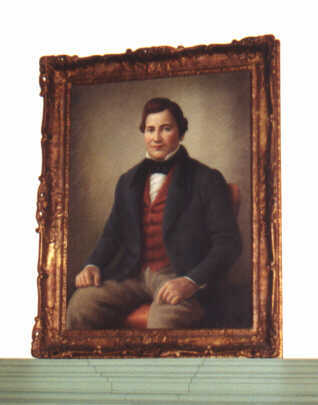
  After being evicted from his father's mansion home "Diamond Hill" in 1834, Joseph moved his large family (he had two wives) and business operations to Tennessee, where he established a large plantation on the Tennessee River near the mouth of Ooltewah Creek that became the center of a settlement called Vann's Town (later the site of Harrison, Tennessee). The big House was a double log wid a big hall and a stone chimney but no porches, wid two rooms at each end, one top side of de other. Clarinda Vann and my aunt Maria turned the keys to the vault and commissary. In the master's yard was the slave cabin, one room long, dirt floor, no windows. His parents Peggy Scott Vann and James Vann were both Cherokee of mixed-blood. His master Daniel Nave, was Cherokee. I eat from a big pan set on the floor---there was no chairs--and I slept in a trundle bed that was pushed under the big bed in the daytime. Nearly a century later (in 1932), Joseph Vann's grandson, R. P. Vann, told author Grant Foreman that Joseph Vann had built a house about a mile south of Webbers Falls (Oklahoma) "a handsome homebuilt just like the old Joe Vann home in Georgia." One day young Master come to the cabins and say we all free and cant' stay there lessn we want to go on working for him just like we'd been for our feed, an clothes. I don't know what dey done it for, only to be mean, and I guess they was drunk. They got on the horses behind the men and went off. The married folks lived in little houses and there was big long houses for all the single men. "Rich Joe" owned a large plantation on the Tennessee River near the mouth of the Ooltewah Creek. Vann. After it was wove they dyed it all colors, blue, brown, purple, red, yellow. Everybody had a good time on old Jim Vann's plantation. Old Mistress had inherited some property from her pappy and dey had de slave money and when dey turned everything into good money after de War dat stuff only come to about six thousand dollars in good money, she told me. There was seats all around for folks to watch them dance. That meant she want a biscuit with a little butter on it. They got over in the Creek country and stood off the Cherokee officers that went to git them, but pretty soon they give up and come home. Lots of the slave children didn't ever learn to read or write. It look lots of clothes for all them slaves. There was lots of preserves. They'd sell 'em to folks at picnics and barbecues. The master had a bell to ring every morning at four o'clock for the folks to turn out. I dont know about Robert Lee, but I know about Lees Creek. By 1800 slavery had become firmly entrenched in the Five Civilized Tribes. He went clean to Louisville, Kentucky, and back. The 1860 Census records for Oklahoma (the last Census of the slavery era), indicates that the Cherokees held 4,600 Negro slaves; the Chickasaws owned 975; the Choctaws owned, 2,344; the Creeks held 1,532; and the Seminoles reportedly owned 500. He didn't want em to imagine he give one more than he give the other. He was a traveler, didn't stay home much. Everybody pretty near to crazy when they bring that arm home. I went to the missionary Baptist church where Marster and Missus went. You know just what day you have to be back too. I had the money Black Hock had won on the track. We stayed here till everything got fixed up, then we went back to Mexico. I never did have much of a job, jest tending de calves mostly. Old Mistress cried jest like any of de rest of us when de boat pull out with dem on it. I wouldn't go, so he sent Isaac and Joe Vann dat had been two of Old Captain Joe's negroes to talk to me. He located at Webbers Falls on the Arkansas River and operated a line of steamboats on the Arkansas, Mississippi, and Ohio Rivers. After it was wove they dyed it all colors, blue, brown, purple, red, yellow. Lord yes su-er. Mistress say old Master and my pappy on the boat somewhere close to Louisville and the boiler bust and tear the boat up. Everything was fine, Lord have mercy on me, yes. Some 3,500 interviews were conducted. We went down to the river for baptizings. Everything was cheap. A town was laid out on his Hamilton Country farm which was called, Vanntown. No fusses, no bad words, no nothin like that. The impressive house reportedly stood on a plantation of nearly 600 acres which was tended by some 400 black slaves "Rich Joe" Vann owned. Well, I'll tell you, you pull it out from the wall something like a shelf. I remember that home after the war brought my pappa back home. Joseph Vann, the son of Chief James Vann and his wife Margaret Scott Vann, was a lad of 12 when his father was killed, in 1809. Young Master Joe let us have singing and be baptised if we want to, but I wasnt baptized till after the war. Robin Vann and Unknown 14 year old in 1809 Vann less. I had on my old clothes for the wedding, and I ain't had any good clothes since I was a little slave girl. Soon as you come out of the water you go over there and change clothes. She turned the key to the commissary too. They rendezvoused with other slaves who had agreed to participate in the revolt, stole horses to ride to their freedom, then broke into a store to steal guns, ammunition, food, and supplies they needed for their planned escape to Mexicowhere slavery was illegal. 117-527 select provisions of the 1866 reconstruction treaties between the united states and oklahoma tribes 117th congress (2021-2022) ";s:7:"keyword";s:29:"chief joseph vann family tree";s:5:"links";s:557:"Tennessee Septic License Test,
Porsche 944 1jz Swap Kit,
Terrace Club Ut Football,
Doc Mcghee Net Worth,
Michele Dauber Brain Cancer,
Articles C
After being evicted from his father's mansion home "Diamond Hill" in 1834, Joseph moved his large family (he had two wives) and business operations to Tennessee, where he established a large plantation on the Tennessee River near the mouth of Ooltewah Creek that became the center of a settlement called Vann's Town (later the site of Harrison, Tennessee). The big House was a double log wid a big hall and a stone chimney but no porches, wid two rooms at each end, one top side of de other. Clarinda Vann and my aunt Maria turned the keys to the vault and commissary. In the master's yard was the slave cabin, one room long, dirt floor, no windows. His parents Peggy Scott Vann and James Vann were both Cherokee of mixed-blood. His master Daniel Nave, was Cherokee. I eat from a big pan set on the floor---there was no chairs--and I slept in a trundle bed that was pushed under the big bed in the daytime. Nearly a century later (in 1932), Joseph Vann's grandson, R. P. Vann, told author Grant Foreman that Joseph Vann had built a house about a mile south of Webbers Falls (Oklahoma) "a handsome homebuilt just like the old Joe Vann home in Georgia." One day young Master come to the cabins and say we all free and cant' stay there lessn we want to go on working for him just like we'd been for our feed, an clothes. I don't know what dey done it for, only to be mean, and I guess they was drunk. They got on the horses behind the men and went off. The married folks lived in little houses and there was big long houses for all the single men. "Rich Joe" owned a large plantation on the Tennessee River near the mouth of the Ooltewah Creek. Vann. After it was wove they dyed it all colors, blue, brown, purple, red, yellow. Everybody had a good time on old Jim Vann's plantation. Old Mistress had inherited some property from her pappy and dey had de slave money and when dey turned everything into good money after de War dat stuff only come to about six thousand dollars in good money, she told me. There was seats all around for folks to watch them dance. That meant she want a biscuit with a little butter on it. They got over in the Creek country and stood off the Cherokee officers that went to git them, but pretty soon they give up and come home. Lots of the slave children didn't ever learn to read or write. It look lots of clothes for all them slaves. There was lots of preserves. They'd sell 'em to folks at picnics and barbecues. The master had a bell to ring every morning at four o'clock for the folks to turn out. I dont know about Robert Lee, but I know about Lees Creek. By 1800 slavery had become firmly entrenched in the Five Civilized Tribes. He went clean to Louisville, Kentucky, and back. The 1860 Census records for Oklahoma (the last Census of the slavery era), indicates that the Cherokees held 4,600 Negro slaves; the Chickasaws owned 975; the Choctaws owned, 2,344; the Creeks held 1,532; and the Seminoles reportedly owned 500. He didn't want em to imagine he give one more than he give the other. He was a traveler, didn't stay home much. Everybody pretty near to crazy when they bring that arm home. I went to the missionary Baptist church where Marster and Missus went. You know just what day you have to be back too. I had the money Black Hock had won on the track. We stayed here till everything got fixed up, then we went back to Mexico. I never did have much of a job, jest tending de calves mostly. Old Mistress cried jest like any of de rest of us when de boat pull out with dem on it. I wouldn't go, so he sent Isaac and Joe Vann dat had been two of Old Captain Joe's negroes to talk to me. He located at Webbers Falls on the Arkansas River and operated a line of steamboats on the Arkansas, Mississippi, and Ohio Rivers. After it was wove they dyed it all colors, blue, brown, purple, red, yellow. Lord yes su-er. Mistress say old Master and my pappy on the boat somewhere close to Louisville and the boiler bust and tear the boat up. Everything was fine, Lord have mercy on me, yes. Some 3,500 interviews were conducted. We went down to the river for baptizings. Everything was cheap. A town was laid out on his Hamilton Country farm which was called, Vanntown. No fusses, no bad words, no nothin like that. The impressive house reportedly stood on a plantation of nearly 600 acres which was tended by some 400 black slaves "Rich Joe" Vann owned. Well, I'll tell you, you pull it out from the wall something like a shelf. I remember that home after the war brought my pappa back home. Joseph Vann, the son of Chief James Vann and his wife Margaret Scott Vann, was a lad of 12 when his father was killed, in 1809. Young Master Joe let us have singing and be baptised if we want to, but I wasnt baptized till after the war. Robin Vann and Unknown 14 year old in 1809 Vann less. I had on my old clothes for the wedding, and I ain't had any good clothes since I was a little slave girl. Soon as you come out of the water you go over there and change clothes. She turned the key to the commissary too. They rendezvoused with other slaves who had agreed to participate in the revolt, stole horses to ride to their freedom, then broke into a store to steal guns, ammunition, food, and supplies they needed for their planned escape to Mexicowhere slavery was illegal. 117-527 select provisions of the 1866 reconstruction treaties between the united states and oklahoma tribes 117th congress (2021-2022) ";s:7:"keyword";s:29:"chief joseph vann family tree";s:5:"links";s:557:"Tennessee Septic License Test,
Porsche 944 1jz Swap Kit,
Terrace Club Ut Football,
Doc Mcghee Net Worth,
Michele Dauber Brain Cancer,
Articles C